
Canadian Forged Wheels: A Local Alternative Worth Knowing
Published
Why origin is a question worth asking
Most wheel buying guides start with how a wheel is made: cast, flow-formed or forged. That is the right first question, but it leaves out something that matters once you have narrowed the list to forged. Where the wheel was made is not a marketing detail or a proxy for quality. It changes what you are buying into in practical ways, and it is a question that has become much more interesting for Vancouver drivers over the past few years, because the credible alternatives to the big European and American names are now genuinely competitive rather than merely a cheaper compromise. We source and fit wheels for Vancouver cars every week, working directly with both the established names and the Canadian makers, so the comparison below is one we actually make at the fitment bench.
Our wheel service lists what that means in practice: we are authorized Vossen dealers, and we also work directly with Canadian forged-wheel makers Forgelite and OPE, with partnerships that give us access to most major wheel brands sold in North America. That last part is worth pausing on. The question of whether a Canadian-forged wheel is a step down from a well-known European brand is one we are asked less often than it should be, because for a long time it was simply true. It no longer is.
What Canadian forging actually changes
Forging is a manufacturing process, and it is not country-specific. Aluminium is pressed under high pressure, and the internal structure of the metal becomes dense and consistent rather than granular, which is what gives a forged wheel more strength and less weight than a cast one. Forgelite and OPE are both fully forged operations. When you buy a wheel from either of them, you are buying a forged wheel with all of the structural benefits that implies, and none of the trade-offs. If you want the underlying case for forged construction itself, our guide to why forged wheels are worth it in Vancouver covers how the manufacturing process affects how a wheel handles a pothole on Highway 1.
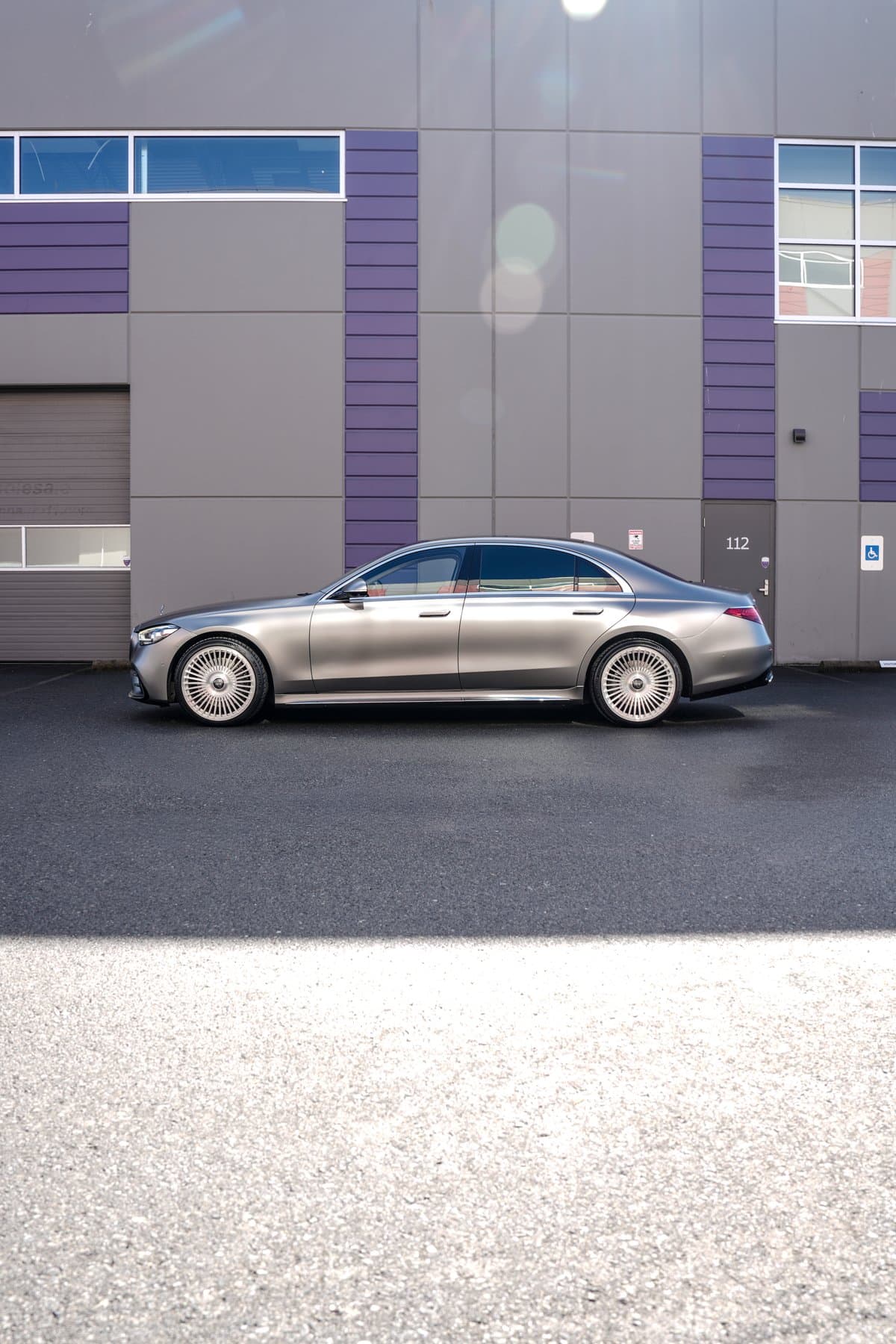
Where the difference sits is in fitment engineering and finish, and in how the wheel was developed for its application. Canadian makers have built their reputations on doing exactly what the established brands do well, and doing it for vehicles that are heavily driven on the same roads you drive. Forgelite in particular developed a strong following on BMW and Porsche applications in the Vancouver aftermarket, and OPE has become well known on Mercedes sedans and SUVs. Neither is a novelty brand. They are working wheel companies with real tooling, real engineering and real volumes. Our portfolio of completed wheel builds shows the range on display, from a Mercedes-Benz S580 running OPE forged wheels to Forgelite-fitted BMW and Audi builds.
The three things that actually differ
First, the design approach. The established European brands have spent decades developing vehicle-specific fitment engineering, with offsets and backspacing engineered to bolt straight onto a particular model without spacers. Some Canadian brands do the same thing for the models they focus on, and for those applications the fitment confidence can be just as good. The difference is that the depth of the catalogue is narrower. If you are buying a set for a mainstream model and it is a platform the maker concentrates on, you may well get the same bolt-on confidence. If you are buying for something unusual, you should expect a longer conversation about offset and clearance. That conversation is the subject of our wheel fitment guide, which covers what to verify before you commit to a set.
Second, finish durability. This is where the Vancouver climate earns its mention. Forged wheels from Canadian makers are finished with powder coat and, in many lines, machined face options. These are durable finishes that handle wet roads and winter salt better than painted or bare chrome, but they are not automatically the same as a high-end European finish, and they are not as varied. If your priority is a specific look, and especially if that look involves a gloss level or a finish the brand is known for, the established names still have more to offer. For how different finishes hold up through a Vancouver year, our post on wheel finishes and the local weather is worth reading before you commit to a colour.
Third, price. This is the honest part, and the reason the conversation has changed. Forgelite and OPE go head-to-head with the established names on a price-to-quality ratio rather than trying to outbid them, and the gap versus a comparable European forged wheel is wide enough that most drivers notice it immediately. That does not make a Canadian-forged wheel a lesser product. It makes it a different purchase, and it is a very good purchase if the design fits your car, the finish suits what you want, and the price leaves room in your budget for the rest of what the car needs.
Who should seriously consider one
A driver who has been quoted a set of forged wheels from a big name, liked the design, and found the price uncomfortable, is the exact person who should ask about the Canadian makers before signing off. The same applies to someone who wants genuine forged construction but is not sure they need the very top of the range, and to anyone building a second set of wheels for winter, where a second set of top-tier forged wheels is the single most expensive line item in a car build and frequently not where the money is best spent. If you are running two sets through the year, our post on storing your off-season tires between swaps covers how the rest of that seasonal rotation works.
The counter-case is worth stating plainly. If the wheel you want exists in one finish, at one offset, from one brand and you are not moving on that, then buying the Canadian alternative is not a saving so much as a compromise on the exact thing you wanted. That is a perfectly valid decision, but it should be made deliberately rather than by default, because the wider catalogue is exactly what you are trading away.
How we would approach the decision
Start with the car and the fitment rather than the logo. Decide the size, the width and the offset you need, and get those confirmed before comparing anything, because a wheel that does not sit right is not a cheaper wheel, it is a return trip. Then look at the design and the finish, and be honest about whether the specific wheel in front of you is the one you want or simply the closest one available in your price range. Only after that does origin come into it, and at that point it is a tiebreaker with real weight behind it rather than the first question.
Our own view is that a wheel that bolts on cleanly, carries a finish you can live with, and is forged is a good wheel regardless of the badge on the centre cap. Both Forgelite and OPE meet that standard, and both have produced builds on these roads that look and fit the way they should. The point is not that you owe it to a Canadian brand to buy Canadian. The point is that you should know the option exists, because a lot of drivers never find out they had a second set of wheels to choose from. Whether a new set of forged wheels is worth the change at all is covered in our upgrade guide, and the maintenance side is in our wheel care guide.
Related project: OPE Forged Wheels — S580