
A-Pillar PPF: The Structural Panel Most Owners Skip
Published
The pillar most people leave uncovered
Ask someone which parts of their car get the most rock chips and they will almost always name the hood and the front bumper. Both are correct, and both are the easiest answers to see. There is one panel that takes the same punishment, sits in the same line of traffic, and is almost never mentioned: the A-pillar. The A-pillar is the structural post between the windscreen and the front door, and it does a job no other panel does. It holds the roof up and it holds the windscreen in. On a car with a windscreen bonded into the pillar rather than seated in a rubber channel, a chip in that post is not a paint blemish, it is a crack that can run through the screen. That is a different category of problem from a stone chip in a bumper. Which raises an obvious question: if the panel is more consequential, should it get the same film as everything else?
Why it is treated separately from the rest of the car
At JRS the A-pillar is a distinct line item, and it is worth understanding why rather than treating it as another panel on a list. Our PPF service lists A-pillars under the Premium tier and as its own entry in the custom coverage options, sitting separately from B-pillars. The B-pillar is the structural post behind the door. It is a genuine impact surface, and it is genuinely worth protecting. But it is a post, not a screen mount. The A-pillar is different in two ways that matter during installation. First, it is a narrow, curved, tapering surface with a rubber or bonded edge right beside it, and the film has to be trimmed and tucked without getting into the channel or the bonding line. Second, the paint on a pillar is frequently a different finish from the paint beside it, sometimes a different colour entirely, and sometimes not painted at all.
The installation problems that do not exist elsewhere
This is where the decision separates from a normal panel. On a hood or a bumper the film is a flat sheet laid onto a surface that is broadly one plane. On an A-pillar there are three separate hazards, and each of them is a way for a good-looking install to still be a poor one. The first is the trim. The pillar carries the windscreen seal, the trim strip, and often a wiring channel for a dash camera. Film that overlaps the seal or sits proud of the edge will interfere with the seal and with the drain path. Water that should run down the outside of the pillar and out through the wiper area gets trapped behind the film instead, and trapped water behind film is how edges lift. Our guide to why PPF edges lift explains the mechanism in detail, and the drain path is the part most people have never thought about. The second is the bonding line. On many modern vehicles the windscreen is bonded directly into the A-pillar rather than sitting in a moulded channel. Film applied over that bond line, or film whose edge is left proud of the pillar surface, can leave a visible step where the windscreen meets the trim, and on a bonded screen that step can matter. This is the reason to have the pillar work done by someone doing pillars as a routine part of a full front package, rather than as a novelty add-on. The third is the paint itself. Pillar paint is often a satin or textured finish used to break up the reflection under the windscreen, and film on a satin surface behaves differently from film on a glossy hood. If the finish is not gloss, the right film is matte PPF, because gloss film over a matte surface has a different texture and a different reflectance. Getting that wrong is visible in daylight, immediately. None of this means film on an A-pillar is a bad idea. It means the pillar is a job where the detail matters more than the square footage.
What a chip in the A-pillar actually means
This is the part worth being blunt about. On most panels, a chip is a cosmetic problem. You either live with it, or you repair it, and there is a sensible order of escalation: repair first if the damage is deep enough to expose the primer, and otherwise protect the paint with film or a coating rather than correcting it. We covered that decision separately. On an A-pillar the order of escalation is different, because the question is not only what the chip looks like. It is whether the windscreen is still doing its job on that side. A crack that starts in the bond line and propagates across the screen is a safety question and a cost question at once, and it is a much more expensive problem than a bumper chip that was always going to be cosmetic. If the pillar has taken a significant impact, it is worth getting the screen inspected before deciding what to do about the paint. A pillar that has been hit hard enough to crack a screen is a pillar that has been hit hard enough to disturb the structure around it, and windscreen damage in Vancouver rain is worth understanding before you go further.
Deciding whether it is worth doing to your car
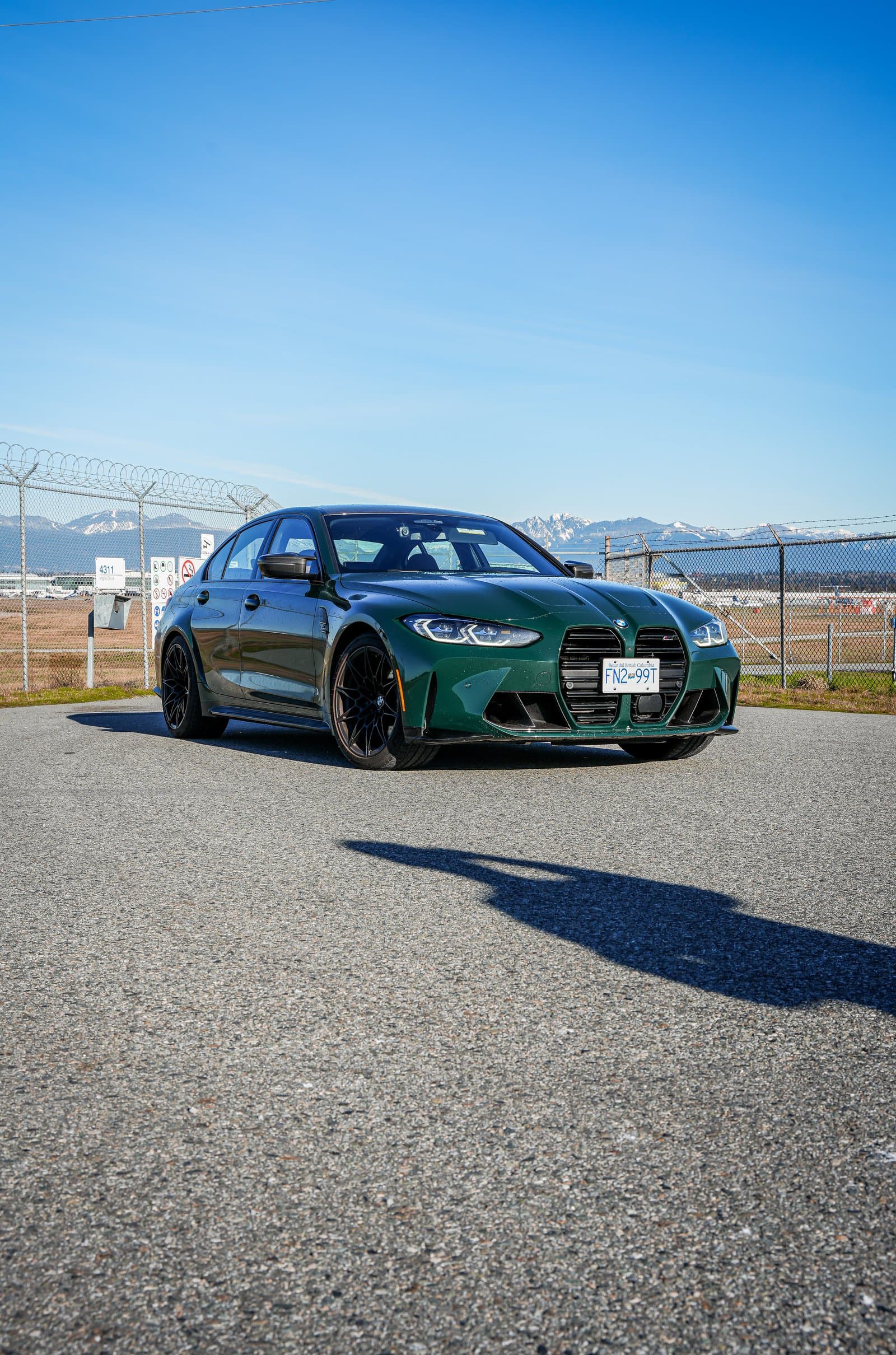
The honest answer is that for most cars and most drivers in Vancouver, the A-pillar is not where the budget should start. Highway commuting at speed with a lot of stone in the lanes, a gravel road, or a job site with debris is a different calculation, and there the pillar earns its place alongside the hood and the bumper. There are two things that make the pillar a more reasonable priority than it looks. The first is that it is small. An A-pillar is a modest area of film compared with a full hood or a complete front bumper, so it is a relatively cheap way to close a gap in the protection on the car. The second is that it sits in the sightline of the driver, where chips are most likely to be noticed. Our BMW M3 full front and rocker coverage is the kind of install where the pillar is part of a continuous line of protection rather than an isolated piece. If you are deciding between packages, the question is not whether A-pillars are worth having in isolation. It is where your front-end protection stops. If you already have a full front bumper and a partial hood, the pillar is the next logical piece of the same line. If you have nothing yet, start with the panels that take the most volume at speed, and add the pillar when you are already in the shop. And if you are protecting paint that is already chipped, get the damage assessed first. Rock chip repair is worth doing before film goes on in most cases, because film laid over an unrepaired chip preserves the damage under it permanently. If the film is going on anyway, it is worth considering how it will be maintained. PPF is not a set-and-forget surface, and the edges are where care matters most. Our guide to PPF care covers the routine that keeps the film behaving the way it should, and if you want the film to be easier to live with day to day, a ceramic coating applied over the top changes how water and grime behave on it.
Related project: BMW M3 Clear PPF Track Shield