Body Kit Upgrades in Vancouver: What to Know Before You Buy
Published
Thinking about adding an aero kit or body kit to your car in Vancouver? You are not alone. More BC drivers are personalising their vehicles every year, and body kit upgrades sit high on the wish list — right alongside wheel upgrades and exhaust modifications. But unlike swapping rims or changing your car's colour, aero upgrades come with a layer of complexity that is worth understanding before you hand over any money. Exhaust upgrades
This guide covers what actually matters: how BC vehicle inspection rules apply to body kits, which parts are worth spending on, and how to avoid a costly mistake that could fail your next inspection.
What Is an Aero or Body Kit?
Aero kits and body kits are broad terms for a collection of exterior panels and aerodynamic pieces designed to change how a vehicle looks and, in some cases, how it behaves on the road. They are most commonly associated with sporty and performance cars, but modern luxury SUVs and daily drivers can benefit from them too.
A full aero or body kit typically includes some or all of the following components:
- A front lip or splitter — a low panel that extends below the front bumper
- Side skirts — panels that run along the lower sides of the vehicle
- A rear diffuser or bumper panel — shaping airflow beneath the rear of the car
- A rear spoiler or GT wing — generating downforce at speed
- Rear bumper vents or inserts — adding visual depth and aiding brake cooling
Some of these parts are purely cosmetic. Others genuinely affect aerodynamic performance. Understanding the difference will help you decide what to prioritise.
BC Vehicle Inspection and Body Kits: What Actually Matters
The British Columbia Motor Vehicle Act sets the standards for annual and periodic vehicle inspections. For aero kits and body modifications, the key rules that affect most drivers are straightforward.
Visibility and lighting: Any component that obstructs a headlight, tail light, brake light, or turn signal is a direct inspection failure. If your front lip sits in front of your headlights, or your rear wing blocks your licence plate light, you will be turning that inspection bay around.
Structural integrity and attachment: Components must be securely attached. A lip that is zip-tied on with double-sided tape is not acceptable under BC standards. Fasteners must be permanent and purpose-made.
Ground clearance: Front lip spoilers must maintain adequate ground clearance. A component that drags on a driveway hump or speed bump will be noted on an inspection. The practical rule is: if it scrapes on anything other than a full-height curb, it is too low.
Width and overhang limits: Under BC inspection regulations, modifications cannot extend the vehicle's overall width beyond factory specifications. Side skirts must sit within the factory body lines, and rear bumpers cannot extend beyond the boot or rear bumper profile.
Wing height and mounting: Rear wings are permitted provided they are securely mounted to the boot lid or body structure with proper load-rated hardware. A wing held on with automotive adhesive alone will not pass inspection.
Not every inspection technician interprets the rules the same way, and what passes in one shop might be flagged in another. Working with a shop that has direct experience with modified vehicle inspections in BC makes a meaningful difference. JRS performance services
Material Choices and What They Cost
Aero kit materials range widely in price, durability, and finish quality. Here is a practical breakdown of what is available.
Fibreglass is the most common entry-level material. It is relatively inexpensive, can be moulded into complex shapes, and is widely available. The downside is that it cracks under impact and does not flex — a parking-lot nudge can mean a costly repair.
ABS plastic is a step up. It is more impact-resistant than fibreglass and holds its shape better over time. Most OEM-style body kit manufacturers use ABS. It is a sensible middle ground for a daily-driven car.
PU or polyurethane resin kits offer the highest quality flexible material. They absorb minor impacts without cracking and can be repaired more easily than fibreglass. Premium body kit manufacturers favour this material. It commands a higher price but lasts significantly longer.
Carbon fibre is the premium choice. It is lightweight, extremely strong, and visually distinctive. It is most commonly found on performance and track-focused builds. The trade-off is cost — a full carbon fibre aero kit can easily cost several thousand dollars, but the durability and weight advantage make it a worthwhile investment for serious drivers.
Installation: Where Most People Cut Corners
A common mistake is focusing on the kit's material while underestimating the installation. A poorly fitted body kit will look worse than not having one. Even the finest carbon fibre piece will look amateur if it is misaligned, if the edges do not sit flush, or if it rocks under hard cornering.
A professional installation involves test-fitting the components before any adhesive is applied, adjusting for panel gaps and alignment, drilling and bolting mounting points where required, sealing edges against moisture and road debris, and priming and painting each component before fitting.
The full process can take several days, particularly for a full kit with multiple components. Rushed jobs lead to gaps, vibration noise, and premature failure of the adhesive or fasteners. Wheel and aero upgrades
Is It Worth It?
For many Vancouver drivers, an aero kit is a visual investment — and there is nothing wrong with that. The best aero builds look effortless because every piece is chosen and fitted with care.
The key decisions are: which components genuinely improve the look and aerodynamics for your vehicle and driving style, what inspection requirements you need to satisfy, and whether the installation will be done properly by someone experienced with BC compliance.
If you are exploring aero upgrades, book a consultation with JRS Auto Customs. We will walk you through the options that make sense for your car, your budget, and your inspection requirements.
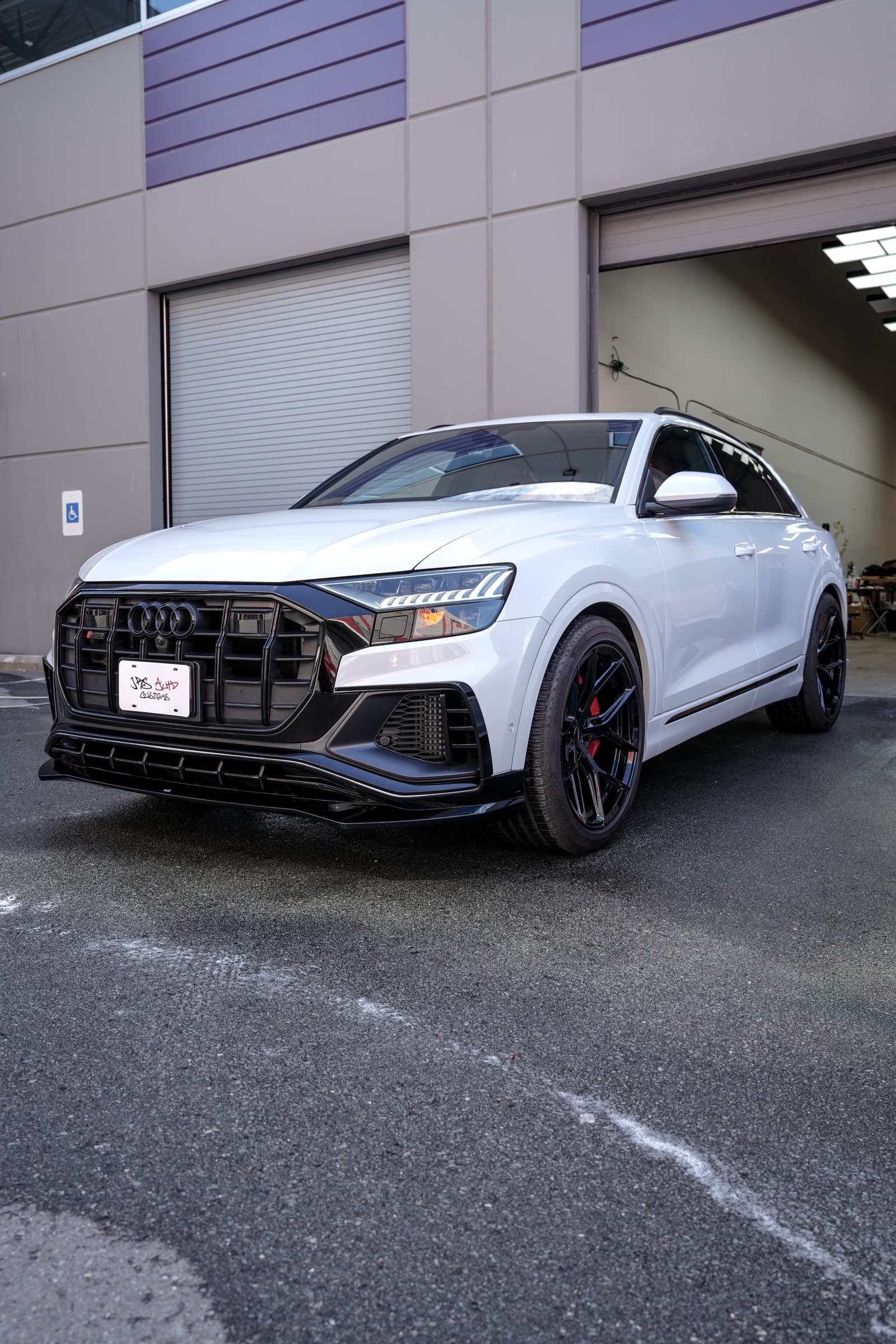
Related project: Audi SQ8 ABT Body Kit & Vossen HF5 Wheels