
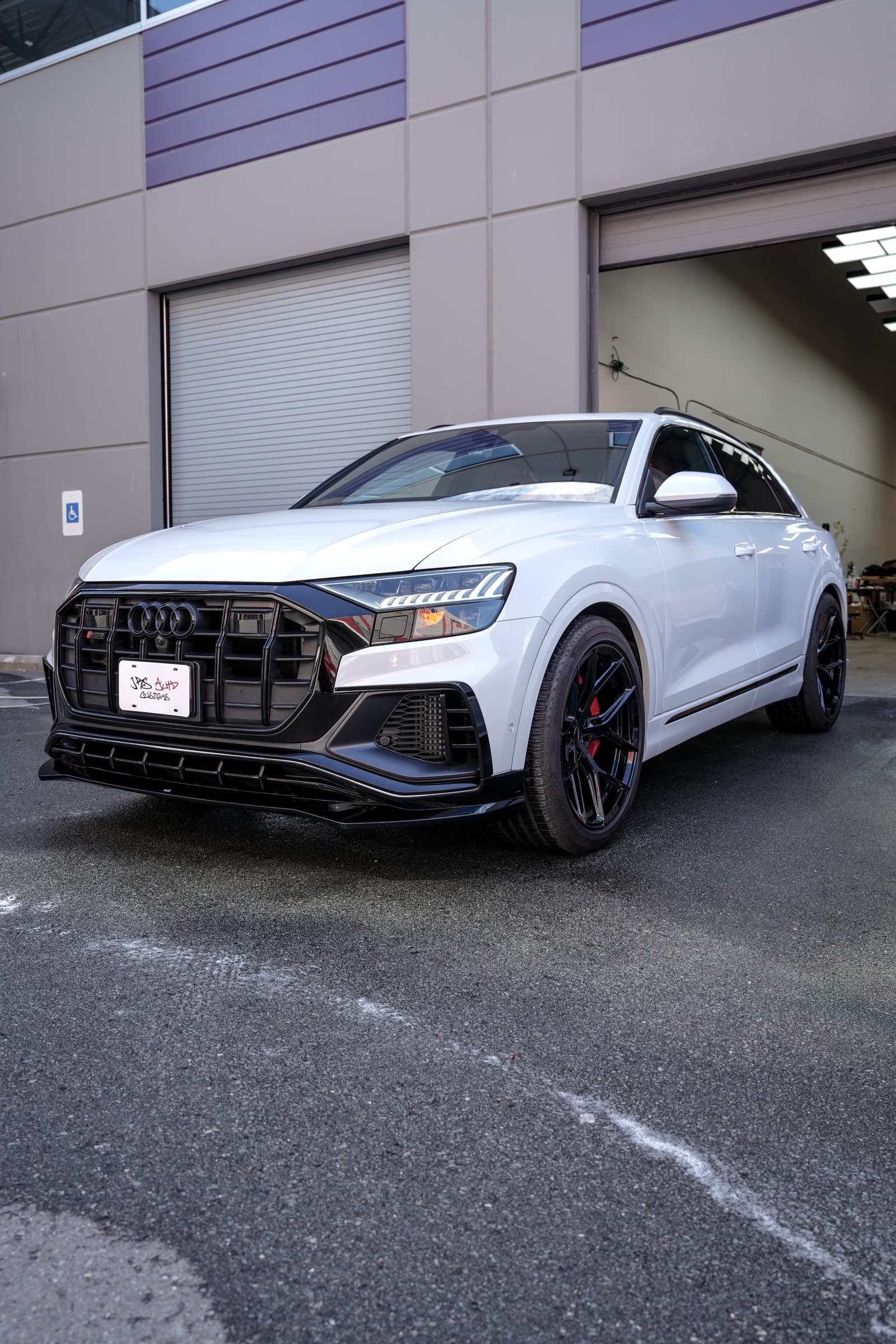
Aero Kits on Vancouver Streets: What Actually Changes
Published
Walk through any Vancouver parking lot and you will notice a split: some modified cars sit low and aggressive-looking; others look fast but have no aerodynamic hardware. That difference is the aero kit — and for most Vancouver owners the question is whether the investment is worth it for street use. The answer depends on what you actually want from the car, and whether the climate cooperates.
What an Aero Kit Actually Does
A body kit designed for street use works in two main ways. The first is aerodynamic efficiency: a well-designed front splitter redirects airflow to reduce lift under the front end, improving high-speed stability. Rear diffusers and spoilers manage the wake behind the car, reducing drag and keeping the rear end planted. The second is cooling: many street aero kits include ducting or venting that directs airflow to the radiator, intercooler, or brake ducts — particularly useful on turbocharged vehicles that spend time in stop-and-go traffic.
The benefit is most noticeable at higher speeds — on the highway, through the Port Mann tunnel rush, or on a mountain road drive. At typical Vancouver commuting speeds, the aerodynamic difference is subtle. The cooling benefit, however, is felt at any speed when the car is working hard.
Does It Change How the Car Handles
For street driving, a properly installed aero kit changes the car's behaviour at the limit rather than in normal use. On a car with good factory suspension, the added front downforce reduces lift at speed, which means the steering feels more consistent when you are pushing through a corner at a drive-your-car event or a mountain road. It does not make the car feel faster — it makes it feel more planted at the upper end of its grip range.
What it does change noticeably in normal driving is ground clearance. A front lip that sits 30 to 50 millimetres below the factory bumper will contact speed bumps, steep driveways, and the frequent uneven surfaces found across East Vancouver streets. If you run a car this low year-round, you will need to learn where the car fits and where it does not.
Materials and the Vancouver Climate
Most street aero kits are made from one of three materials: ABS plastic, fibreglass, or carbon fibre. ABS is the most common for daily-driver setups — it is durable, takes paint well, and resists the minor road debris impacts that happen in city driving. Fibreglass is stiffer and lighter but cracks more easily under impact. Carbon fibre is the lightest and stiffest option but comes at a significant price premium and requires more careful maintenance in certain conditions.
Vancouver's coastal climate creates specific considerations. High humidity and salt air — particularly near the water and on North Shore roads in winter — can attack unpainted carbon fibre if it is not properly sealed. ABS plastic and fibreglass parts need to be inspected regularly for any cracking around mounting points, especially after the first cold winter. A well-installed aero kit on a daily driver in Metro Vancouver will hold up fine with basic care; a poorly sealed or badly mounted kit will develop issues faster in this climate than in a drier city.
When an Aero Kit Makes Sense on a Daily Driver
The strongest case for an aero kit on a Vancouver daily driver is when you have a performance-oriented vehicle that sees regular highway driving or spirited back-road routes. On a turbocharged car that generates significant heat under load, the cooling ducts in a quality body kit can make a measurable difference to operating temperatures in summer traffic. On a car used purely for commuting on flat city streets at legal speeds, the functional benefit is minimal and the ground clearance trade-off may outweigh it.
Aero kits also make practical sense when you want to protect existing bodywork. A front lip takes the impact from road debris instead of your factory bumper. A rear diffuser protects the lower bumper panel from parking scrapes and road spray. In that role an aero kit is partly cosmetic and partly functional — it adds visual intent while acting as a sacrificial layer on the surfaces most exposed to road damage.
Maintenance and Care for Street Aero Kits
An aero kit on a Vancouver daily driver requires slightly more attention than standard bodywork. Inspect the mounting points at the start of winter and again in spring — road salt and moisture working into poorly sealed joins accelerates corrosion at the mounting brackets. After a winter storm, rinse the undersides of any carbon fibre or fibreglass components to remove salt residue.
For ABS parts, standard car washing is sufficient. For carbon fibre, apply a UV-resistant sealant or ceramic coating annually to protect the surface from chalking in direct sunlight — this matters on the south-facing sides of vehicles parked outdoors through summer. A carbon fibre aero kit that is maintained properly will outlast most of the other components on the car.
unknown nodeperformance upgrades
to see what is possible, or get in touch to talk through the options for your specific vehicle.
Related project: Audi SQ8 ABT Body Kit & Vossen HF5 Wheels