
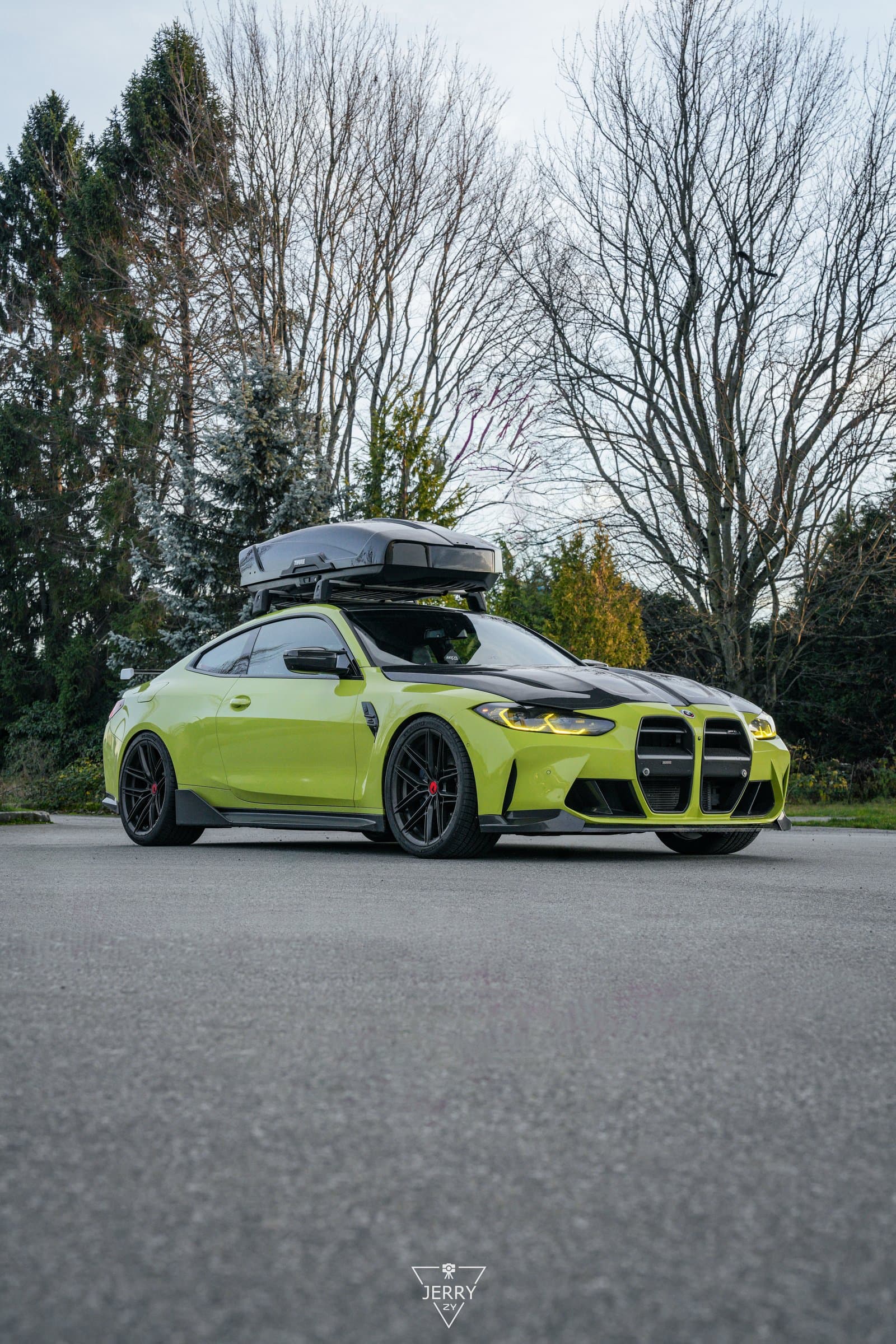
Do Aero Kits Make Sense for Vancouver Daily Drivers?
Published
Aero kits show up on local roads more than they used to. The sight of a front splitter, side skirts, and a rear wing on a car that never sees a racetrack raises a legitimate question: is any of this actually doing something for a Vancouver daily driver, or is it purely aesthetic? The honest answer depends on how and where you drive, what you are trying to achieve, and which components are on the car.
What aero components actually do on the street
Aero kits modify the way air moves around the car. At speeds above roughly 80 km/h, the aerodynamic forces acting on a vehicle become significant enough to measurably affect handling and stability. A front splitter creates a low-pressure zone under the car that presses it toward the road, increasing front-end grip at speed. Rear wings generate downforce on the rear axle, improving traction under acceleration and stability under braking. Side skirts reduce the amount of air that escapes from under the car at speed, which improves the efficiency of the underbody aero efforts.
On a track car, these effects are tuned and measured. On a street car, the effects are smaller and harder to feel, but they are real. A well-designed aero kit on a car driven aggressively on winding North Shore roads or the Sea to Sky will measurably increase front-end grip and improve high-speed stability. On a car used for Highway 1 commuting, the benefit is more marginal.
Why Vancouver conditions change the calculation
Vancouver's road surface quality introduces a consideration that pure aero performance calculations do not account for. Front splitters, lip spoilers, and diffuser edges are typically set at ride height — they sit close to the ground and are exposed to the uneven surfaces found on many Lower Mainland roads. Speed bumps, steep driveways, and the varied surface quality on secondary roads mean that a low-set front aero component is more likely to make contact with the road surface. This means aero components on a Vancouver street car need to be mounted with enough clearance to avoid damage on rough surfaces, which reduces their effectiveness compared to a track setup.
The other climate factor is rain. Aero kits modify airflow, and in very heavy rain, certain configurations can reduce the amount of water reaching the windshield or the intercoolers. This is only relevant for cars with forced induction that rely on an intercooler to reduce intake air temperature, and only at speeds high enough for the aero to have an effect. For most Vancouver drivers, this is not significant.
The fuel economy question
Reducing aerodynamic drag at highway speeds improves fuel efficiency. Aero kits that reduce drag — particularly rear spoilers set at an efficient angle rather than a downforce angle — can slightly improve highway fuel economy. A properly angled rear spoiler on a highway-driven car can reduce the Cd (coefficient of drag) slightly. Downforce-oriented aero components, by contrast, add drag and can slightly reduce fuel economy at highway speeds. The key distinction is angle: a wing set for downforce adds drag; a spoiler set for efficiency reduces it.
When the appearance is the point
For many Vancouver drivers who add aero components, the primary motivation is appearance rather than performance. This is not a criticism. If the primary motivation is visual, the question becomes whether the kit is well-designed for the street environment rather than whether it improves lap times. A kit designed for street use will have appropriate clearances, use materials that tolerate road salt and UV exposure, and be designed for the speeds encountered on public roads.
What to check before fitting an aero kit
Before adding aero components, check the existing cooling system. Cars with limited radiator airflow from a front-mounted intercooler or large brake calipers can see reduced cooling performance if an aero kit blocks airflow to the heat exchangers. A reputable shop will check this as part of the fitment process.
Materials matter for Vancouver's conditions. Carbon fibre aero components are lighter and stiffer but are more expensive. Fibreglass or ABS plastic components are more affordable and more forgiving of minor contact with road surfaces. For Vancouver's road conditions, fibreglass or ABS front lip components are often more practical than exposed carbon fibre edges, which can chip or crack on contact with road surfaces.
Talk to JRS Auto Customs about aero kit options and fitment
Aero kits are worth considering if you drive at the limits of your car's handling on BC roads regularly, want the visual character a well-sorted kit provides, or are running a forced-induction setup that would benefit from reduced intake air temperatures. For the average Highway 1 commuter, the performance benefit is modest, but for a driver who pushes their car on good roads, the appearance and handling feel improvement is real. Understanding which applies to your driving is the difference between a well-considered modification and one that costs more than it delivers.
Related project: BMW M4 — Vorsteiner Wheels and Aero Kit