The Annual Service Visit for a Coated or Wrapped Car
Published
A car that has been ceramic coated or wrapped is not finished when you drive it away. It is finished when it has been maintained, and maintenance for a protected car looks different from maintenance for an unprotected one. The wash technique changes, the chemicals change, and once a year there is a short list of things worth having looked at while the film and coating are still doing their job.
JRS offers an annual maintenance plan for owners of ceramic-coated and film-protected cars, and the reason it exists is simple. Coatings and films are designed to be maintained, and the maintenance that keeps them in good condition is not the same work as the maintenance that keeps a car clean.
What the Annual Visit Actually Covers
The annual service for a protected car is not a full detail and it is not a paint correction. It is a short, targeted visit aimed at the things that wear first on a coated or wrapped car.
A compatible decontamination wash comes first. This uses chemicals that will not attack the coating or the film. On an unprotected car you can be more aggressive with the products you use; on a protected one the products have to be chosen so the protection is not stripped off in the process of cleaning the car.
Then the coating layer gets inspected. Coatings wear unevenly, and the parts of a car that see the most use wear first. A hood takes more road debris than a door. A front bumper takes more salt in a Vancouver winter than anything else on the car. Inspecting the layer tells you whether it is still performing across the whole vehicle or whether it is thinning out somewhere specific.
A maintenance topper goes on afterwards. This is a light, refreshing layer that restores the surface properties the coating had when it was new. It is not a full coating and it is not a replacement for one; it keeps the existing coating doing its job for longer.
Film edges get checked as part of the same visit, and edges are where problems start. A lifting edge lets water and grit get underneath the film where they can reach the paint, so edges that have started to lift are worth re-tucking rather than leaving to see how they go.
Finally, the hydrophobicity is reset. Fresh coatings bead water tightly and let it roll off. That behaviour dulls over time, and resetting it is what brings back the beading and the easy-clean surface that made the coating worth having in the first place.
Why a Wash Alone Is Not Enough
Most owners who come in for this visit have been washing their car carefully, and that is the right thing to be doing. A careful hand wash is what keeps a coating in condition, and it is what the maintenance guidance service is built around.
But washing is a maintenance activity. It removes what is sitting on the surface. It does not inspect the coating, it does not refresh the top layer, it does not check edges that have started to lift, and it does not put the water beading back. Those are different kinds of work, and they are the kind that only shows up if somebody is looking for it.
There is a practical reason the annual visit is worth scheduling. A coating that has thinned out in one area is much easier to deal with while the car is in for a service than it is after the finish has visibly started to fail. The same is true of a film edge that has lifted while it is still small.
What Washing Method Matters
Once a car is coated or wrapped, the way it gets washed changes what the protection lasts. Drive-through car washes use abrasive brushes, and those brushes will scratch a clear film and can dull a coating over time. The wash and protection guidance covers this in more detail, but the short version is that a coated car wants a hand wash and a controlled environment rather than a brush.
The chemicals matter as much as the method. Silicone-loaded dressings and aggressive degreasers used near coated surfaces will do exactly what they are designed to do to a car in general, which is to leave an unwanted layer on the paint. On a ceramic coating, that layer defeats the hydrophobic surface underneath it. Every maintenance package we run uses compatible chemicals only, and that is a deliberate choice rather than a marketing line.
This is also the reason a maintenance wash plan exists separately from a one-off clean. If the car is going to be washed properly and with the right products, it is much easier to have that done on a schedule than to remember the right products every time the car needs washing.
How to Tell If Your Protection Needs Attention
There are a few honest signals that a car is due for a service visit rather than just another wash.
Water stops beading tightly and starts sheeting across the panel. Beading was one of the things that made the coating feel worth paying for, and when it is gone the coating is still there but is not working the way it did.
The car does not seem to stay clean the way it used to. Dirt used to rinse off; now it takes more effort and more product. That is the coating losing its surface properties rather than the car getting dirtier.
Edges of the film have started to lift or look uneven along a panel gap. A lifted edge is one of the few things in this list that is worth acting on quickly, because it is a route for water and grit to reach the paint underneath.
There is a mark on the coating that has become noticeably harder to shift than it used to be. This is often the first sign that a specific area of the coating has worn through rather than simply dulling.
None of these are emergencies. They are all much easier to deal with as part of a planned service visit than they are once the finish has visibly started to fail on a car you drive every day.
Getting It Booked
Send your details and you will hear back with a timeline, a price and anything that needs preparing before the appointment, usually within a working day. JRS is currently booking about two to four weeks ahead. For a car that is already coated or wrapped the work itself is short, so the lead time on the booking is the part worth planning around.
It helps to have one service visit a year, timed so it is not the same week every year as the one you had last year. A car that sees a lot of winter road salt in January needs a different moment in the year than a car that sits in a garage through the wet season.
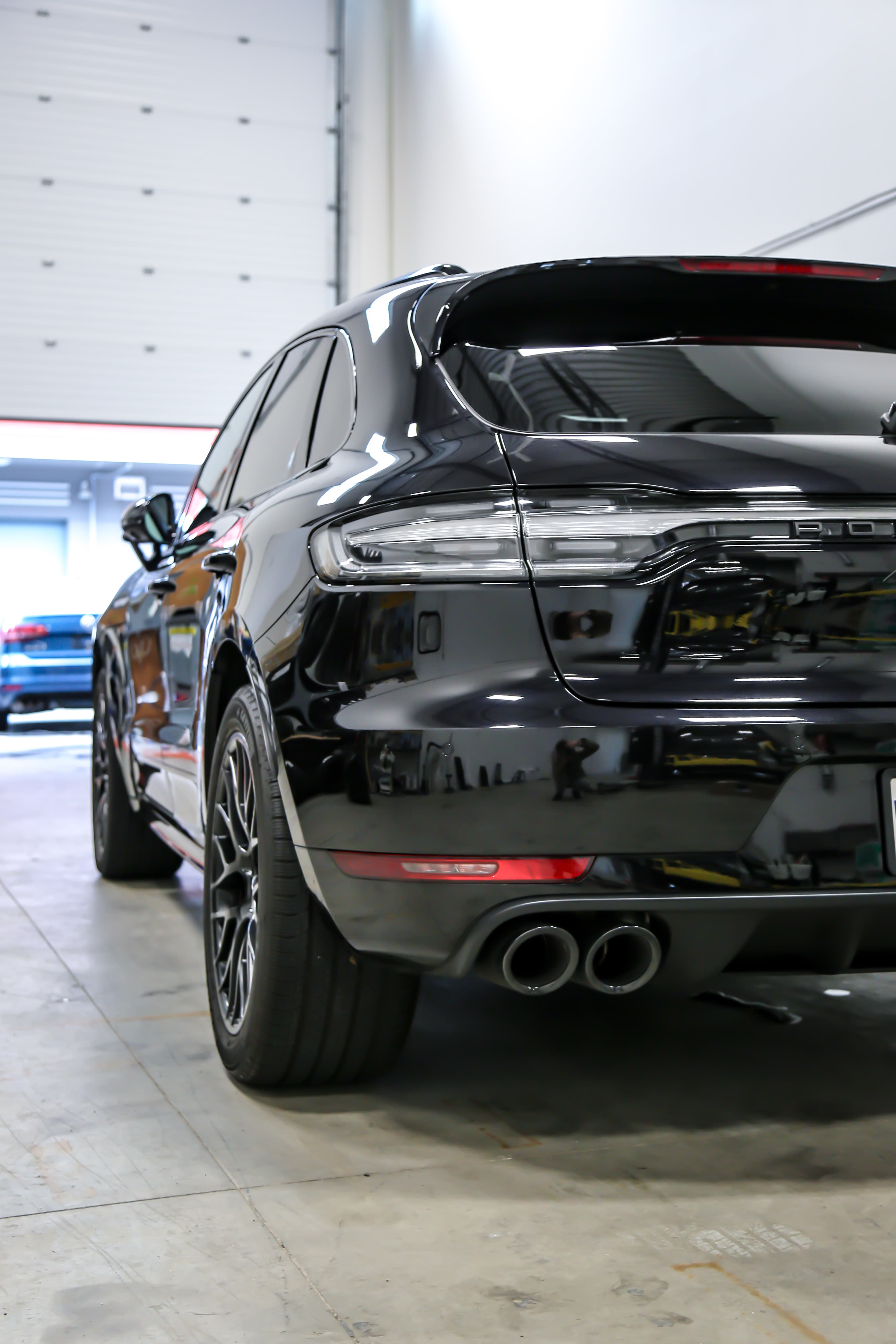
One of our own projects shows how the work is sequenced when a car is protected from the start. This Porsche Macan GTS came in for long-term paint protection and enhanced gloss, and after a thorough decontamination and paint preparation we applied a Gyeon ceramic coating system. The result was a highly hydrophobic surface that made routine maintenance considerably easier, which is exactly the point where an annual visit starts to matter.
Unsure whether the car genuinely needs a service visit or would be fine with a careful wash? Send us a message and find out. We would rather look at the car and tell you honestly that it does not need one than add a line to your bill every year out of habit.
Related project: 2020 Porsche Macan GTS | GYEON MOHS EVO Ceramic Coating