BC Annual Vehicle Inspection: A Vancouver Driver's Guide
Published
British Columbia requires an annual vehicle inspection for most passenger vehicles — a check that goes beyond the standard safety check in many other provinces. For Vancouver drivers, the inspection is often triggered when transferring ownership, but it is also required annually for vehicles that are registered as salvage, for vehicles over a certain age, and in some insurance and registration situations. The inspection is performed by an Autoplan broker or an accredited inspection facility, and the scope is wider than most owners expect. Understanding what is checked — and what tends to fail — can save you an unexpected trip back to the shop.
What BC Actually Checks During an Inspection
A BC vehicle inspection is not just a safety check. It covers lights and signals, brakes and brake lines, steering and suspension components, tyres and wheels, the exhaust system and emissions-related equipment, the body and frame, the windshield and mirrors, and the vehicle identification number. If your car has been modified — larger wheels, an aftermarket exhaust, tinted windows, a lift kit — those modifications are evaluated against provincial standards. Items that pass inspection in other provinces may not pass in BC, particularly around exhaust emissions and lighting.
Common Reasons Vehicles Fail in Vancouver
BC's coastal climate creates inspection conditions that catch some owners off guard. The persistent moisture in Vancouver accelerates wear on brake lines, rubber seals, and electrical connections — items that might pass a dry-climate inspection but fail in BC. Corroded battery terminals, worn brake pads at the edge of legal minimum, and fogged or cracked headlights are common failures that are aggravated by the local climate rather than by neglect.
For modified vehicles, exhaust compliance is the most frequent issue. BC's inspection checks that the exhaust system does not exceed allowable noise levels and that emissions equipment — catalytic converters, oxygen sensors — remains intact and functional. Aftermarket exhaust systems that delete or bypass emissions components will fail. Some cat-back or axle-back systems that are legal in other provinces are not compliant in BC if they affect emissions equipment routing or exceed noise thresholds.
Lighting is another common failure. Aftermarket headlights or taillights that are not DOT-approved can fail even if they look brighter or better than the factory units. Modifications that change the beam pattern of headlights — including some LED bulb upgrades in halogen housings — fail because they create glare for oncoming traffic. Before adding any lighting modification, it is worth confirming it meets BC standards.
How Modifications Affect Your Inspection
Not all modifications create inspection problems, but owners who have made significant changes should be aware of what they are bringing to the inspection. Larger tyre and wheel combinations that alter the overall diameter beyond manufacturer specifications can affect the accuracy of the speedometer and may flag the inspection. Suspension modifications that change ride height beyond factory tolerances can fail on the geometry check. A vehicle with a paint protection film or ceramic coating, on the other hand, has no effect on inspection outcome — those are cosmetic and protective treatments that do not change the vehicle's roadworthiness.
If your vehicle has performance modifications and you are uncertain whether they are compliant, it is worth asking before the inspection. JRS Auto Customs can review what has been done to the car and advise on whether the modifications are likely to affect the inspection outcome. For vehicles with exhaust modifications in particular, knowing in advance is better than finding out at the inspection bay.
A Pre-Inspection Checklist for Vancouver Owners
Before booking your inspection, a quick walkaround can catch issues that are straightforward to fix. Test every light — headlights, taillights, brake lights, indicators, and hazards. Check tyre tread depth and tyre pressure. Inspect brake pads through the caliper — if the pad material is below five millimetres, replace before the inspection. Look at the brake lines for visible rust or damage. Check that the horn works and that the windshield wipers are in good condition with no streaking. Clean corroded battery terminals. If the check engine light is on, address it before the inspection — it will fail on the spot.
For Vancouver drivers, timing also matters. Inspection facilities in the Lower Mainland get busier in October through December as the annual inspection cycle coincides with the end-of-year ownership transfer season. Booking ahead — rather than waiting until the inspection is about to expire — gives you more flexibility to address any issues that come up. Learn more about the full range of maintenance and inspection services at JRS Auto Customs.
A BC vehicle inspection is straightforward when you know what is being checked. The vehicles most likely to face surprises are modified cars, older vehicles with coastal wear, and cars with deferred maintenance. Giving yourself time to prepare — and knowing which modifications might need documentation or reversal — makes the process significantly less stressful.
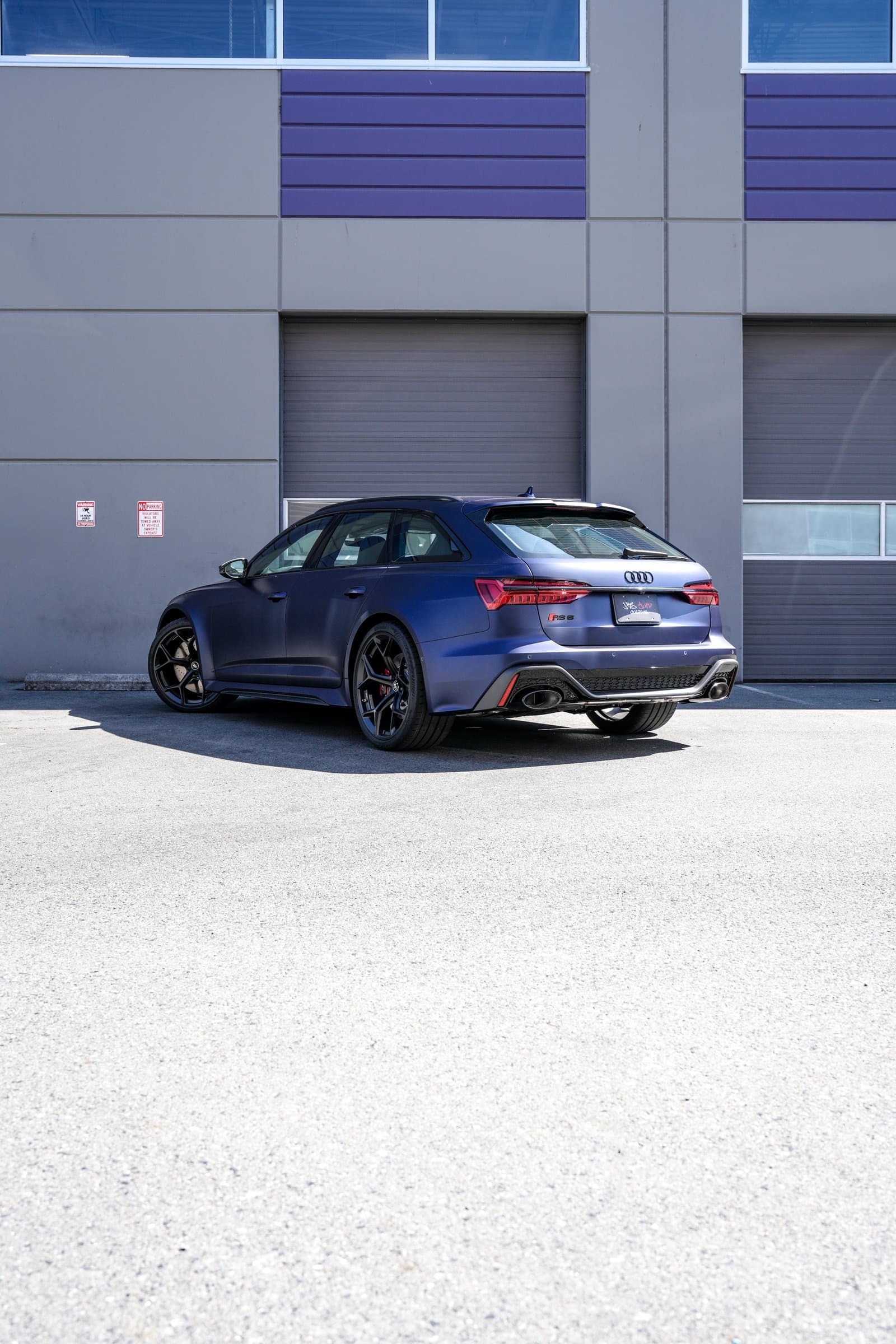
Related project: Audi RS6 Avant Matte Blue PPF