
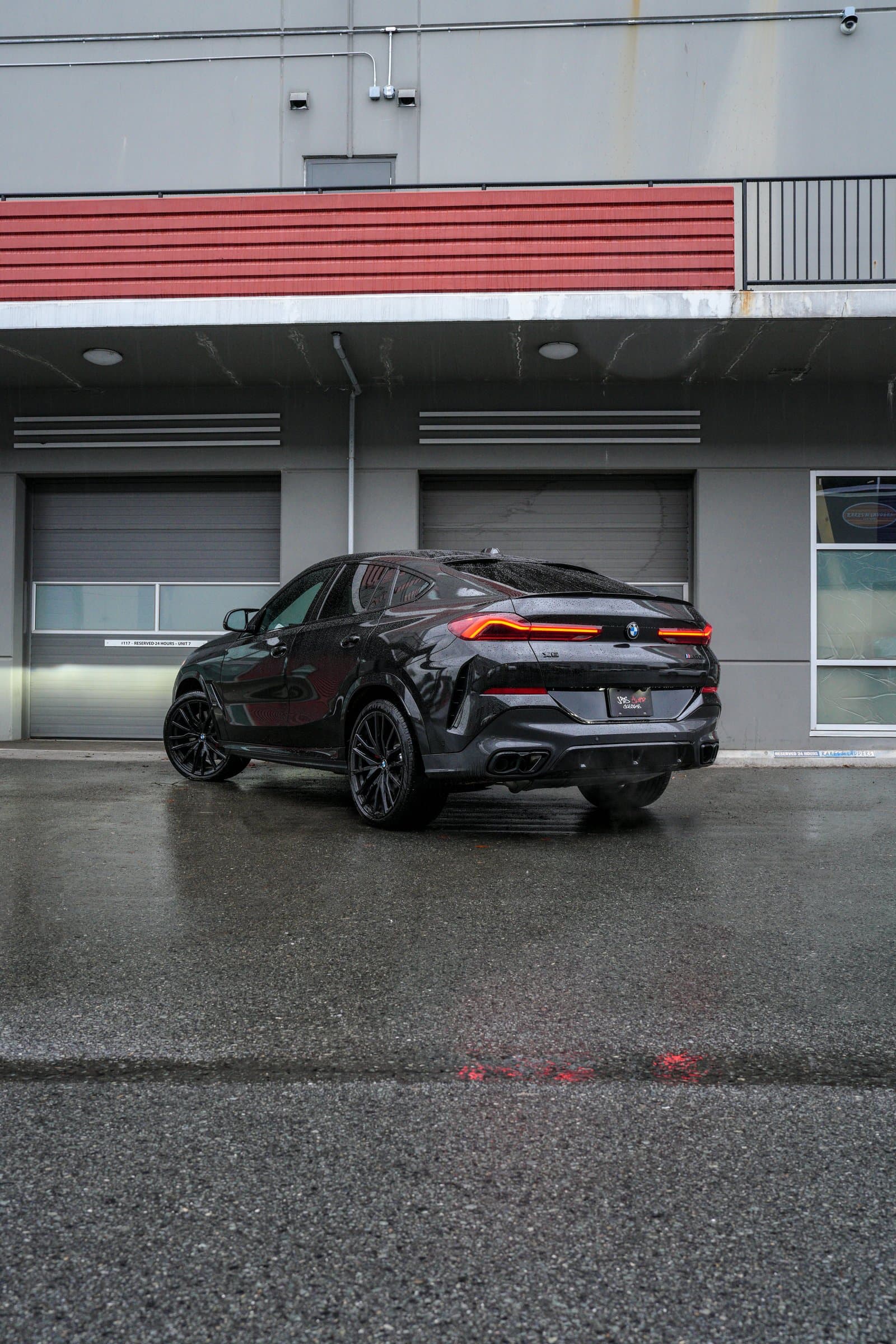
Why Black Cars Need Extra Attention in Vancouver's Climate
Published
Walk through any Vancouver neighbourhood and you will notice something: dark-coloured cars — black, dark grey, deep blue — seem to spend half their lives at the detailer. It is not that their owners are more particular. It is that dark finishes make every imperfection visible, and Vancouver's environment creates more imperfections than almost anywhere else.
If you own a black or dark-coloured car in Vancouver, here is what that means for your wash routine, your protection choices, and the kind of attention your paint actually needs.
Why Vancouver Is Harder on Dark Finishes Than Most Cities
The city receives over 1,400 millimetres of rain per year — more than double Toronto's total. Every rain event deposits mineral-rich water on your car's surface. As that water evaporates, it leaves behind dissolved solids: calcium, magnesium, silica. On a white or silver car these deposits are barely noticeable. On a deep black finish they form the white water spots that look like the car has been dusted with ash.
Vancouver's roads are also a year-round source of fine abrasives — road grit, construction dust, and winter salt all contain micro-hardness particles. When these land on a wet or dusty surface and are spread by a cloth or sponge, they create the fine circular scratches known as swirl marks. On a dark, glossy surface, a single wash with a contaminated mitt can leave dozens of visible swirls under direct sunlight.
What Swirl Marks and Water Spots Actually Do
Swirl marks are superficial scratches in the clear coat. They do not reach the base colour, but they break up the way light reflects off the surface, making a freshly washed black car look dull and hazy even when it is clean. Water spots, if left to sit, can etch permanently into the clear coat — the minerals crystallise as the water evaporates and the sharp edges of those crystals microscopically scratch the surface.
The combination is why black cars in Vancouver often look tired after just a few weeks of regular driving — and why the same car, after a proper paint correction and protection treatment, looks dramatically different.
The Wash Technique That Makes the Biggest Difference
For dark cars, the two-bucket wash method is not optional — it is essential. One bucket holds clean, soapy water. The second holds clean water for rinsing your wash mitt before you reload it with soap. Without rinsing, any grit on the mitt gets redeposited on the paint and dragged across the surface, creating the swirls you are trying to avoid.
Use a high-quality microfibre wash mitt rather than a sponge. Sponges trap particles against the paint; microfibre traps them inside the fibres. Rinse the mitt thoroughly between each panel, and do not let the wash water dry on the car — in Vancouver's mineral-rich water, drying residue adds to the water spot problem.
After washing, blot — do not wipe — the remaining water with a clean, plush microfibre drying towel. Wiping drags any remaining contamination across the paint.
Protection: What Actually Helps a Dark Finish
A ceramic coating on a black car produces the most dramatic visual result of any protection option. It fills micro-scratches with a glass-like layer, adds UV resistance, and produces a deep, wet-looking gloss that makes the colour appear richer and more uniform. It also makes the surface hydrophobic — water beads up and rolls off rather than sitting on the paint and evaporating into mineral deposits.
For black cars that already have significant swirl marks, a paint correction before applying ceramic coating is strongly recommended. The coating locks in whatever surface condition exists at the time of application — if there are already swirls under the coating, they will remain visible, just behind a glossy surface.
Paint protection film is the preferred option for owners who want maximum physical defence — PPF absorbs stone chips and road debris impact, preventing the scratches that are most visible and most irreversible on dark finishes.
What a Vancouver Detailer Does for Dark Cars That You Cannot Do at Home
Professional detailers use dual-action polishers with precision-compound pads to remove swirl marks without introducing new ones — something nearly impossible to replicate by hand on an entire car. A full paint correction on a dark vehicle at a Vancouver shop typically involves multiple stages: compounding to remove deeper defects, polishing to refine the finish, and a final IPA wipe to remove polishing oils before protection is applied.
Vancouver detailers also deal with the city's particular mineral water spot problem using deionised water rinses and targeted mineral removers that dissolve crystallised deposits without damaging the underlying clear coat.
A Realistic Care Routine for Black Car Owners
Weekly: rinse the car with deionised water or clean municipal water to remove loose contamination. Every two to four weeks: a proper two-bucket wash. Every six months: inspect for water spot etching and remove with a mineral-specific cleaner. Every one to two years: evaluate whether the paint needs a correction stage and whether protection needs refreshing.
The extra effort is real — dark-coloured cars require more attention in Vancouver than in drier cities. But the result is worth it: a deep, uniform gloss that makes any vehicle look significantly more expensive than it is. Book a dark car paint assessment with JRS Auto Customs to find out what your paint actually needs — or learn about ceramic coating options for dark finishes.
Related project: BMW X6 M60i — Metallic Black 3M Wrap