
Blackout vs Colour Change Wraps: Which Suits Your Car
Published
Choosing between a blackout wrap and a colour change wrap is not just a colour decision -- it is a statement about what you want the car to communicate and how you want it to perform in Vancouver climate. The two options have different visual effects, maintenance requirements and impacts on the car character. Here is how to think through the choice.
What a blackout wrap actually achieves
A blackout wrap -- typically gloss black, satin black or matte black -- changes the visual mass of the car without introducing a new colour. The effect is to sharpen the car lines, reduce visual clutter, and give a more aggressive, understated appearance. Blackout wraps are popular for trimming: blacking out chrome window trim, door handles, grilles and badges creates a coherent look even without wrapping the whole car.
Gloss black is the most common blackout choice. It reflects light in a mirror-like way, making the car look like it was painted. Satin black sits between gloss and matte -- it has more reflection than matte but less than gloss, giving a more textured, premium appearance. Matte black absorbs light and reads as a deliberate design choice rather than a paint alternative.
What a colour change wrap adds
A colour change wrap replaces the original colour with something fundamentally different. A white car wrapped in midnight blue, or a grey car wrapped in sunset orange, makes a different statement than the original -- it is a transformation. The contrast between the new colour and the original paint is most visible at panel edges and shut lines, which is why a quality installation includes wrapping edges into door jambs where the colour meets the original paint.
Colour change wraps work best when the new colour complements the car existing body lines rather than fighting them. A bold colour on a car with complex bodywork can look busy; the same colour on a cleaner, more angular body can look intentional and resolved.
Durability in Vancouver climate
Both blackout and colour change wraps share the same material considerations in Vancouver environment. Coastal humidity, road salt in winter, tree sap in summer and UV exposure all affect film longevity. High-quality TPU (thermoplastic polyurethane) films offer better chemical and UV resistance than older PVC materials, and hold their colour more consistently over time.
Matte black wraps require the same matte-specific maintenance as matte PPF: no wax, no polishing compounds, and cleaning with products designed for matte surfaces. A gloss black wrap tolerates a wider range of cleaning products but is more prone to showing every wash mark and water spot, so the maintenance routine matters more than it might on a ceramic-coated car.
What each choice says about the car
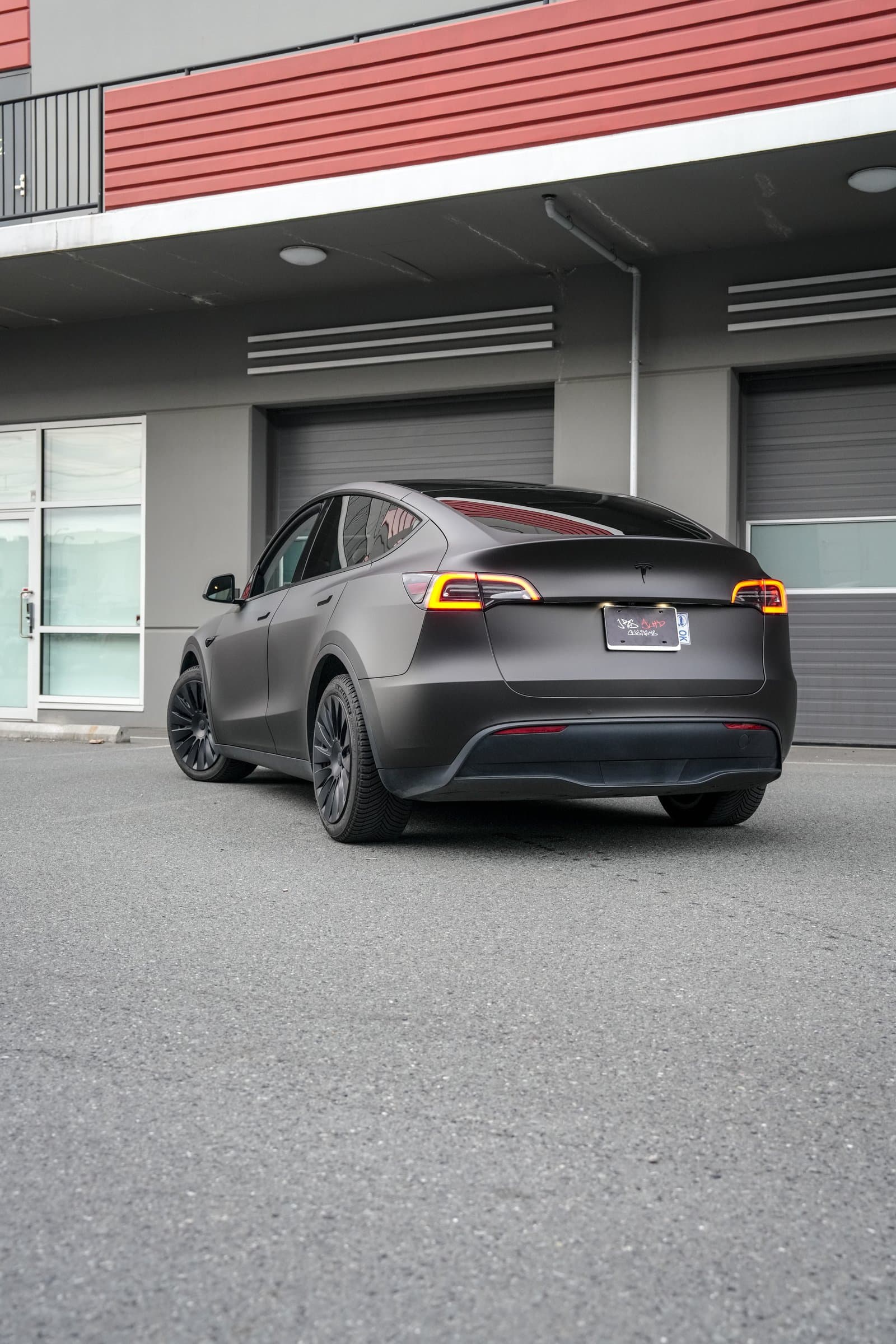
The visual effect of a blackout wrap is subtractive -- it removes visual noise and lets the car shape speak more clearly. The visual effect of a colour change is transformative -- it changes what the car is perceived to be. A Tesla in satin black reads differently than the same Tesla in gloss orange; neither is more valid, but the choice should be deliberate.
For owners who want the stealth look -- the car that looks fast even parked -- a blackout wrap is the natural choice. For owners who want their car to stand out and be noticed, a colour change opens a much wider range of options.
Can you do both?
Absolutely. A partial colour change -- wrapping the hood and roof in a contrasting colour while keeping the body in black, for example -- is a legitimate approach. A full blackout on the lower body panels combined with a colour change on the upper panels can create a two-tone effect that reads as considered rather than arbitrary. These combinations require careful planning to ensure the colour relationship works at all angles.
The installation process for both full wraps and partial wraps involves paint correction before the film goes on. Any scratch or swirl mark under the film will be visible, and the film surface follows the substrate exactly. A quality installer will address paint condition before wrapping, which is also why some owners choose to wrap a car that has accumulated minor defects rather than pay for a full paint correction.
For examples of both blackout and colour change work at JRS Auto Customs, see the colour change page. For partial wrap options and custom combinations, speak to the team about what is achievable for your vehicle.
Related project: Tesla Model Y TPU Color Change to Gloss Black