Should Your Body Kit Match Your Paint or Stay Carbon?
Published
Two Finishes, Two Very Different Cars
When you order a splitter, a set of side skirts or a rear wing, you are making a decision that goes further than how it fits. You are deciding what the part will look like for the rest of its life on the car. Most owners fall into one of two camps: paint the parts so they disappear into the bodywork and read as though the car came that way from the factory, or leave them in carbon fibre so they read as a deliberate motorsport addition. Both are legitimate. They are simply different cars, and the choice deserves to be made deliberately rather than by default.
This is a decision JRS Auto Customs makes regularly. We have been building and finishing custom cars in Vancouver since 2010, and we source, fit and paint-match aero components across a range of build styles. The carbon fibre pieces and the painted-to-match pieces arrive at our shop from the same tuner, the same brand and the same box. The only difference is what happens after they are fitted.
Here is how the two approaches actually differ, and how to work out which one suits the way you use your car.
What Raw Carbon Actually Looks Like
Carbon fibre is not a colour. It is a woven material, and what you see is the weave itself under a clear coat. When a part is supplied in raw carbon, it arrives with that visible weave and a glossy clear finish. On a dark car the weave can disappear into the paint at a distance and the part looks almost black; in daylight, at an angle, the weave pattern becomes obvious. That is the intended effect. It is the reason carbon is chosen, not a flaw.
The appeal is that the material is inherently a performance signal. It is lighter than the painted alternative and it visually separates the aero from the body, which draws the eye along the line of the car rather than letting it merge. A raw carbon splitter on a body-coloured car reads as a deliberate add-on. That is exactly what someone who chose it wanted.
There is a practical side to it as well. Vancouver's climate is genuinely hard on exterior finishes, and exposed carbon parts need their own care routine rather than the same one you would use on paint. Raw carbon can be protected and maintained, but it will never look like the car it is bolted to.
Why Paint-Matching Changes the Whole Car
Paint-matching a part means blending the fresh finish into the existing bodywork so the panel reads as one continuous surface. This is the approach that makes a coupe with a full aero package look like a factory fastback rather than a car with add-ons. It is more work, it costs more, and it is the option most owners choose when the car is a daily driver they want to keep looking coherent for years.
The hard part is not spraying the part. It is blending. A painted splitter has to be matched to the paint code, sprayed in the same base and clear, and then blended into the bumper so there is no visible edge where the two surfaces meet. Depending on the colour and the age of the existing paint, that can take real time and it needs a booth. The performance and aero service at JRS covers this because our body kit installation work includes paint matching as part of the job rather than as an extra.
The result is the thing worth understanding: a painted splitter is visually invisible as an add-on. It changes the shape of the car without announcing itself. If you want a car that looks factory, this is the only route there is.
The Practical Trade-Offs
Cost and effort are the obvious differences. Paint-matching adds material, booth time and labour, and it can add to the timeline of the whole install, since the parts have to be fitted, refinished and then possibly re-fitted. Raw carbon arrives finished from the manufacturer and can go straight on the car, which keeps a build moving and the budget focused on the parts themselves.
Maintenance is the difference most owners underestimate. Paint on a body panel can be treated with the same approach as the rest of the car, including the protection options covered in our ceramic coating service. A painted aero part still needs protection, but it behaves like the paint around it. Carbon fibre does not behave like paint. It has a different surface chemistry, it can develop a hazy or milky look under UV exposure and salt, and it responds differently to the products you would normally reach for. That difference is manageable, but it is a real difference.
Resale is the third factor and it cuts in a direction many owners do not expect. A car in body colour with matching aero reads as an original, well-kept vehicle to a buyer who does not know the history. A car with obviously aftermarket carbon reads as a modified car, and it appeals to a narrower audience that may value the modification or may simply want something stock. There is no universally right answer here, only the question of whether you are optimising for the car you want to drive now or for the car you want to sell later.
How to Decide
Start with how the car looks from twenty metres. If the shape of the kit is the point, you want it to read as part of the silhouette and paint-matching is the way to get there. If the material is the point, and you want the aero to announce itself as a performance part, raw carbon does that better than any painted finish.
Then think about the car you drive. If it lives on wet roads in winter and sees salt, a finish that can be protected with the same products as the rest of the paint is simpler to own. If the car is a weekend toy that stays clean and dry, carbon is an easier commitment.
Finally, be honest about the existing paint. Paint-matching a twenty-year-old car with faded or slightly mismatched paint is a harder job than matching fresh paint, and the more the panel has been resprayed, the less the result will be invisible. On an older car with a history of body work, a well-finished carbon part can honestly look better than a paint-matched one that is close but not quite right.
You do not have to settle this on your own. Bring the car in, talk through the look you are after, and we can tell you what is realistic for your particular panels and paint condition. If you want to see the range of what has been done, the project gallery has builds from both sides of this decision.
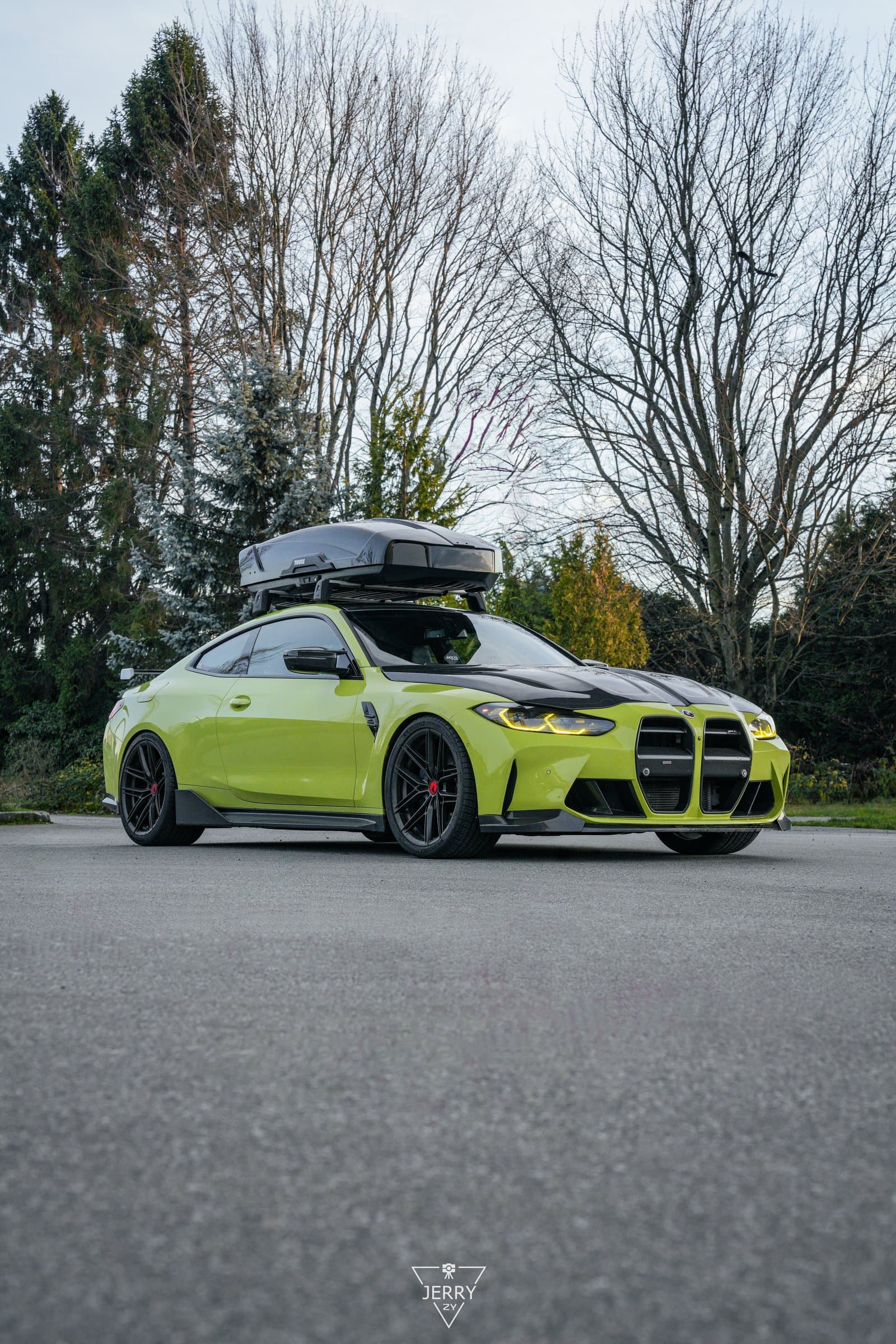
Related project: BMW M4 — Vorsteiner Wheels and Aero Kit