Bonnet Protectors and Hood Bras: Do You Need One?
Published
The front of your car takes a disproportionate amount of abuse compared to the rest of the body. Stone chips from your own tyres, grit thrown up by other vehicles, the constant low-level abrasion of highway driving — the hood accumulates the most damage over time. A bonnet protector, also called a hood bra, is a panel specifically designed to absorb that damage in place of your paint. Understanding what it covers, what it does not, and who benefits most makes the decision more straightforward.
What a Bonnet Protector Actually Is
A bonnet protector is a vinyl or polyurethane panel that adheres to the hood of your car, typically covering the area directly behind the leading edge and extending back to cover the zone most exposed to stone chips. The original versions — the hood bra — were made from heavy rubberised vinyl and had a visible, sometimes bulky appearance. Modern bonnet protectors use clear or tinted urethane films that are nearly invisible once installed.
The protection zone covers the leading edge of the hood and the flat panel area behind it — the area that receives the most direct stone impact from your own tyres on highways and on gravel-covered roads. It does not cover the bumper, the fenders, or the areas behind the front wheels. Those areas require separate protection if stone chips are a concern.
The Difference Between a Bonnet Protector and Full-Front PPF
A bonnet protector covers only the hood. Full-front paint protection film — which includes the hood, front bumper, fenders, mirror caps, and sometimes the headlight surfaces — covers a significantly larger area.
The case for a bonnet protector over full-front PPF comes down to cost and the scope of exposure. If your primary concern is the hood — the area that takes the most direct stone impact — a dedicated bonnet protector is a targeted solution at a lower cost than full-front film. If you want comprehensive protection across all the front-facing panels, full-front PPF is the more complete answer.
For Vancouver drivers who frequently tow, drive on gravel roads in the North Shore or Fraser Valley, or have had repeated hood chipping despite careful driving, a bonnet protector addresses the specific problem without the cost of protecting the entire front end.
When the Protection Is Most Worthwhile
Highway driving on the Sea-to-Sky corridor, the North Shore roads, and routes into the Fraser Valley expose your hood to more stone chip risk than city driving. The Sea-to-Sky Highway in particular — with its combination of highway speeds and winding sections through rock cuts — is one of the most punishing routes for front-end paint in the region.
Driving behind large trucks and commercial vehicles on any highway increases stone chip exposure significantly. If your regular commute or route involves extended periods behind heavy vehicles, the risk to your hood is elevated compared to light traffic conditions.
For daily drivers in dense urban Vancouver traffic, the incremental benefit of a bonnet protector is lower. Lower speeds mean less impact energy when stones are encountered. That said, if you have experienced hood chipping on your current car or a previous one, the pattern suggests your driving habits or routes expose you to more risk than average.
UV Protection: An Overlooked Benefit
The hood is one of the most UV-exposed surfaces on your car. Summer sun hitting the flat hood surface at a direct angle can accelerate paint fading and clear coat degradation in that area specifically. A bonnet protector made from a material with UV stabilisers adds a layer that reduces UV exposure on the protected area.
Over several summers, this can make a measurable difference in how evenly the hood paint ages compared to the roof and rear panels, which are less directly exposed. For vehicles with light-coloured paint — where fading and yellowing are more visible — this UV protection is a genuine benefit, not just a secondary consideration.
Installation and Appearance
Modern bonnet protectors use adhesive films that are pre-cut to the exact contours of your vehicle's hood. Installation is straightforward for a professional and takes less than an hour. The result is a near-invisible panel that only becomes apparent when you know to look for it.
Older-style hood bras — the heavy rubberised covers that wrap over the hood edge and attach with clips — are less commonly used now. They offer more robust protection for heavy-duty use but have a visible appearance that many drivers find unappealing. They remain relevant for off-road vehicles or vehicles used in commercial or industrial environments.
Pairing With Other Front Protection
Explore full front-end protection options at JRS Auto Customs
See the completed protection projects in the portfolio
A bonnet protector works well alongside other front-end protection measures. Front bumper film protects the lower bumper face and lower grille area. Mud flaps reduce the spray and debris thrown up by your own tyres. Door edge guards protect the leading edges of the doors. Together, these represent a layered protection strategy for the front end.
For drivers who want the most complete protection without a full PPF wrap, combining a bonnet protector, mud flaps, and a front bumper film is a practical middle ground that covers the most exposed areas at a lower total cost.
JRS Auto Customs can advise on bonnet protector options and installation, including pairing it with other front protection measures for your specific vehicle.
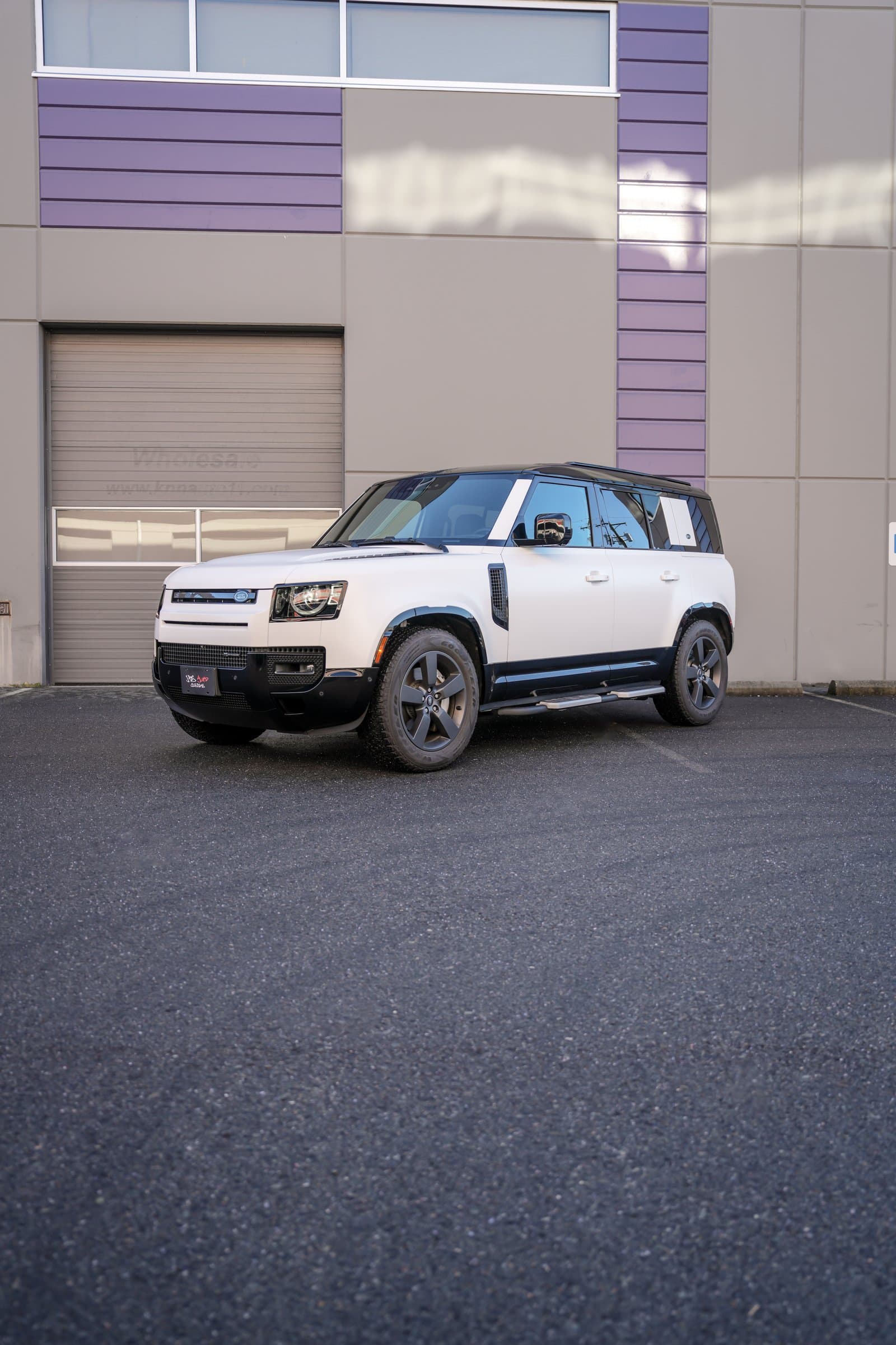
Related project: Land Rover Defender Matte White PPF