Brake and Suspension Servicing for Vancouver Roads
Published
Most drivers in Vancouver know the roads are hard on cars. What fewer people think about is how specifically hard they are on brakes and suspension — two systems that take more abuse per kilometre in the Lower Mainland than in almost any other Canadian city. Understanding what to watch for means catching problems before they become dangerous or expensive.
Why Vancouver's Roads Are Harder on Brakes and Suspension Than You Think
The combination of steep hills, frequent rain, and road salt creates a specific set of conditions for both systems. On steep descents like the approach to Lions Gate Bridge or any of the North Shore mountain roads, brakes work harder and generate more heat than on flat terrain. That repeated thermal cycling accelerates wear on brake pads and can cause discs to develop hot spots, warping them over time.
Road salt compounds the problem. Salt residue settles on brake rotors and caliper hardware, and if it is not rinsed off regularly, it corrodes the surfaces that need to move freely. Corroded caliper slide pins cause uneven pad wear — one side of the car brakes harder than the other, which you feel as a pull to one side when you apply the brakes. Salt also attacks suspension components, eating into exposed hardware and rubber bushings and shortening their service life.
The roughest road surfaces in the Lower Mainland are found on construction detours, rural routes in the Fraser Valley, and sections of highway that have been patched multiple times. Each sharp edge and sudden dip loads the suspension with an impulse force that rubber bushings absorb. Over thousands of kilometres, that cumulative wear shows up as play in the steering, a clunking noise over bumps, or a change in the way the car sits and handles.
What Specific Components Need Attention in Vancouver
Brake rotors and pads wear faster in Vancouver than in drier climates. The combination of moisture, salt, and frequent short trips — where the brakes never fully heat up to burn off moisture — means corrosion builds up on rotor surfaces between drives. That surface rust is normal and mostly harmless, but it accelerates pad wear if the brake system is not used regularly enough to keep the rotors clean.
Brake caliper slide pins — the pins that allow the caliper to move as the pad wears — are a common failure point in coastal cities. They rely on grease to slide freely. Salt water gets into the pin boots, washes the grease out, and the pin corrodes or seizes. When a slide pin seizes, the caliper can no longer retract the pad fully, meaning the pad drags against the rotor continuously. That causes premature pad wear, overheating, and a noticeable smell after a long drive.
Suspension bushings — rubber mounts that isolate metal components and reduce vibration — deteriorate faster in wet climates. Exposure to road salt, water, and oil degrades the rubber, causing it to crack and harden. When bushings fail, the driver notices increased road noise, a vague or loose feeling in the steering, and often a knocking sound over larger bumps. Control arm bushings, strut mounts, and sway bar end links are the most commonly affected on Lower Mainland vehicles.
Shock absorbers and struts wear out gradually, and many drivers adapt to the changing feel without noticing it. The tell-tale signs are increased body roll in corners, longer stopping distances, and the car continuing to bounce after hitting a bump. If you have not had the shocks checked in more than 80,000 kilometres, it is worth having them assessed — especially before winter, when wet roads and heavy braking demand more from the suspension than dry summer driving.
What Servicing Involves and When to Book In
A brake service at JRS Auto Customs covers inspection of the full system: rotor condition, pad thickness, caliper operation, line integrity, and fluid condition. Caliper slide pins are cleaned and re-greased as standard practice. If a rotor is below minimum thickness or has hard spots, it is flagged and quoted separately from any pad replacement.
Suspension servicing involves inspection of shock absorbers, struts, all visible bushings, and steering linkage. The technician checks for play, binding, and signs of fluid leakage. Bushing condition is assessed visually — cracked, hardened, or missing bushing material is noted. The inspection takes time, and the quote is based on what is actually found, not a flat rate.
Suspension components are interconnected, and replacing one worn part without addressing others can shift the load and accelerate wear elsewhere. JRS Auto Customs handles both brake and suspension servicing as part of its maintenance offering. If you have noticed any of the symptoms described above — pulling under braking, a clunk over bumps, or a change in how the car handles — book an inspection before the problem compounds.
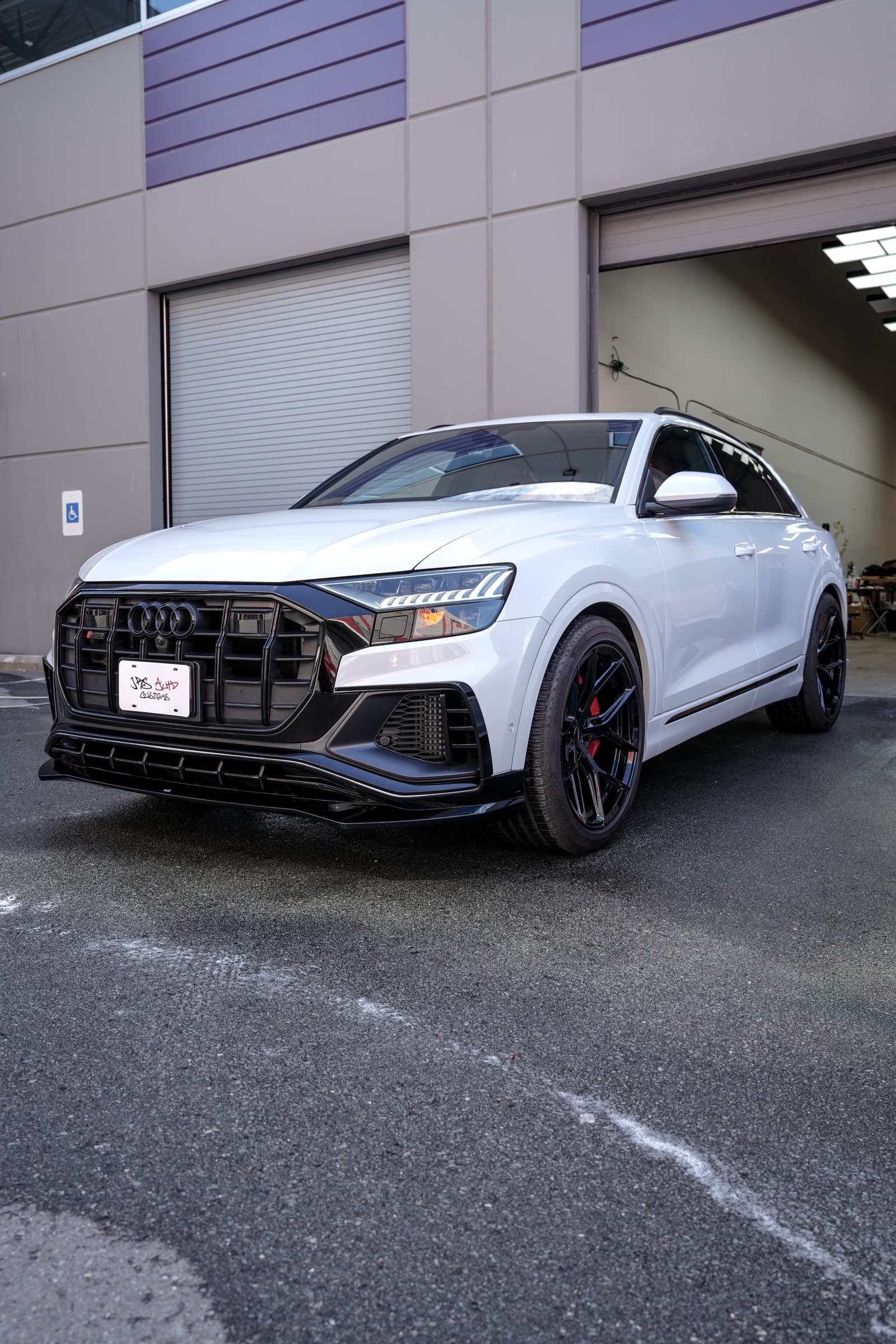
Related project: Audi SQ8 ABT Body Kit & Vossen HF5 Wheels