Branded vs Generic Aero Kits: Why the Brand Matters
Published
Not All Aero Kits Come From the Same Place
There are two entirely different kinds of aero parts, and from the outside they can look identical. One is a component engineered and manufactured by a known tuner brand, sold through a proper distribution network, and fitted by a shop that works with that brand regularly. The other is a part made to fill the same gap in the same market. They arrive in similar boxes and they bolt to the same mounting points. The difference shows up later, in the fit, in the finish, and in how the car looks after two winters.
This is worth sorting out before you spend money rather than after, because the price difference between the two is not always large, and the difference in the outcome usually is. Our performance service sources, fits and paint-matches aero components for every build style, and it names the relationships it works through: authorized installers for ABT, Vorsteiner and Revozport, plus a partnership that gives us access to dozens more, from Varis to Liberty Walk. That is not a list of logos on a wall. It means there is a route back to the manufacturer when something needs replacing, and someone on their side who knows the part.
What the Brand Actually Buys You
Start with the shape. A branded aero component is designed for a specific car, and the surfaces are built to follow the body lines rather than to look aggressive in isolation. That means the splitter sits against the bumper the way the original bumper was drawn, the side skirts follow the rocker, and the diffuser closes off the space underneath. When a part is shaped to a generic curve instead, it is usually the shut lines and the wheel arch gaps that give it away. We have covered what a kit does to a car in our aero kit guide, and the fit is where most of that effect lives.
Then there is the material and the finish. Carbon fibre parts are a woven structure under a clear coat, and a generic version of the same part uses less of it, or a thinner mould, or a filler where a structural layer should be. You may not see that on the day it is fitted. You see it on the car a year later, when the finish has dulled unevenly or the edge has started to crack. Our guide to carbon fibre parts covers how the material differences show up in practice.
There is also the practical point about fitment. A branded part is designed around the mounting points of a real car, so it uses the factory fixings and sits correctly against the body. A generic part may need adapting, and adapting is where gaps and uneven lines come from. Our article on aero kits on Vancouver streets covers what happens when the fit is not right, and it is not a small detail. A kit that is fitted badly looks worse than no kit at all.
And then there is support, which is the part people forget to ask about. If a lip arrives chipped, or a splitter needs replacing after a kerb strike, or you want a second car in a different colour, the difference between a manufacturer you can go back to and an anonymous listing is enormous. Our aero kit care guide covers what protecting the work involves once it is on the car, and much of that advice starts with the fact that some parts can be replaced and others cannot.
Two Examples From the Shop
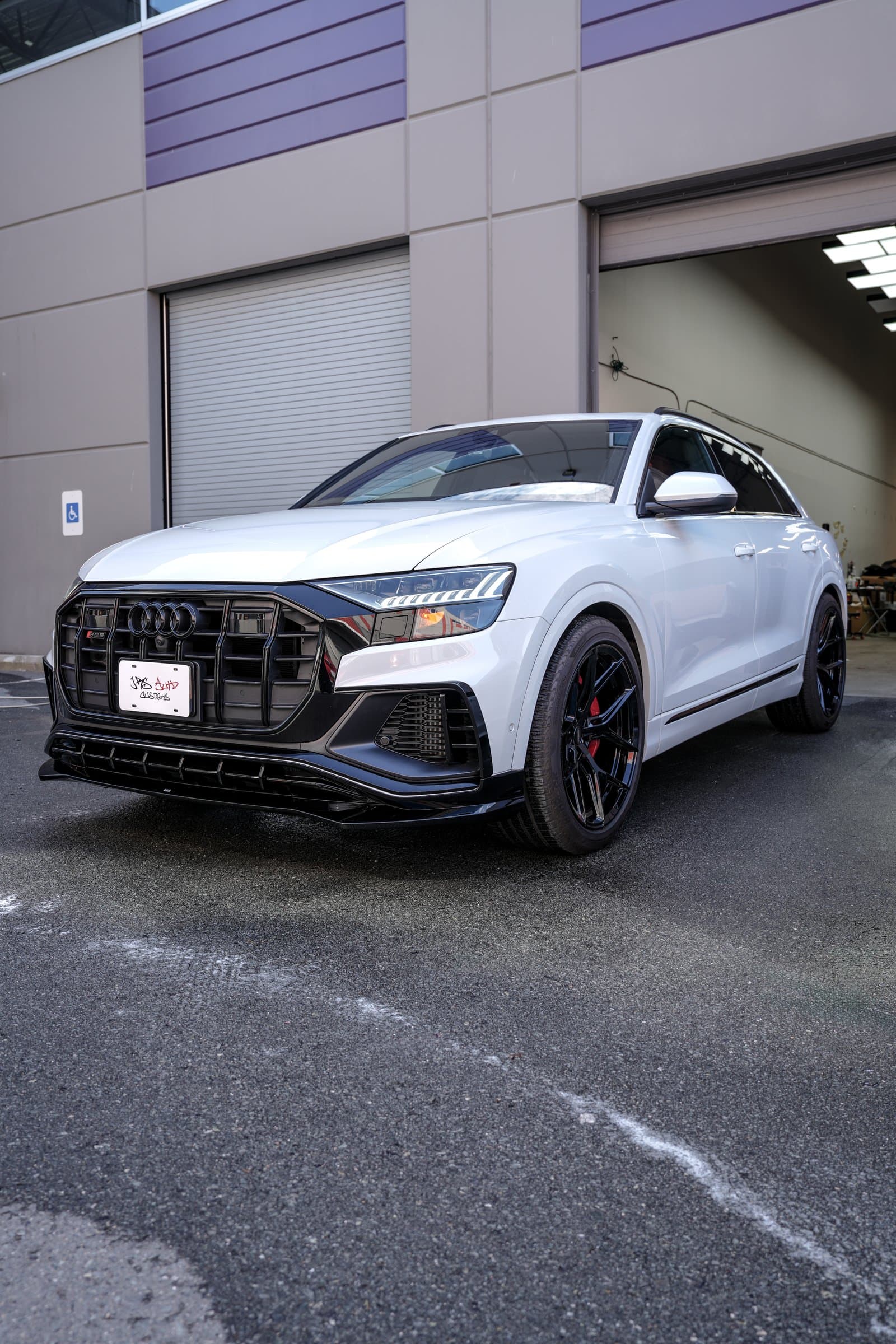
On an Audi SQ8 we fitted an ABT body kit alongside Vossen HF-5 wheels. The ABT elements are what sharpen the silhouette, and the wheels anchor the stance underneath. That combination is the point: the aero changes the shape of the car and the wheels change how it sits, and neither works as well on its own. The project is in our portfolio if you want to see how a branded aero package reads on a road-going SUV.
On a BMW X3 M40i we fitted a Maxton Design aero kit. The description in the project file is that the European-styled front splitter, side skirts and rear spoiler add motorsport visual credibility to a compact M Performance model. That is a different brand and a different answer to the same question, and it is in the portfolio as well. Two brands, two builds, one consistent approach: the part should be designed for the car.
How to Tell What You Are Buying
When you ask a shop for a quote on aero work, the useful questions are specific. Ask who manufactured the part. If the answer is a brand you have heard of, and the shop can tell you how they order it, that is a good sign. Ask how the part is finished, and whether the finish is painted in the same booth as the rest of the car or sprayed separately. Ask what happens if the part needs replacing, and whether that is possible.
Our wheels and fitment service handles fitment, and the same conversation applies there. The reason a brand matters is the same reason it matters for wheels: it is not about the badge, it is about whether the part was made for your car and whether someone is accountable for it afterwards. Ask about the offset, ask about the centre bore, and ask where the fitment was checked. If the answer is that it was checked on a vehicle in front of you, that is a good answer.
What to Do With the Rest of the Build
Aero is never the whole car, and the parts around it matter as much. A splitter changes the shape of the front of the car but does nothing for the paint, and if the front bumper is going to take the road debris, the front of the car is where a protection decision belongs. We install paint protection film and it is worth reading about the trade-off between film and a wrap before you commit to either.
The same applies to the finish. If the car is going to be wrapped rather than painted, the aero parts and the wrap have to be planned together, because a painted carbon part and a wrapped panel read very differently under the same light. Our colour change service handles that kind of matching routinely, and it is the conversation to have before the parts are ordered rather than after they are on the car.
The last thing worth asking is whether the brand is worth it for the car you own. For a car that sees a lot of highway kilometres and gets driven hard, a well-engineered part that fits properly and can be replaced is usually easier to live with than a cheaper one that has to be made to fit. For a show car that rarely moves, the visual argument may lead. Either way, the useful habit is the same: find out who made the part before you find out what it costs.
Related project: Audi SQ8 ABT Body Kit & Vossen HF5 Wheels