
Caring for Black Wheels: Brake Dust and Bad Cleaners
Published
Dark wheels look sharp when they are clean. They also show every mistake. A silver rim can hide a little neglect; a black wheel shows brake dust, hard water spots and the wrong cleaner within a day of washing. If your car wears dark or gloss black wheels, the way you clean them matters more than the products you buy.
The good news is that most dark wheels can be brought back with the right process. The bad news is that a few common habits are what put them in a bad state in the first place. Here is what actually goes wrong, and what to do about it in our climate.
Why brake dust is different from ordinary road grime
Brake dust is not just dirt. When the pads meet the rotor, the friction creates a fine metallic dust that bonds to the wheel surface through heat and moisture. Once it is on there, ordinary soap will not shift it, and a gritty sponge will spread it around and scratch the clear coat at the same time.
This matters in Vancouver more than it does in a dry climate. Winter road salt and rain both carry contaminants onto the wheel face, and the salts stay on the surface until you wash them off properly. A wheel that has been through a wet season without a decontamination step is working with a layer of bonded grit every time you drive.
The fix is chemical and deliberate rather than aggressive. A wheel-specific iron remover is what actually dissolves the metallic particles, and it needs dwell time and agitation to work. The common mistake is reaching for a heavier abrasive instead, which clears the dust and takes the finish with it.
The cleaner that ruins the finish
This is where most dark wheels get damaged, and it is worth being specific about. A wheel is a coated surface. Gloss black, satin black and matte black are three different finishes, and household cleaners and strong alkaline wheel cleaners are formulated to break down grease and road film quickly. On a dark finish they can leave a dull, hazy film that no amount of rinsing will shift, and on satin or matte they can permanently change the appearance of the surface.
The appearance you get depends on the coating, and the most reliable way to know how your wheel will respond is to test a small section first, out of sight, and let it fully dry before you commit to the whole face. From there, the rule of thumb is simple: use products intended for the finish, keep them off the tyre sidewall, and give the wheel face a rinse and dry before the product fully dries.
If your wheels have already gone hazy and you are not sure what the finish underneath is like anymore, a professional assessment is cheaper than replacing a set of wheels. Ourwheels and rims servicecovers cleaning, coating and protection for dark and gloss finishes.
Salt, rain and the off-season problem
Vancouver gives black wheels a specific set of problems. Between November and March the roads carry salt, and that salt film will etch the surface if it sits through repeated freeze and thaw. In the wet season the same wheel collects a fine mist of road film that dries into spots with each dry spell. Spring is usually when owners notice that the wheels have gone from dull to genuinely hazy.
The timing that works is to deal with the salt before the season starts rather than in the middle of it. Wheels that come in clean at the end of winter stay far easier to maintain through the summer, because there is no bonded layer for road film to grab onto. If you are rotating seasonal tyres, that visit is a natural moment to have the wheels looked at properly while they are already off the car.
Ourtires servicehandles seasonal fitment, and we can assess the wheel condition at the same time, so a swap does not turn into two separate errands.
Protecting the finish once it is clean
Once a wheel is genuinely clean, the question is how to keep it that way. For gloss black, a sealant gives the surface some resistance to brake dust and road film, which shortens the next cleaning session. Satin and matte finishes cannot be made glossier without changing how they look, so they need protection that preserves the flat, low-sheen appearance instead.
If the wheel faces are sound and you want longer-term protection across the car, a ceramic coating on the wheels is a reasonable step, and it works alongside a coating on the body rather than instead of it. Ourceramic coating servicecovers the vehicle as a whole if you are deciding what the next level of protection should look like.
JRS Auto Customs has been working on cars in Vancouver since 2010. If you are not sure whether your wheels need a clean, a correction or simply a good wash, the honest answer is usually the simplest of the three, and we will tell you which one that is.
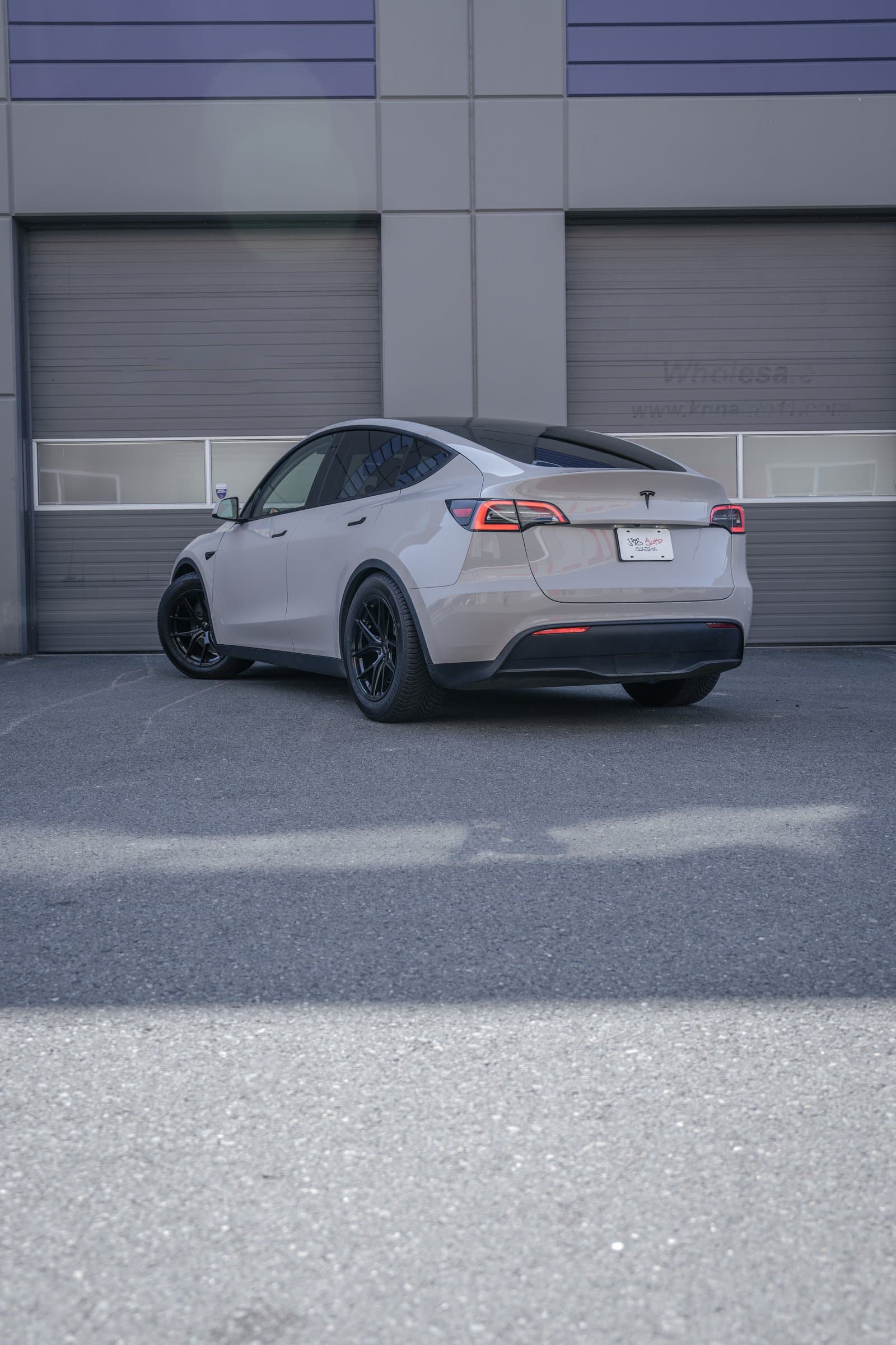
Related project: Tesla Model Y — Chalk Grey Color Change with Black Wheels