
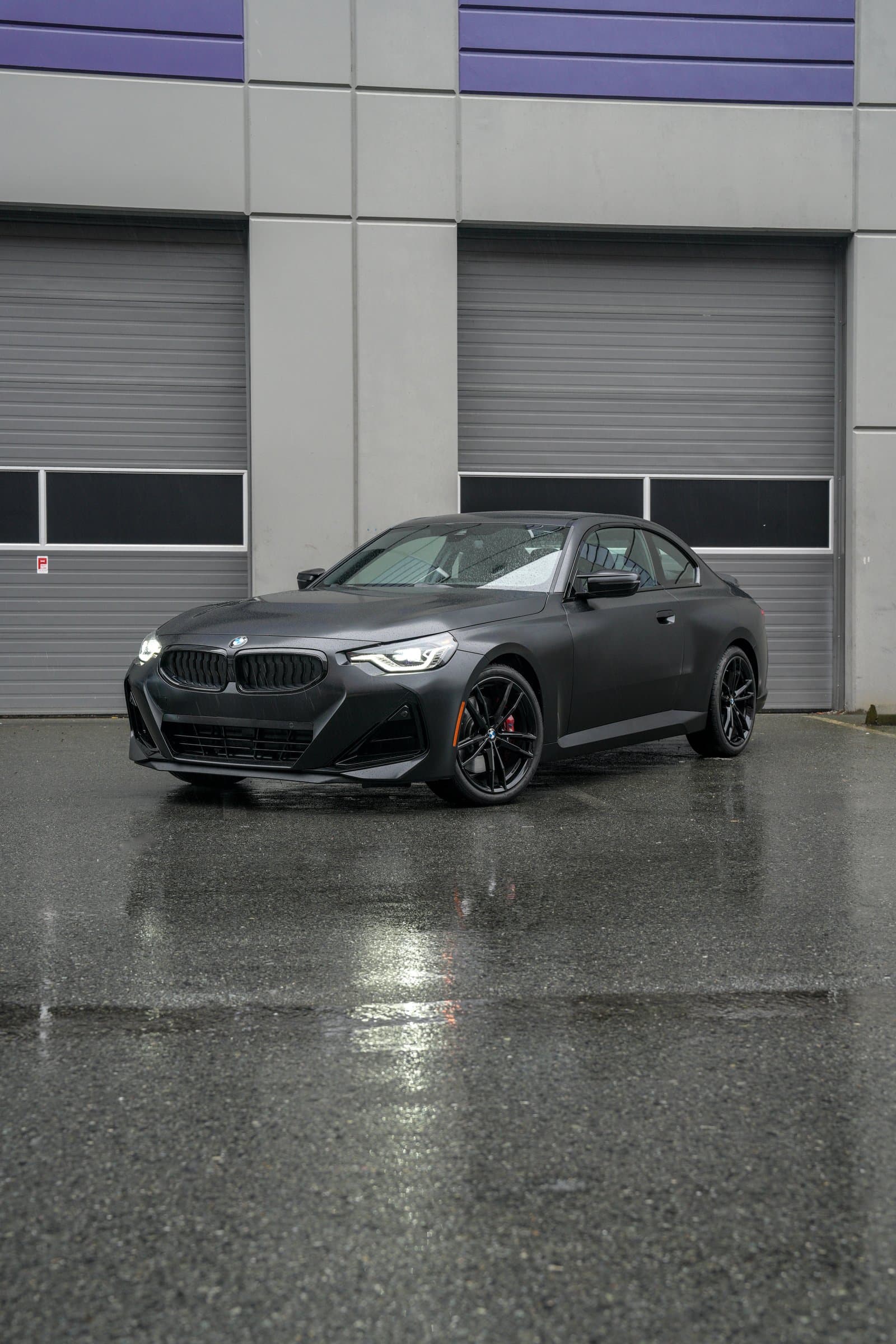
Ceramic Coating on Matte Paint: What Vancouver Drivers Need
Published
Matte paint demands a different approach to protection and care. The surface that makes a car look distinctive also behaves differently from gloss paint in ways that affect how you wash it, protect it, and correct defects in it. If you have a matte-finish car and are considering ceramic coating, the decision involves more than just finding a shop that offers the service.
What makes matte paint different from gloss
A gloss paint surface is flat and smooth at the microscopic level, which is what gives it its shine and allows compounds and polishes to cut evenly across the surface. Matte paint has a microscopically rough texture -- the surface is intentionally non-reflective, which is what creates the flat appearance. That texture is structural: it is not a surface coating that can be stripped away. Because the matte surface is the actual paint layer, correcting a scratch or oxidation on matte paint is not the same process as on gloss paint. Conventional cutting compounds and polishers remove material to level the surface -- which on matte paint removes the texture itself and leaves a shiny spot. Matte paint correction requires specific matte-safe compounds that blend the surface without restoring gloss.
The practical consequence is that defects on matte paint are harder to fix than on gloss. A stone chip on gloss can be touched up and blended. A stone chip on matte paint requires a specialist approach to avoid creating a glossy spot at the repair site. This is one of the reasons paint protection film is a common choice on matte-finish vehicles -- it preserves the texture by keeping impact away from the paint surface.
What ceramic coating does and does not do on matte paint
Ceramic coating on matte paint works differently from how it works on gloss. On gloss paint, ceramic coating adds gloss and creates a hard, slick surface that repels water and contamination. On matte paint, the ceramic coating adds a durable chemical barrier without restoring the gloss that matte intentionally lacks. The result is protection that preserves the matte texture while adding chemical resistance and hydrophobic properties.
What ceramic coating does not do on matte paint is correct existing defects. Applying ceramic coating over scratches, water spots, or oxidation does not hide them -- it seals them under a durable layer and makes them permanent. Any paint correction needed on matte paint must be completed before ceramic coating is applied. This is true of ceramic coating on any surface, but it is more consequential on matte paint because the correction process is more specialized.
PPF, ceramic, or both on a matte-finish car
Paint protection film and ceramic coating address different risks. PPF provides impact protection -- it absorbs stone chips, abrasion, and contact damage before it reaches the paint. On a matte-finish vehicle, PPF with a matte texture finish preserves the original appearance while adding a physical barrier. TPU-based PPF also has self-healing properties where light surface scratches warm out with heat.
Ceramic coating addresses chemical contamination -- road salt, bird droppings, sap, mineral deposits from water, and the general accumulation of contamination that bonded to the paint surface. It makes the surface easier to wash and reduces the likelihood of etching from acidic contamination.
For a matte-finish car that is used as a daily driver in Vancouver, the combination of PPF on the high-impact areas -- front end, door edges, mirror caps -- and ceramic coating over the full vehicle gives the most complete protection. PPF handles stone chips; ceramic handles chemical contamination and makes the whole car easier to maintain. Some owners choose one or the other depending on their budget and usage pattern.
Vancouver-specific considerations for matte-finish cars
Vancouver's climate creates specific challenges for matte paint. Coastal humidity and frequent rain mean matte-finish cars are exposed to more moisture and road splash than in drier climates. Road salt through winter settles on every surface including the roof and hood, and if not washed off it accelerates the degradation of the clear coat layer that sits under the matte texture. On a matte-finish car, salt deposits are more visible on the flat matte surface than on gloss, which makes the maintenance urgency more apparent -- but also more noticeable when it has been neglected.
UV exposure in summer is another factor. Matte paint that is regularly parked outdoors will accumulate UV exposure over years, and the clear coat layer under the matte texture degrades with UV just as it does on gloss paint. A ceramic coating adds a layer of UV protection that slows this degradation. The matte texture itself is not affected by UV in the same way, but the underlying clear coat is.
Washing a matte-finish car also requires specific care. Standard car wash soaps with gloss-enhancing additives leave a residue that is more visible on matte surfaces. Matte-safe wash products are formulated without those additives and are the correct choice for any matte-finish vehicle, whether it has ceramic coating or not. A ceramic coated matte car still needs to be washed with a matte-safe product -- the coating does not change the wash chemistry requirement.
When to consider ceramic coating on a matte-finish car
Ceramic coating makes most sense on a matte-finish car when the paint is in good condition, the car will be kept for more than two or three years, and the owner wants to reduce ongoing maintenance effort while adding chemical protection. If the car is being sold within a year or two, the cost of ceramic coating is harder to justify against the time the car will spend in the owner's possession.
The condition of the paint before coating matters more on matte than on gloss. Any existing defects -- scratches, water spots, oxidation -- need to be addressed with matte-safe correction before the coating goes on. JRS Auto Customs can assess the condition of your matte-finish paint and advise on whether correction, ceramic coating, or PPF is the right starting point for your car.
For details on ceramic coating and paint protection options for matte-finish vehicles at JRS Auto Customs, see the ceramic coating service page.
Related project: BMW M240i Matte PPF Protection