
Ceramic Coating Over PPF: Is the Combination Worth It
Published
Paint protection film and ceramic coating are often discussed as alternatives — one or the other. But in practice they work well as a combined system. Applying a ceramic coating over PPF is a real option that many installers offer, and for Vancouver drivers it addresses a set of conditions that neither product handles fully alone. Here is how the combination works and whether it makes sense for your car.
What Each Product Does on Its Own
PPF is a physical barrier. It sits on top of your paint and absorbs the impact energy from stone chips, road debris, and abrasion. Its primary job is preventing physical damage — a chip, a scratch, a key mark. PPF is also hydrophobic and self-healing to a degree, which helps it stay looking good through minor abrasion. The trade-off is that the top surface of standard PPF is a urethane film that is functional but not as smooth or glossy as a properly coated paint surface. Over years, the PPF surface can look slightly dull compared to bare ceramic-coated paint.
Ceramic coating is a chemical bond with your paint surface. It does not add a physical layer — it changes the surface chemistry of whatever it is applied to, creating a hard, hydrophobic, chemically resistant surface. Its strengths are chemical resistance, ease of cleaning, UV stability, and gloss. It does not stop a stone chip. If a piece of gravel hits your paint through a ceramic coating, the damage goes to the paint.
Why the Combination Is More Than the Sum of Its Parts
When ceramic coating is applied over PPF, the ceramic bonds to the PPF surface rather than the paint. This changes the surface energy of the film: the hydrophobic effect of the ceramic coating makes the PPF easier to clean, reduces water spot formation, and adds a layer of chemical resistance to the top of the film. The PPF underneath still does its job of absorbing physical impacts. The ceramic on top improves the gloss, makes washing easier, and protects the PPF surface itself from chemical contaminants like road salt and bug splatter.
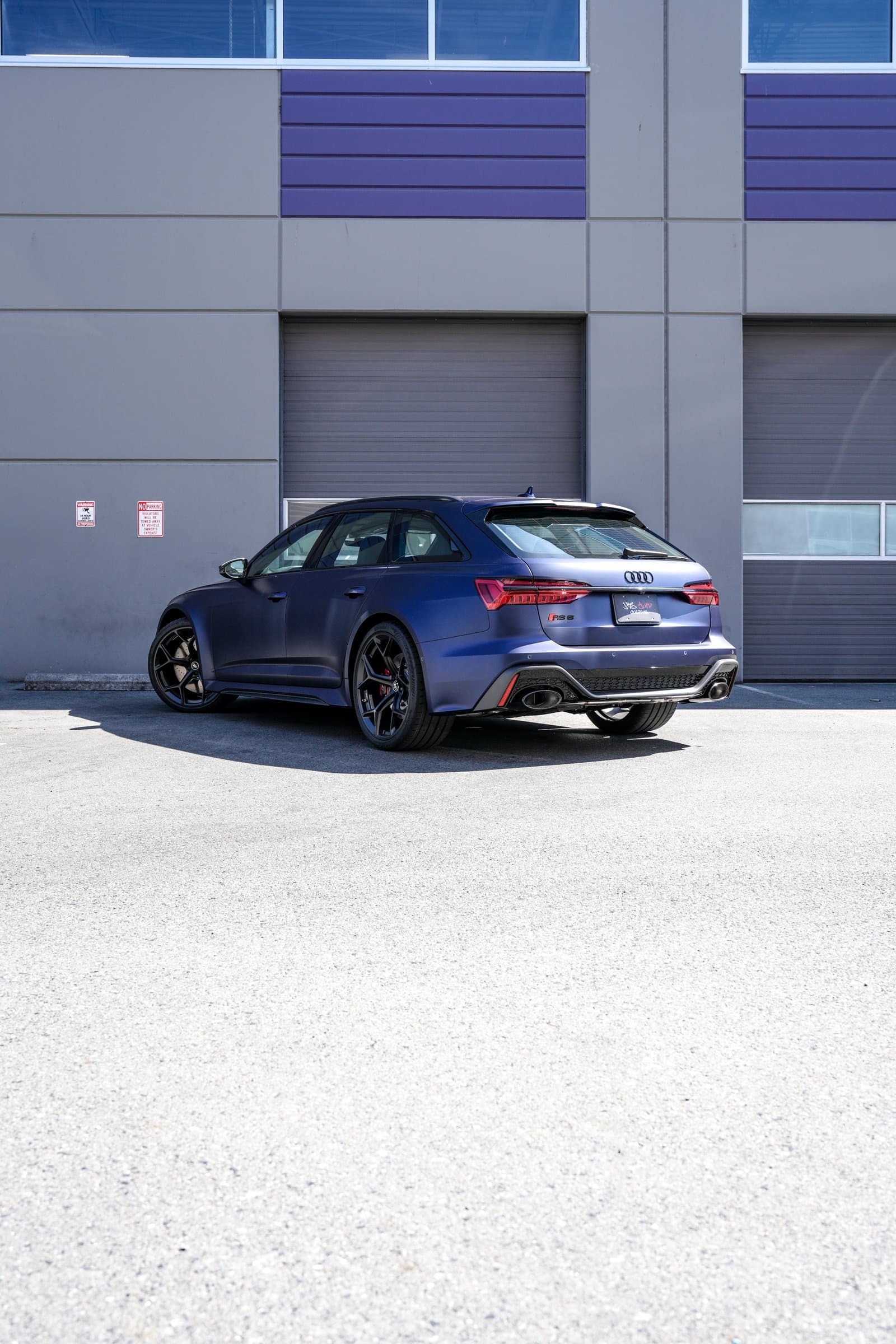
The combination is particularly well suited to Vancouver conditions. The PPF handles the stone chips and road debris that winter driving on Highway 1 and local arterial roads produces. The ceramic coating over the top helps the film shed road salt and water more effectively, reducing the staining and discolouration at edges that can affect PPF over a long winter season. The gloss benefit is real on matte PPF in particular: a ceramic coating over matte film adds a satin-level sheen without losing the matte aesthetic.
What the Installation Process Looks Like
The order matters. PPF is applied first, fully cured, and then the ceramic coating is applied over the top. The PPF surface must be properly prepared before the ceramic is applied — this means a thorough decontamination wash to remove any surface contaminants from the film, followed by an isopropyl alcohol wipe-down to ensure the surface is clean and slightly activated for bonding. The ceramic coating then cures onto the PPF in the same way it cures onto paint: controlled temperature, controlled humidity, appropriate dwell time. This is not a job for a single afternoon. A proper installation takes multiple days to allow each layer to cure fully before the next step begins.
What the Combination Costs Compared to Each Alone
It costs more than either product on its own, because you are paying for the labour of both: PPF installation plus ceramic coating application over the top. For a full-body PPF install, adding ceramic coating over the film is a meaningful additional cost. For a front-only PPF package, adding ceramic coating over the film on the front panels brings the two products together on the most exposed areas. The right configuration depends on how you use the car, where it is parked, and how long you plan to keep it. There is no single right answer for every vehicle.
Is It Worth It?
For a daily driver in Vancouver that is parked outside most of the year, the combination makes strong practical sense: PPF protects against the physical reality of Metro Vancouver winter roads; ceramic coating keeps the PPF surface clean and looking its best through the season. For a garage-kept vehicle with low annual mileage, one product alone is likely sufficient. The question to ask is not which is better — it is which combination matches how you actually use the car.
JRS Auto Customs in Vancouver has applied both PPF and ceramic coating as standalone services and as a combined system since 2010. If you are considering the combination for your vehicle, get in touch to discuss the specifics of your car and usage. See PPF packages and ceramic coating options at JRS Auto Customs.
Related project: Audi RS6 Avant Matte Blue PPF