
Ceramic Coating Seasonal Maintenance Schedule for Vancouver
Published
A ceramic coating on your vehicle is one of the most durable protection investments you can make — but it is not a set-and-forget product. Vancouver's four distinct seasons each stress a ceramic coating differently, and matching your maintenance routine to the season is what keeps the coating performing and extends its lifespan as long as possible.
How Vancouver's Seasons Differ in What They Do to a Ceramic Coating
Spring in the Lower Mainland brings cool, wet weather and high pollen counts. Pollen adheres to a hydrophobic ceramic surface and, if left to dry in sunlight, can leave marks that require a wash to remove. Rain during spring is your coating's friend — it sheets off and carries loose contaminants with it — but standing water from slow evaporation in cool temperatures can leave mineral residue from BC tap water.
Summer brings intense UV exposure on clear days and occasional acid rain events from Pacific storm systems. UV is the primary driver of ceramic coating degradation over time. Vehicles parked outdoors in the North Shore or exposed parking lots receive the most UV stress. Acid rain events, while infrequent, can temporarily affect the surface chemistry of an uncoated top layer.
Autumn is the most important maintenance season for ceramic-coated vehicles. Falling leaves, tree sap and the beginning of road salt use create a build-up risk. A thorough decontamination wash before winter is the single most effective step a coated vehicle owner can take to protect the coating through the harshest season.
Winter is the most damaging season for any vehicle surface in Vancouver. Road salt, calcium chloride brines used on mountain highways, and the wet-salt slurry that coats vehicles during ferry queue waits all challenge a ceramic coating's chemical resistance. The hydrophobic properties of a coating are genuinely useful here — they make salt slurry less likely to bond — but the coating still needs regular washing to remove accumulated salt before it dries and leaves corrosive residue.
Spring: Refresh, Inspect and Restore
After winter, your ceramic coating has survived the harshest conditions. Start with a thorough wash using a pH-neutral shampoo formulated for ceramic coatings — not an all-purpose car wash, which can contain surfactants that strip topping products. A foam cannon and a two-bucket wash method reduces the risk of introducing new scratches during the wash process.
Inspect the coating under good light — fluorescent workshop lighting or direct sunlight reveals areas where the hydrophobic beading may have weakened. If beading is inconsistent across panels, a topper product applied in spring restores the surface chemistry and extends the coating's performance. JRS Auto Customs offers a ceramic coating maintenance inspection as part of its service offering, where the team assesses each panel and advises on whether a topper reapplication is needed.
Spring is also the right time to address any winter glass contamination. Use a dedicated glass polish or iron removal product on the windscreen and windows before the coating is re-topped, so contaminants do not get sealed under the fresh topper layer.
Summer: Protect Against UV and Maintain Cleanliness
The most important summer maintenance step is washing frequency. In hot, dry summer weather, vehicles parked under trees attract pollen and airborne contaminants that bond to the coating surface. Washing every one to two weeks during summer prevents these from baking onto the coating in direct sunlight. A touchless Rinse-less wash or a proper two-bucket method is appropriate; automatic car washes should be avoided on ceramic-coated vehicles because the brushes can introduce micro-scratches.
UV exposure over summer months accelerates the degradation of any silica-based or SIO2 topper layer. Vehicles with a dedicated topper product — applied seasonally — should have the layer refreshed before summer UV peaks, typically in May or early June. The coating itself is UV-stable, but topping products degrade faster and replacing them before peak summer ensures continuous protection.
Autumn: Decontaminate Before Winter Arrives
Before road salt season begins, a full decontamination wash removes embedded iron particles, tree sap, pollen and the general build-up of a summer's driving. An iron-removal product applied to the paint surface dissolves ferrous contamination that a standard wash cannot shift. This step is critical: road salt bonds more readily to contaminated surfaces, and any contamination under a fresh topper later will be sealed in.
Apply a fresh topper layer after decontamination — this gives the coating the best possible hydrophobic performance going into winter. Hydrophobic surfaces cause salt brine to bead and sheet off rather than sitting on the paint, which reduces the corrosive contact time considerably.
Winter: Maintain the Coating Through Salt Season
The core winter maintenance habit for any coated vehicle in Vancouver is regular washing with a dedicated ceramic-safe shampoo. Removing road salt before it dries is what prevents the coating from being overwhelmed by accumulated chloride compounds. A touchless wash at a self-serve bay, followed by a proper hand dry with a microfibre towel, is the most practical approach for many Vancouver drivers between full detail appointments.
Do not use a pressure washer close to the paint surface at close range — the high-pressure stream can lift edges of any previously applied topper product. Keep the wand at a shallow angle and maintain distance.
When the temperature is near freezing, avoid washing the vehicle outdoors — water will freeze on trim, glass edges and door seals. A touchless wash bay at a sheltered location is the right approach in cold weather.
Year-Round Habits That Extend a Ceramic Coating's Life
Regardless of season, a few practices apply universally. Never use a conventional car wash that contains abrasives or aggressive surfactants on a ceramic-coated vehicle. Dry with clean microfibre towels rather than chamois or synthetic drying aids, which can drag contaminants across the paint. Inspect the coating's beading behaviour every few weeks — when beading weakens noticeably, it is time to reapply a topper layer.
If the coating has suffered impact damage — a deep stone chip that penetrated to the primer, or an area where a bird dropping etched the surface — those spots will not recover and will need localised paint correction before the coating or topper is reapplied. Do not apply topper products over damaged paint.
JRS Auto Customs offers ceramic coating maintenance services at its Vancouver shop, including inspection, decontamination washes, topper reapplication and damage assessment. Visit the
ceramic coating page on the JRS Auto Customs website to learn more or book a maintenance appointment.
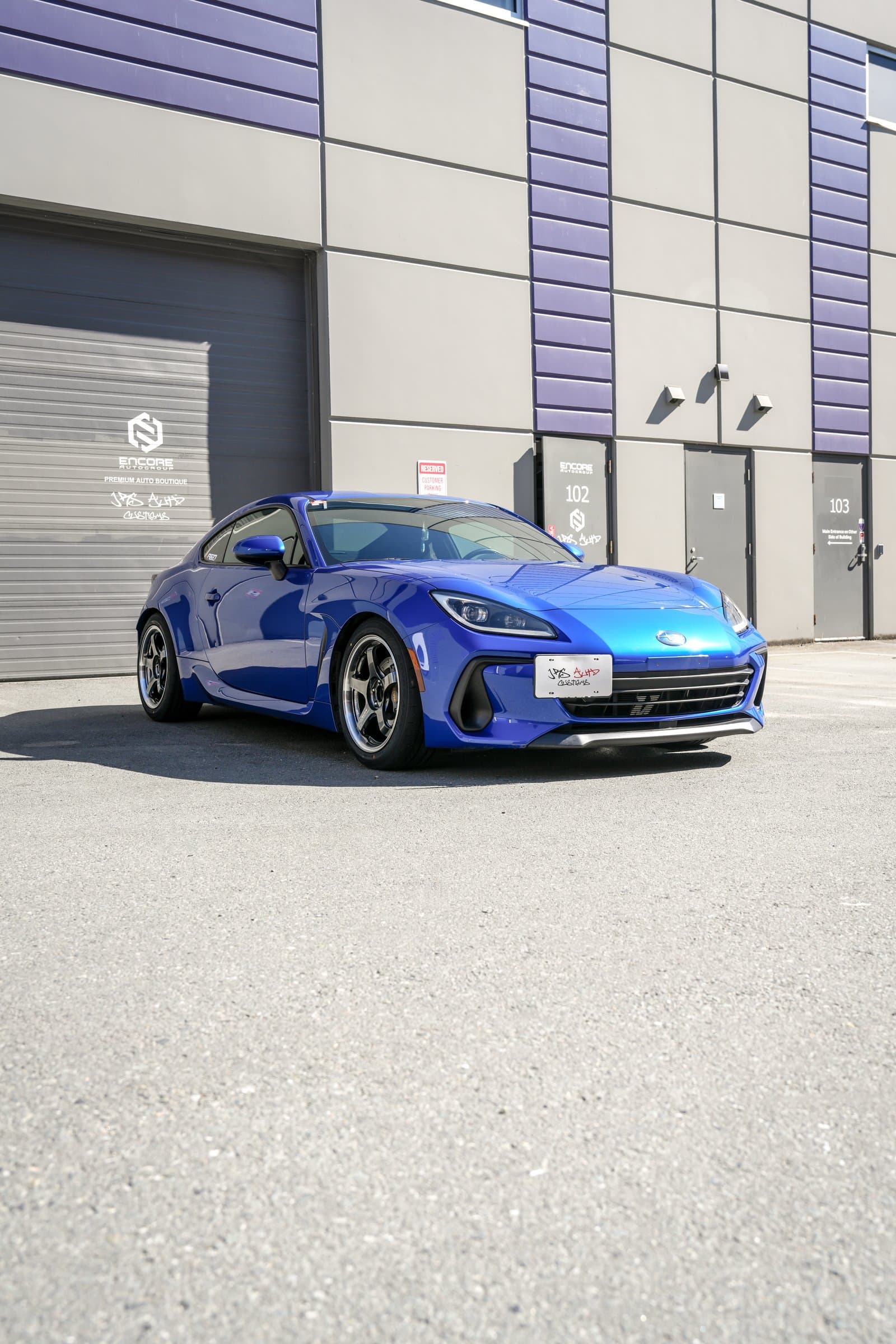
Related project: Subaru BRZ — Full Gloss Clear PPF