
Ceramic vs. PPF: Which Does Your Car Need in Vancouver?
Published
If you have been researching ways to protect your car in Vancouver, you have almost certainly run into both ceramic coating and paint protection film (PPF). They both come up on detailing forums, they both appear in shop menus, and they both promise to keep your paint looking better for longer. But they are fundamentally different products for different situations — and confusing the two leads to either spending more than you needed to, or ending up with less protection than you thought.
Here is a straightforward way to think about it: PPF is a physical shield. Ceramic coating is a chemical bond. Both have a place in a well-maintained car, and the right choice depends on how you use your vehicle and what you are trying to protect it from.
Why Vancouver Makes This Decision More Pressing
Vancouver's combination of rain, road salt, construction dust, and coastal humidity is harder on car paint than most climates. Rain deposits a film of mildly acidic water on every horizontal surface. Salt — still used on Highway 1 and some North Shore routes — accelerates corrosion at any point where the clear coat is compromised. Fine dust from construction season works into wash mitts and creates micro-abrasions every time you clean the car. The result is that paint that would look fine after five years in Toronto or Calgary can look noticeably aged in Vancouver after two.
This is why the comparison matters more here. In a drier city, minor chips and surface oxidation are slower to develop. In Vancouver, the clock runs faster — which means getting the right protection in place before the damage accumulates pays off more visibly.
What PPF Actually Does
Paint protection film is a urethane membrane — essentially a thick, optically clear tape — applied directly over the factory paint. It sits on top of the clear coat as a sacrificial layer. When a rock hits your hood, the film absorbs the impact and tears rather than the paint. Modern PPF also has a self-healing top coat: minor scratches disappear when the film is exposed to heat, such as sunlight or a warm garage.
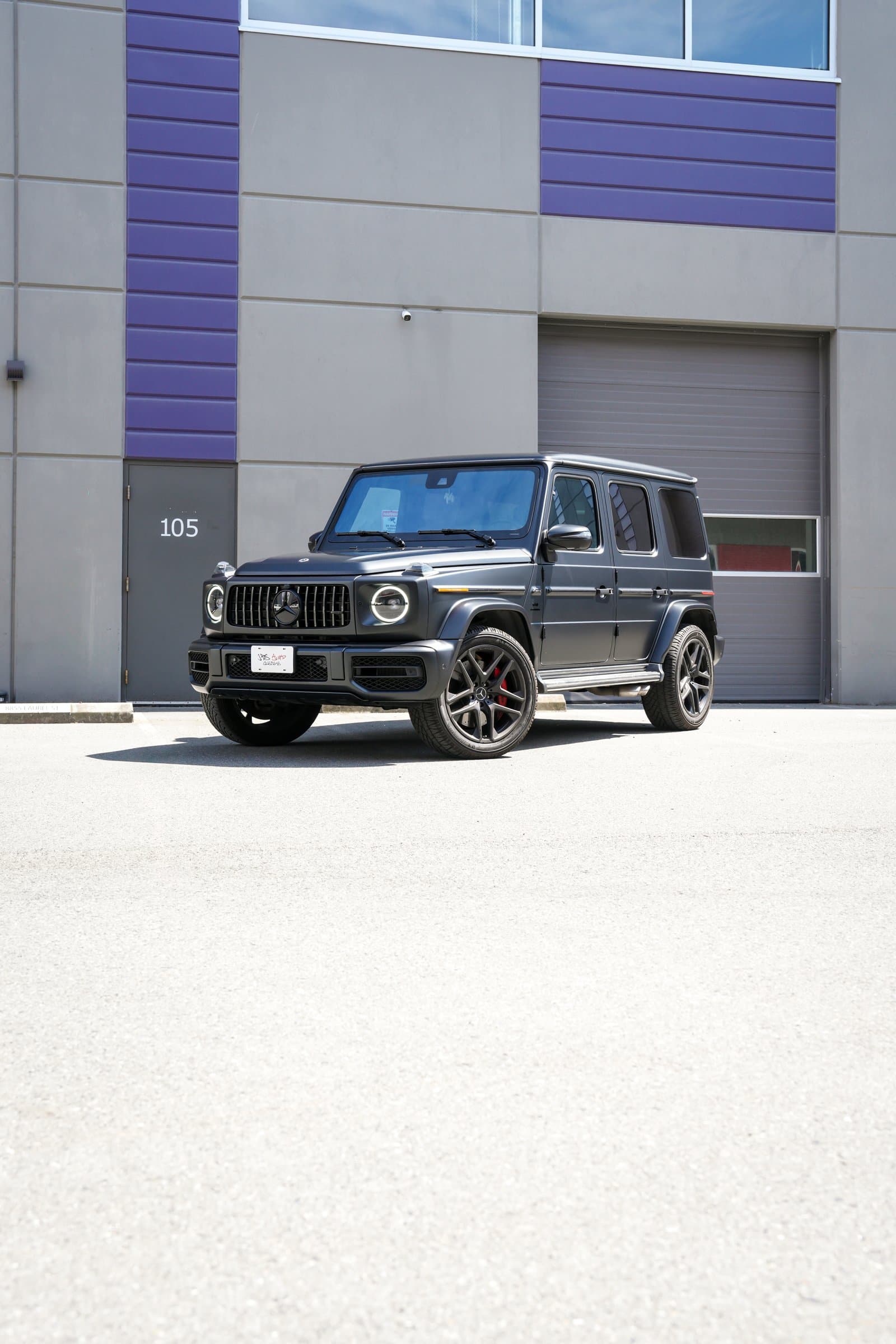
PPF is most commonly applied to the front end — hood, bumper, and fenders — because those areas catch the most road debris. Full-body coverage is available for owners who want it. PPF does not change the appearance of the car significantly when applied in clear form; matte PPF gives the paint a satin or flat finish while retaining full protection.
What Ceramic Coating Actually Does
Ceramic coating is a liquid silica or quartz compound that chemically bonds with the factory paint, filling microscopic pores in the clear coat and hardening into a glass-like layer. Unlike PPF, it becomes part of the paint surface rather than sitting on top of it. The primary benefits are a deep, sustained gloss, strong hydrophobic surface that causes water to bead and roll off (carrying dirt with it), and resistance to light oxidation and chemical contamination from bird droppings, tree sap, and acid rain.
Ceramic coating does not stop rock chips — it offers no physical barrier — but it makes the paint significantly easier to clean and keeps it looking newer between details. Many owners apply ceramic coating over PPF once the film is installed, combining the physical protection of PPF with the chemical benefits of ceramic.
Which One Is Right for Your Vehicle
PPF makes the most sense when the vehicle faces high-impact exposure: daily highway driving, mountain routes, construction zones, or a commute that involves gravel shoulders. It is also the better choice for leased vehicles (easy to remove at lease end) and for any car where preserving the original paint condition is a priority for resale or trade-in.
Ceramic coating is well suited to daily drivers and commuter vehicles that spend most of their time in the city. If your car is parked outdoors in a covered lot or on the street, ceramic coating reduces the visible impact of Vancouver's acid rain and road film between washes. It is also a practical first step for owners who are not yet ready to commit to PPF but want better protection than wax or sealants can provide.
Maintenance for both is straightforward: regular washing is all that is required. PPF can be washed like normal paint; the self-healing surface handles minor marks. Ceramic coatings require a pH-neutral wash product and should not be machine polished, as that will remove the coating. Over time, a professional top-up can restore the ceramic layer if it begins to fade.
The decision does not have to be either/or. Many owners in Vancouver run front-end PPF and a full ceramic coating together — PPF handles the rock chips and road debris, while the ceramic layer makes the whole car easier to clean and adds a deep gloss across every panel. If you are not sure which option fits your vehicle, describe your parking situation and driving patterns to a detailer and ask for a recommendation based on your actual exposure rather than a package price. You can also
Browse our ceramic coating options and speak with a detailer
Related project: Lexus CT Matte Space Grey Color Wrap