
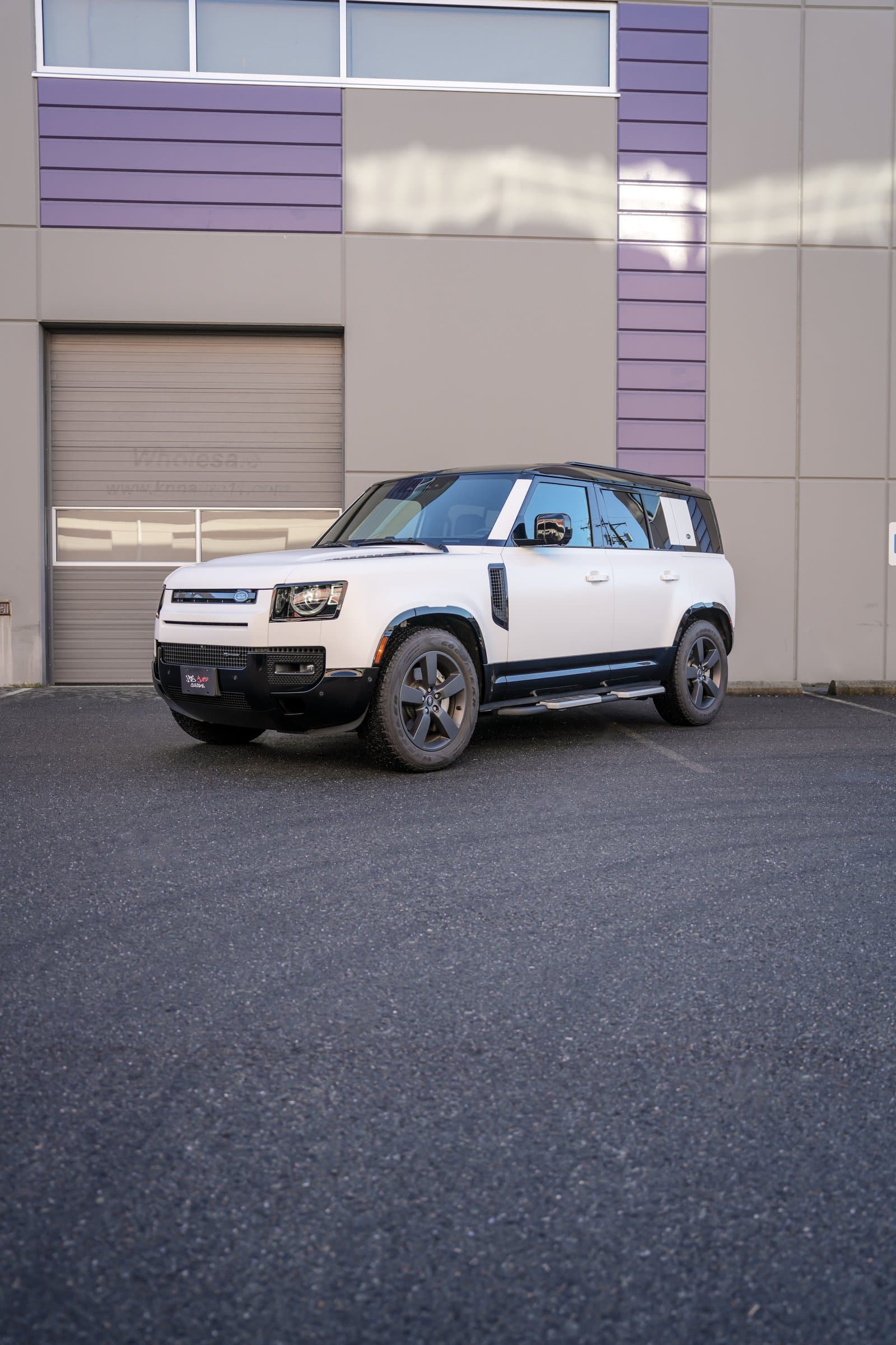
Ceramic Coating vs PPF: Which Is Right for Vancouver Cars
Published
Vancouver drivers have two serious options when it comes to protecting a car paint: ceramic coating and paint protection film (PPF). Both are real, effective, and worth understanding — but they are not the same thing, and they suit different cars, different drivers, and different priorities. Here is a practical breakdown to help you decide which one makes sense for your vehicle.
What Ceramic Coating Actually Does
Ceramic coating is a liquid polymer applied to the exterior paint that chemically bonds with the factory finish. Once cured it creates a hard, semi-permanent layer that repels water, road grime, and UV rays. The result is a surface that stays cleaner for longer, beads water readily in rain, and is noticeably easier to rinse clean after a motorway run or a rainy commute.
For Vancouver specifically, the hydrophobic properties are a genuine benefit. The city sees rain on roughly 150 days a year. A ceramic-coated surface dramatically reduces the streaks and water-spot buildup that are a constant frustration on unprotected paint during wet months. It also offers a layer of defence against the calcium deposits left behind when cars dry in the open air.
What ceramic coating does not do is resist physical abrasion. Stone chips, parking lot dings, and keyed scratches can still reach the paint. If a shopping trolley grazes your door panel, the coating will not absorb that impact.
What PPF Actually Does
PPF — also called clear bra — is a thick, optically clear urethane film applied directly to the paint surface. Its primary job is impact resistance. It absorbs stone chips, deflects key scratches, and protects against the low-speed abrasions that are an everyday reality on Vancouver roads, especially in winter when road salt and grit are scattered across every arterial route.
Modern PPF also carries hydrophobic properties, so it shares the water-beading benefit of ceramic coating to a degree. Some premium films are marketed as having self-healing properties — minor surface swirl marks can be removed with heat, whether from the sun or a heat gun. PPF is typically applied to high-impact zones first: the front bumper, bonnet, side mirrors, and door edges. Full-body coverage is available for owners who want comprehensive protection.
Head-to-Head on Vancouver Priorities
Road salt and aggregate grit are the defining threat to paint in Metro Vancouver from November through March. If your car spends time on Highway 1, Marine Drive, or any arterial route in heavy traffic, the front-end exposure to stone chips is real and repeated. PPF is purpose-built for exactly this scenario.
If your main frustration is the way the paint looks after a rainy week — dull, water-spotted, streaked — then ceramic coating solves that problem directly and at a lower cost than full PPF coverage. It is also a strong choice for cars that are primarily city-driven and parked in covered garages, where the primary enemy is oxidation and contamination rather than physical impact.
Can You Use Both?
Yes — and for many Vancouver drivers this is the right answer. Applying ceramic coating over PPF (once the film has fully cured) is a common and effective approach. The PPF handles the physical protection while the ceramic layer on top adds hydrophobic performance and simplifies cleaning across the whole vehicle. It is a premium solution, but one that eliminates the trade-off between impact resistance and surface quality.
Explore our ceramic coating service and our PPF installation service to see what each option covers.
JRS Auto Customs installs both ceramic coatings and PPF, and can advise on whether a combined approach makes sense for your specific vehicle and usage. The starting point is understanding what actually threatens your paint — not what sounds impressive in a sales conversation.
Making the Call
If your car faces daily highway driving, rural routes, or any situation where stone chips are a regular occurrence, PPF is the more important first investment. If your car is mainly urban, covered-parking, and you want it to look clean and be easy to wash, ceramic coating delivers that directly.
Neither product is a one-time cost that solves every problem permanently. PPF may need replacement in high-impact areas after several years. Ceramic coatings break down gradually and benefit from periodic maintenance. But both are genuinely useful investments in a car appearance and residual value — and understanding what each one does is the first step to spending your budget in the right place.
Related project: Land Rover Defender Matte White PPF