
Is Ceramic Coating Worth It? A Practical Guide
Published
Ceramic coating is one of the most commonly discussed protection options in car care, but the practical benefits for Vancouver drivers are not always well explained. Most descriptions focus on what it sounds impressive to say -- hydrophobic, chemically bonded, UV resistant -- without connecting those properties to what they actually mean for your car over months and years of ownership.
What Ceramic Coating Actually Does
Ceramic coating is a liquid formula that chemically bonds to your vehicle's paint surface, creating a hard, semi-permanent layer that is thinner than a coat of wax but significantly more durable. Once cured, it becomes part of the paint surface rather than sitting on top of it. This bonding is what distinguishes it from conventional waxes and sealants, which sit on the surface and wear off over weeks and months.
The practical effects of this bonding are threefold. First, the coated surface becomes hydrophobic -- water beads and rolls off, carrying loose dirt with it. This means that light rain and morning dew do not leave water spots; they carry contamination off the surface. Second, the hardness of the coating makes it more difficult for contaminants to bond to the paint in the first place. Tree sap, road tar, insect residue, and brake dust are all easier to wash off a ceramic-coated surface than an uncoated one. Third, the coating provides UV resistance, slowing the oxidation process that causes paint to dull and fade over time.
What Ceramic Coating Does Not Do
Understanding the limits of ceramic coating is as important as understanding its benefits. Ceramic coating does not absorb physical impacts. A stone chip from highway driving will damage the paint underneath the coating in the same way it would on an uncoated car. A ceramic coating cannot prevent scratches from keys, washing with a dirty mitt, or contact with a bollard or garage wall. For physical impact protection, paint protection film is the appropriate product.
Ceramic coating is also not maintenance-free. While it makes washing easier and more effective, the coated surface still requires regular cleaning. Contaminants that are left on the surface for extended periods -- particularly acidic substances like bird droppings and tree sap -- can still cause etching. The hydrophobic effect also diminishes over time as the coating's surface chemistry changes, which is why periodic maintenance applications are recommended to refresh the coating's performance.
Who Ceramic Coating Makes Sense For
Ceramic coating is most worth the investment for vehicle owners who want to reduce the maintenance burden of keeping their car clean and well-presented, and who drive in conditions where contaminants are a constant challenge. In Vancouver, that describes most vehicle owners -- the combination of rain, road salt, and biological contaminants means that maintaining an uncoated car's paint surface requires more frequent washing and more aggressive decontamination than in drier cities.
It is particularly worth considering for owners who plan to keep their vehicle for more than three years. The hydrophobic and contamination-resistant properties compound over time -- a car that is ceramic-coated from new and maintained consistently will be in measurably better paint condition at the three-year mark than an equivalent uncoated car. For a vehicle that will be sold within a year or two, the calculus is different -- the benefit accrues to the next owner rather than the current one.
For vehicles that are stored outdoors in full weather exposure, ceramic coating provides meaningful UV and contamination protection that significantly slows the deterioration of the paint surface. For vehicles in covered or garage storage, the benefits are less pronounced but still present, particularly in reducing the maintenance effort required.
Ceramic Coating and Vancouver's Climate
Vancouver's climate is one of the strongest arguments for ceramic coating. The city experiences roughly 1,200 millimetres of rain per year, plus winter road salt, autumn leaf debris, and spring pollen. In this environment, a hydrophobic surface is not a luxury -- it is a practical necessity for keeping the vehicle clean without excessive effort. Without it, the combination of rain-sourced water spots and biological contaminants means that an uncoated car's paint surface requires decontamination every few months to maintain a clean appearance.
The UV protection is less dramatic in Vancouver than in sunnier climates, but it is still relevant. Even through cloud cover, UV radiation reaches vehicle surfaces throughout the year and causes cumulative oxidation. The UV resistance of ceramic coating slows this process and extends the period before the paint surface begins to show the dulling and fading that characterises an unprotected vehicle of several years.
Making the Decision
Ceramic coating is worth considering if you want to reduce the maintenance effort required to keep your car clean, slow the oxidation of your paint surface, and protect your vehicle's appearance over a multi-year ownership period. It is not worth the investment if you are planning to sell within a year, if your vehicle will be stored in conditions where physical damage is the primary concern (in which case PPF is the right product), or if you are looking for a product that requires no ongoing maintenance.
JRS Auto Customs offers ceramic coating packages including the Gyeon Syncro EVO system, which combines paint correction with a full-coverage ceramic application. Explore ceramic coating options at JRS Auto Customs.
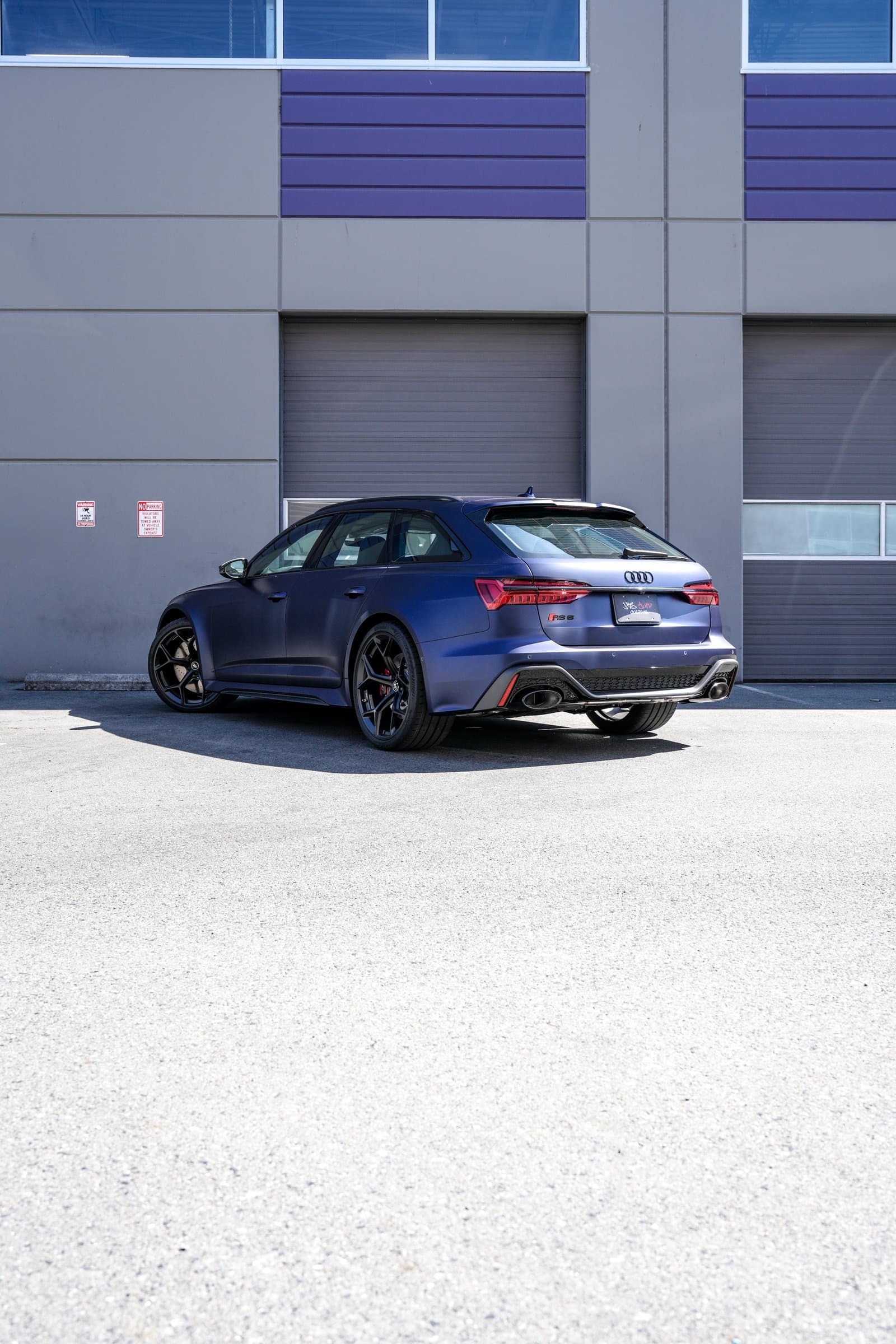
Related project: Audi RS6 Avant Matte Blue PPF