
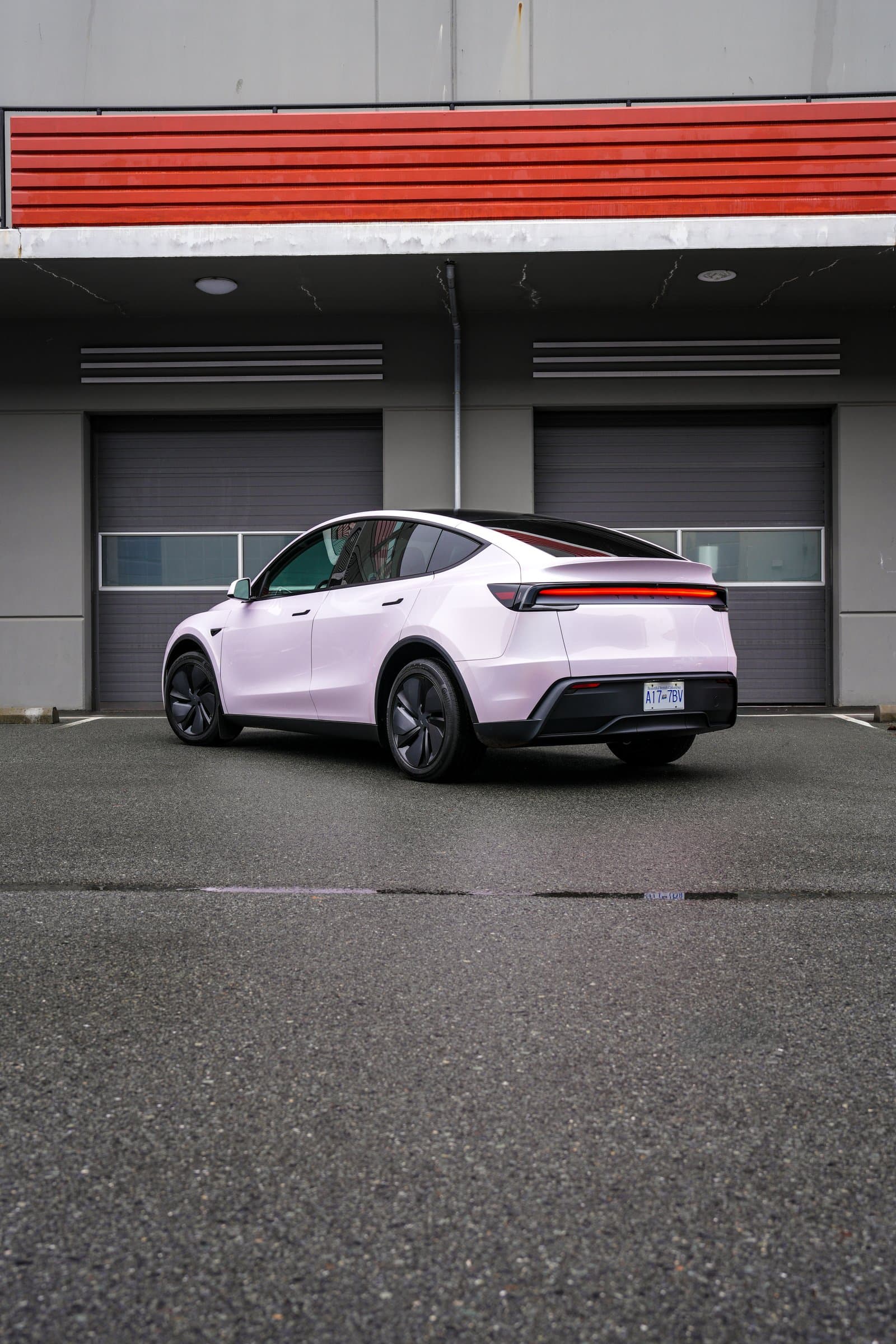
Chrome Delete: Wrap or Paint? A Vancouver Driver's Guide
Published
Chrome trim has been a standard feature on cars for decades — window surrounds, mirror caps, door handles, grille accents, and rear bumper inserts are all common chrome surfaces. On modern vehicles, chrome is applied as a thin electrolytic plating over ABS plastic or steel. It looks clean in the showroom. But in Vancouver's climate, it starts a slow deterioration the moment the car leaves the lot.
Why Chrome Fails in Vancouver's Climate
Chrome plating corrodes through a process called microm crevice corrosion: moisture and road salt work into microscopic gaps between the chrome layer and the substrate beneath it, typically at edges, bends, and around fastener holes. Once moisture penetrates the plating, the zinc or nickel intermediate layer underneath begins to sacrifice itself through galvanic action — and the result is the white powdery oxidation known as chrome pitting. In coastal cities like Vancouver, the combination of marine salt aerosol, road salt in winter, and high ambient humidity creates near-continuous conditions for this process.
The deterioration typically starts at edges and high-contact areas first: around window seals, door handle recesses, and grille slots. Once pitting has started, it cannot be reversed by polishing — the damage is below the surface of the plating.
What Chrome Delete Actually Means
Chrome delete is the process of removing or covering chrome trim to change its appearance. The term covers two distinct approaches: wrapping and painting. Each has different characteristics, different costs, and different long-term outcomes.
Chrome delete by vinyl wrap: a matte or gloss black vinyl film is applied directly over the chrome surfaces. The existing chrome trim stays on the car; it is covered rather than removed. If the underlying chrome has already started pitting, the film will adhere to a clean surface but will not fill or hide existing damage — so surface preparation matters. Vinyl wrap is fully reversible: it can be removed if you sell the car or change your mind.
Painting Chrome Trim: What Is Involved
Chrome delete by painting requires more preparation. Chrome plating must be sanded and primed before paint will adhere — paint applied directly over bare chrome will peel within weeks. The process typically involves a light sand of the chrome surface, an adhesion promoter or etch primer, then a top coat in the colour of your choice. Most commonly this is a satin black or gloss black to match the vehicle body, though any colour is possible.
Painted chrome delete is more durable than vinyl wrap in the long term and looks more integrated with the vehicle body. It is not easily reversible — removing painted chrome delete requires re-chroming, replating, or a full colour change wrap over the area. Discuss the permanence and your plans for the vehicle before committing to a painted solution.
Which Vehicles Benefit Most from Chrome Delete
Chrome delete is most commonly applied to modern vehicles where chrome trim is a factory finish that the owner finds does not suit the vehicle's character. Luxury vehicles and EVs in particular often come from the factory with extensive chrome brightwork that looks premium in photographs but can appear stark or mismatched with certain body colours in person. A blacked-out trim on a dark-coloured vehicle creates a more cohesive, sporty appearance.
Chrome delete is also a practical choice for drivers in the North Shore or near the water, where marine salt aerosol accelerates chrome pitting. Replacing pitted chrome trim is expensive — wrapping or painting before the pitting starts is significantly cheaper.
Chrome Delete and Colour Change: Combining Both
Chrome delete and a full colour change are often done together as part of the same customisation appointment. Blacking out the trim before wrapping the body in a complementary colour creates a more complete visual transformation than either change alone. The trim colour should be considered as part of the overall colour planning for the vehicle.
JRS Auto Customs handles chrome delete by vinyl wrap and can advise on whether a paint or wrap approach is better for your vehicle. We also handle colour change wraps and can plan both modifications together at the same appointment.
Getting Chrome Delete Done in Vancouver
Chrome delete is available at JRS Auto Customs as a standalone service. We prep the chrome surface before application to ensure maximum adhesion and longevity, and use film products rated for automotive exterior use. For painted chrome delete, we follow the full surface preparation sequence before colour coating.
Bring your car in and we can show you the film options on the spot — the difference between a cheap film that will peel in six months and a quality product that will last years is immediately visible.
See our full range of customisation services or speak to the team about combining chrome delete with a colour change wrap.
Related project: Tesla Model Y Iridescent Rose Pink TPU Wrap