
Cold Air Intakes: What They Change on Vancouver Streets
Published
A cold air intake is among the first upgrades most people consider when they start looking into performance modifications. The pitch is straightforward: more air into the engine means more power. The reality is more nuanced, and for Vancouver's specific driving conditions, it is worth understanding exactly what changes and what does not before spending the money.
What a Cold Air Intake Actually Does
A cold air intake moves the air inlet away from the engine bay — where it would draw hot air from around the engine — and routes it to a location that pulls in cooler, denser ambient air from outside the engine bay, typically through a duct behind the grille or in a wheel well. Cooler air is denser, meaning each breath of air contains more oxygen molecules, which supports better combustion.
On a modern turbocharged engine, the relationship between intake air temperature and power is measurable but modest under normal driving conditions. The factory intake system on most turbo cars is already reasonably efficient, and the gains from swapping to an aftermarket cold air intake are typically in the range of five to fifteen horsepower on a chassis dyno — a real difference, but one you feel more at the top end of the rev range than in normal street driving.
On naturally aspirated engines, the gains can be slightly more meaningful, but the ceiling is still set by the rest of the engine's breathing capacity. An intake alone rarely transforms the character of a naturally aspirated engine.
What the Marketing Claims vs. What Actually Happens
Cold air intake marketing often cites gains of twenty, thirty, or more horsepower. These numbers come from dyno runs on highly tuned engines in controlled conditions, not from a stock daily driver on a Vancouver street. Real-world gains on a stock engine are more modest, and the percentage gain relative to a vehicle's baseline horsepower is smaller than the absolute numbers suggest.
There is one area where a cold air intake makes a clear, tangible difference for daily drivers: induction sound. Removing the factory airbox and replacing it with a short-ram or cold-air setup opens up the intake tract audibly. Turbo cars develop a more pronounced induction whoosh; some drivers find this satisfying and consider it a worthwhile upgrade on its own.
The other realistic benefit is throttle response, particularly on cars with restrictive factory airboxes. This is more noticeable than peak power gains in everyday driving.
Why Vancouver's Driving Conditions Matter for This Upgrade
Vancouver is not a place where engine performance is typically the limiting factor. The road network is largely flat or gently rolling, traffic moves at urban speeds, and the climate is temperate. Under these conditions, the marginal gains from a cold air intake are almost imperceptible for most drivers.
The one scenario where a cold air intake is genuinely worth considering on a Vancouver daily driver is on a car that already has other modifications — a tune, an upgraded intercooler, or supporting bolt-ons — where the factory intake becomes the next restriction in the airflow path. On a completely stock car, the gains do not justify the cost for most people's priorities.
What to Watch Out For Before Installing
Not all cold air intakes are created equal. One common failure mode is an intake that draws air from inside the engine bay rather than from a genuinely cold source. If the intake tube runs close to the engine and pulls hot air, you end up with worse performance than the factory setup — the opposite of the goal.
A quality intake will have a properly routed inlet that stays away from heat sources and seals well against the airbox. Water ingestion is a real risk on Vancouver's wet roads if the inlet is positioned too low or without adequate protection against splash. If you drive through deep puddles regularly, this matters.
On the BC vehicle inspection side, a cold air intake that does not alter emission control hardware — the MAF sensor, airbox plumbing, or catalytic converters — is unlikely to trigger a rejection on a standard inspection. However, if the intake causes a check engine light or changes the fuel trims enough to fail an OBD-II readiness monitor, that is a different story.
Where It Fits in a Realistic Upgrade Path
Explore performance upgrade options at JRS Auto Customs
See the portfolio of completed projects for reference
If you are building a car for performance and are working through a logical upgrade sequence, a cold air intake earns its place after the foundations are in place: good tyres, a proper brake setup, and a suspension that can handle the power you are building toward. On a car that will primarily sit in Vancouver traffic and occasionally see a spirited drive on Marine Drive or the North Shore roads, the order of spending matters more than any single bolt-on.
For owners of turbocharged cars who want to add an intake as part of a broader modification plan, the intake is a reasonable piece of the puzzle — but it is not the foundation.
JRS Auto Customs can advise on performance upgrade paths that make sense for your specific vehicle and driving patterns in Vancouver.
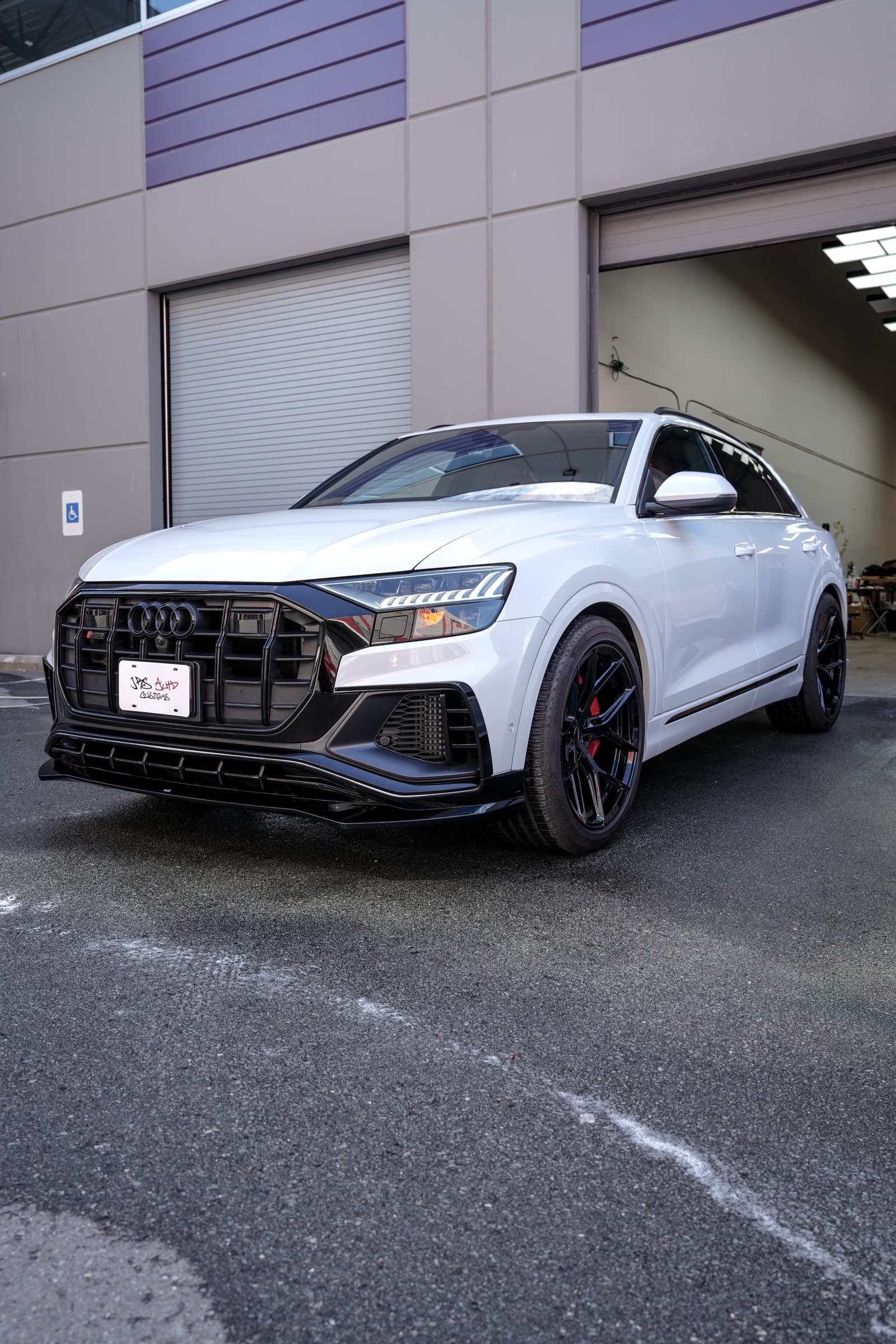
Related project: Audi SQ8 ABT Body Kit & Vossen HF5 Wheels