
How to Wash and Maintain Your Color Change Wrap in Vancouver
Published
Colour change wraps have become a mainstream option for Vancouver drivers who want to personalise their vehicle without committing to a repaint. What many wrap owners do not realise is that the maintenance requirements are meaningfully different from factory paint, and that the wrong wash technique causes most of the damage they eventually notice on their wrap. This is a practical guide to washing and maintaining a colour change wrap in Vancouver — what works, what to avoid, and how often to do it.
What Vancouver Weather Does to Colour Change Wraps
The biggest threat to wrap longevity in Vancouver is not UV — it is road salt, industrial pollution from port operations and Highway 1 truck traffic, and the general grit that accumulates on Lower Mainland roads through the wet season. These contaminants sit on the surface between washes and gradually degrade the adhesive at the edges and the vinyl surface chemistry. Unlike factory paint, the vinyl is not sealed and is more vulnerable to chemical damage from acid rain and salt residue.
How Often to Wash Your Wrap
Wash your wrap every two weeks during the wet season and at least once a month in summer. Frequency matters more than technique — a biweekly wash removes contaminants before they have time to bond to the surface and degrade the film. In winter, a monthly wash is the absolute minimum; twice monthly is better if your vehicle is parked outside.
The Two-Bucket Method for Wrap Washing
One bucket holds clean wash solution — use a shampoo specifically formulated for vinyl wraps, not a generic car wash product or anything containing petroleum distillates, silicone, or wax compounds. The second bucket holds clean water for rinsing your wash mitt between passes. Using a separate rinse bucket prevents transferring grit from the previous vehicle back onto the wrap surface, which is the primary mechanism by which automatic car washes cause micro-scratches.
Work from the top down. Start with the roof and upper panels, then move to the sides and lower sections. Use a soft microfibre wash mitt — not a sponge, not a brush, not a washcloth. Apply gentle pressure and let the mitt do the work; wrapping a vehicle generates more surface area than most owners expect and rushing the process leads to missed sections and uneven cleaning.
Rinse thoroughly. Residue from the shampoo left to dry on the surface creates water spots that are harder to remove from vinyl than from glass or paint and can leave a hazy appearance on darker wrap colours. Dry with a clean, soft microfibre drying towel rather than a chamois — chamois materials can create friction on vinyl surfaces if moved carelessly, and on satin or matte wraps the friction marks are permanent.
What to Avoid: Automatic Car Washes and the Wrong Products
Automatic car washes are the single most damaging wash method for colour change wraps and should be avoided. The brushes in mechanical car washes hold grit from previous vehicles even when rinsed between cycles, and that grit produces micro-scratches on vinyl that accumulate over time. Touchless car washes are acceptable for emergency situations when you have no other option, as they do not make direct contact with the surface. However, the high-pressure water jets can force water under loose edges at the bumper and door seams if any lifting has already begun.
If you use a pressure washer, keep the nozzle at least 30 centimetres from the wrap surface and use a fan spray pattern rather than a pinpoint jet. Pressure washers are excellent for rinsing but the concentrated force of a pinpoint nozzle can lift film edges and force water under the wrap.
Decontamination and Wrap-Safe Products
After winter, a decontamination wash using a product specifically formulated for vinyl wraps removes the road salt and industrial film that a standard wash cycle will not fully clear. Do not use iron remover products designed for paint — those are too aggressive for vinyl and can damage the surface. Look for a wrap-safe decontamination wash or a pH-neutral all-over cleaner made for wrapped vehicles.
What Colour Change Wraps Do Not Need
Colour change wraps do not need wax, polish, or paint sealant. These products are designed for paint and their solvents can interact with vinyl. A wrap-specific spray sealant is available from detailing product brands that work with vinyl — if you want additional protection between washes, use a product that is explicitly rated for wrap surfaces. Otherwise, regular washing is sufficient.
If your wrap shows signs of surface contamination that washing will not resolve — such as tar spots from road construction, paint overspray, or heavy industrial fallout — a professional wrap detailer can address these without damaging the film. Do not use adhesive remover, acetone, or petroleum-based products on the wrap yourself. JRS Auto Customs in Vancouver can advise on maintenance options for your specific wrap type and colour.
Related Services at JRS Auto Customs
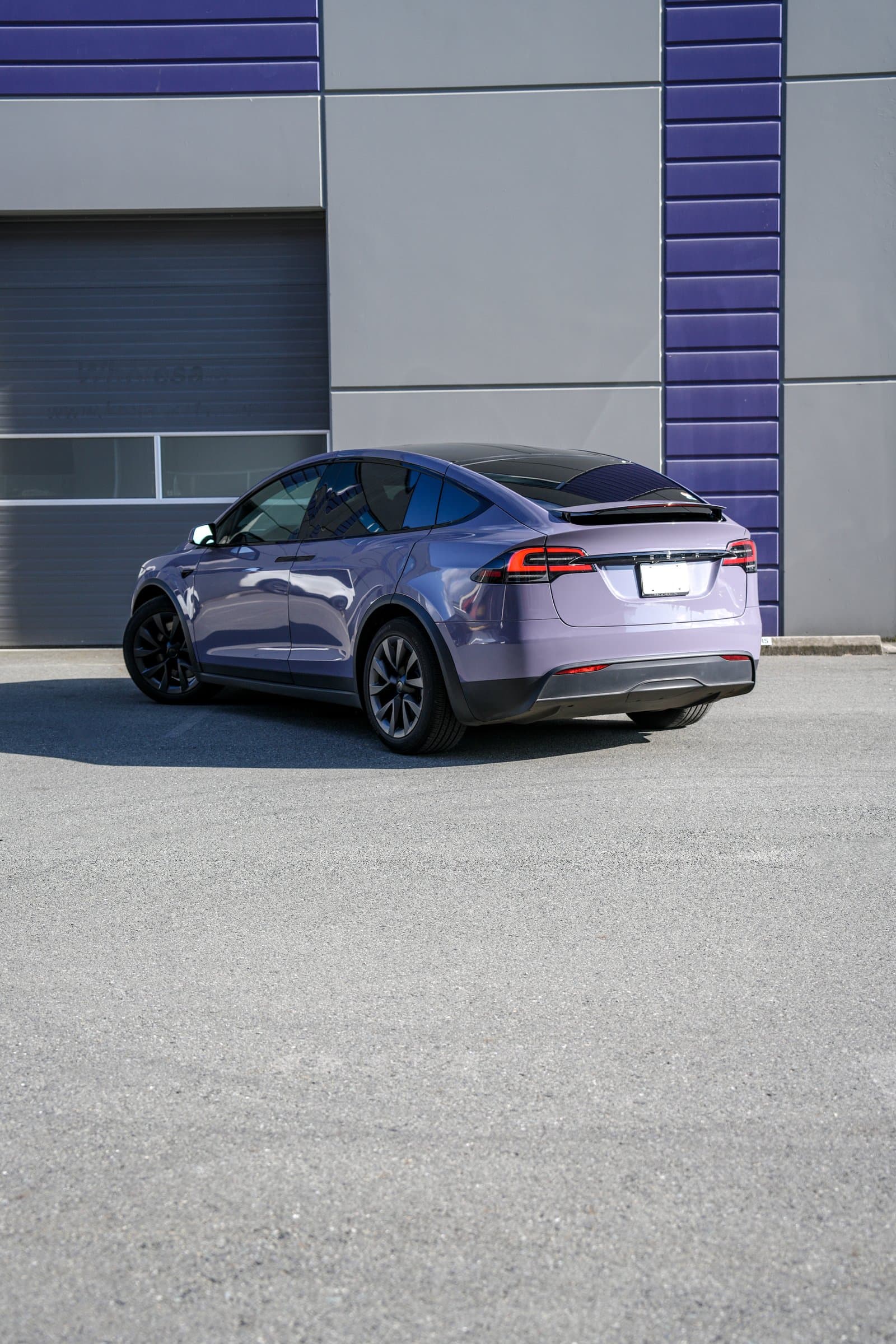
See our colour change wrap work in the Tesla Model X Provence Purple colour change project portfolio. JRS Auto Customs installs colour change wraps on all vehicle types. Explore our services: colour change wraps, PPF installation, and ceramic coating.
Related project: Tesla Model X — Provence Purple Color Change