
How to Care for Your Colour Change Wrap in Vancouver
Published
A colour change wrap is a significant investment. Whether you chose it for aesthetics, to protect the original paint, or both, the question that comes next is the same for every owner: what do I actually do to keep this looking right? The answer is less complicated than people expect, but it requires a different approach than caring for a painted surface.
Vancouver's climate makes this more relevant than in most cities. Our city gets over 160 days of rain per year, road salt on the roads through most of autumn and winter, and a marine environment that keeps humidity consistently elevated even in summer. Each of these affects vinyl wrap differently than it affects paint.
Washing Your Wrapped Car: The Two-Bucket Method
The most important maintenance task for any vinyl wrap is regular washing. How you wash matters more than how often. The two-bucket method — one with clean wash solution, one with rinse water — is the single most effective habit you can develop. It prevents grit from being dragged across the surface, which is the primary cause of swirl marks and premature wear on both vinyl and the clear coat underneath.
Use a pH-neutral car shampoo specifically formulated for vinyl or wrapped surfaces. Avoid dish soap, which is designed to cut grease and will strip any protective coating applied over the wrap. A soft microfibre wash mitt is better than a sponge for the same reason that grit control matters — it holds less contamination against the surface.
After washing, rinse thoroughly with deionised or filtered water if possible. Vancouver's tap water is relatively soft compared to other cities, but mineral deposits can still leave water spots on matte and satin finishes in particular.
What Vancouver's Road Salt Does to Vinyl
Road salt is abrasive and corrosive. On painted surfaces it attacks clear coat; on vinyl it works differently — salt residue sits in the micro-texture of the film and, if left, gradually degrades the adhesive at the edges. This is why wrapped vehicles that are driven through winter without regular washing look fine through December and start to show edge lifting by March.
The fix is straightforward: wash your wrapped car more frequently in the wet months. Once a week during November through February is not excessive if you are commuting daily. Salt residue does not need much time to cause damage — it starts attacking adhesive as soon as the water evaporates, leaving the salt crystal behind.
If you are unsure whether a wash product is safe for your specific wrap, our colour change wrap service team can advise on the specific film type on your car and recommend compatible products.
Matte, Satin, and Gloss Finishes — Different Care Rules
Gloss wraps behave most like paint — they can be clayed, decontaminated, and even polished to remove oxidation or minor surface scratches. Matte and satin wraps are different. They are designed to look a specific way, and using the wrong product will permanently change the finish. A compound or polish designed for clear coat will leave shiny spots on a matte wrap that cannot be reversed without re-wrapping.
Matte-wrap-safe products exist and are widely available. The same applies to satin finishes, which occupy a middle ground — they have more reflectivity than matte but less than gloss, and the care rules follow the conservative end of that spectrum.
The single most common mistake with matte wraps is using a conventional carnauba wax or spray sealant. These products add gloss, which is the opposite of what a matte finish is supposed to do. Always use products labelled specifically as matte-safe.
When to Bring It to a Professional
There are several situations where professional attention is the right call. Edge lifting — where the wrap starts peeling at a panel edge or seam — should be assessed by the shop that installed it. Small lifts can be cleaned and re-pressed; ignoring them lets contamination get underneath and can require a full panel re-wrap.
Oxidation on a gloss wrap — a dulling of the surface that does not wash off — responds well to a professional decontamination and, if warranted, a light machine polish. On a matte wrap, oxidation requires a chemical decontamination with a matte-safe iron remover followed by a matte-top dressing, not a polish.
Our maintenance and detailing service includes wrap-safe washing, decontamination, and surface conditioning. We assess each car individually — a wrap in good condition needs different care than one that has been through a Vancouver winter without proper maintenance.
How Long Does a Colour Change Wrap Last in Vancouver?
The honest range for a professionally installed, well-maintained colour change wrap in Vancouver is five to seven years for gloss films, and three to five years for matte and specialty finishes. The marine environment and UV exposure in summer are the two biggest factors that accelerate degradation in our climate — not the rain itself, but the combination of moisture, salt, and UV that comes through the spring and summer months.
The two variables in your control are maintenance quality and parking environment. A car parked in an underground garage year-round will outlast one that sits on a north-facing street through every winter. That is not an argument for garage parking if you cannot arrange it — it is context for setting realistic expectations.
A colour change wrap is designed to be a removable, reversible modification. When it comes time to remove it, a professional removal is quick, and if the paint underneath was properly maintained, it should be in good condition. That is one of the main advantages of wrap over repaint — it protects the original finish for as long as it is on, and leaves it intact when it comes off.
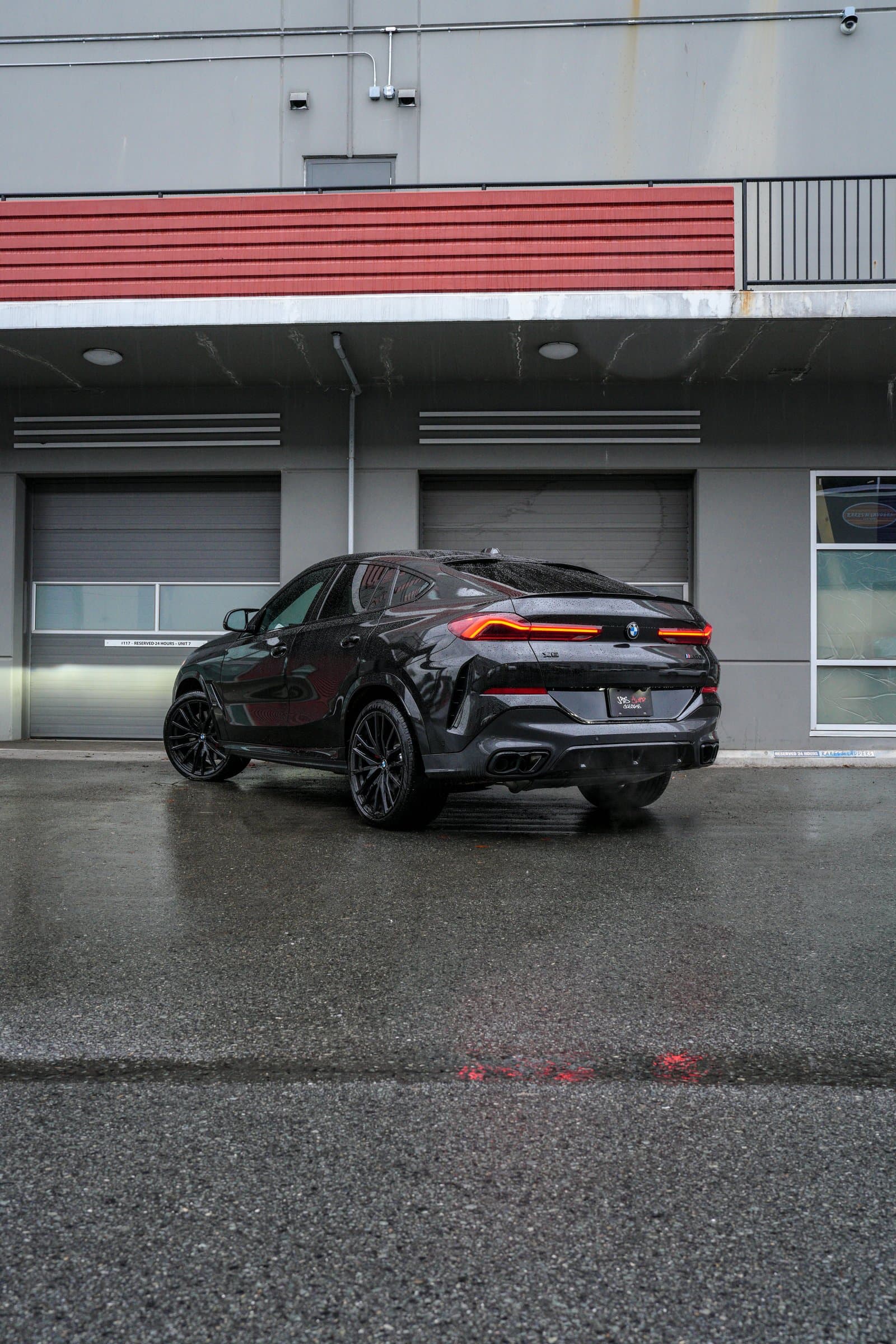
Related project: BMW X6 M60i — Metallic Black 3M Wrap