
Custom PPF Coverage: Wrapping Only the Panels You Want
Published
The Four Tiers Are Not the Only Option
Most paint protection film conversations start with a tier. There is a package that covers the high-impact zone, a package that adds the front bumper and mirrors, a package that wraps every panel the wind and the stones can reach, and a package that covers the whole car. JRS sells all four, and for most owners one of them is the right answer. But there is a fifth option sitting on the same page, and it is the one that gets the least attention: custom coverage. Instead of accepting a tier as a fixed bundle, you pick the panels individually. The hood is on the list. The cargo lip is on the list. The roofline is on the list. Door sills, side skirts, B-pillars, mirrors, each bumper and each door are all priced separately, and you choose which ones you want.
This sounds like a small technical detail. It is not. A tier is a general answer to a general question, and a custom package is a specific answer to a specific question about your car, your parking situation and the way you actually drive.
Why Tiers Are a Rough Fit for Some Cars
The packages are built around where damage usually happens on an average car in an average parking situation. That works well until your car stops being average. A car that spends its life in a parkade does not need the same front end as a car that does its commuting on the Port Mann Bridge. A car with a tow hitch and a dog in the back does not get chip damage in the same places as a car that stays on paved city streets. And a car that is going to be sold in four years has a completely different calculus from one that will be kept for a decade.
If you have read our guide to full-body versus partial coverage, you will have seen the argument for going all the way. The custom option sits between those two, and it is the one that lets you spend your money where the damage actually is rather than where the package puts it. We also explain what happens to film years later in our piece on what happens when PPF is removed, which is worth reading before you commit to any layout at all.
How to Work Out Which Panels Matter
Start with the second question: where does your car take hits? Not where cars in general take hits. Yours. Think about where it is parked on a Tuesday night, which direction you pull out of the driveway, and which part of the car sits closest to the wall in a parkade. A car reversed into a narrow spot every night will collect damage low on the rear bumper that a car parked nose-in never sees.
Then think about what the car does. A tow-hitch car puts its rear bumper and lower tailgate in the spray zone of everything behind it. A car with a bike rack or a roof box has a different exposure at the roofline. A car that drives forest roads regularly on Vancouver’s North Shore brings back more gravel and bark than a car that stays on the Trans-Canada.
The third question is about the panels people forget. Door sills and the lower edges of the doors take contact from boots, bags and parking obstacles. The jambs and the painted edges of a door get chipped every time the door is swung open in traffic, which is why we wrote about door jambs and sills separately. Our post on PPF for trim, mirrors and door cups covers the smaller painted surfaces that a front-end package leaves bare.
Panels That Look Minor and Are Not
The custom list includes entries that seem almost incidental until you picture your own car. The cargo lip is a small trim strip at the back of the hatch or trunk, and it is exactly where a shopping trolley or a kerb finds your car. The roofline is the leading edge of the roof above the windscreen, and on a car that is driven in the rain at highway speed it is a constant target for debris.
Side skirts sit low, close to the road, and they take the same stone and salt spray as the rocker panels above them. The B-pillars run down the sides of the car between the doors, and they are exposed on both faces to anything that comes off the road beside you. A pillar covers the structural post between the windscreen and the door, and it is covered in more detail in our post on A-pillar PPF, which is worth reading if you are weighing that entry on the list.
Mirrors are included in the upper tiers, but as a custom item they are a different decision. A mirror housing takes road spray constantly and it is the first thing to look at on a car parked nose-in, where the mirror housings face whatever the car behind you is throwing up.
What a Custom Package Costs You in Other Ways
A custom layout is not simply the sum of the panels you pick. Every additional panel means another cut, another edge and another hand-finished tuck, and the labour to fit one small trim strip is not proportionally less than the labour to fit a full hood. Our article on how long PPF and wrap work takes covers the booking and timing side of this, and it is relevant here because a scattered custom package with many small pieces usually takes longer than a single straightforward panel.
There is also the issue of consistency. A car with film on the hood and nothing else has a visible edge where the protection stops, and that edge is where the next chip is going to happen. A custom package built around a coherent idea — everything the road can reach at your driving height, or the full lower body — reads as a deliberate choice. A package built by adding one panel at a time can end up looking arbitrary.
How to Ask For One
When you send your enquiry, the useful thing to include is not the panel list. It is the car, the year, the model, where it is parked, how far you drive, and what you are worried about. With that information the recommendation can be specific, and it may well turn out that one of the standard tiers is the better answer for your car. That is a legitimate outcome. The point of the custom option is that it exists when the tiers do not fit, not that every car needs it.
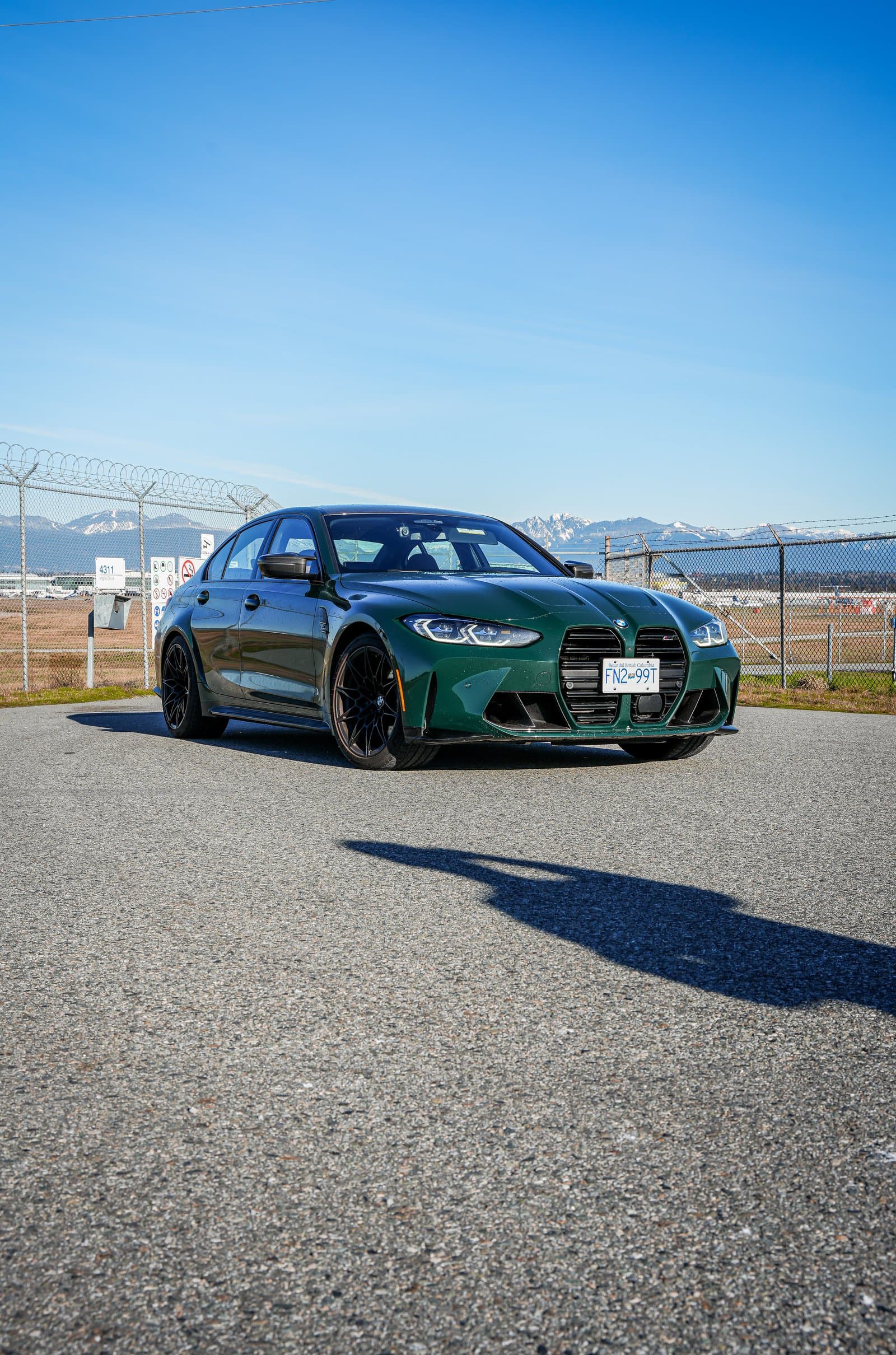
If you want to see how a selective coverage job actually looks on a real car, our BMW M3 project was done with full frontal and rocker coverage rather than a body-wide wrap, which is a good example of coverage chosen to match how the car is used.
The Honest Summary
The custom coverage list on the PPF page is the most flexible thing JRS offers, and it is the right tool for a specific situation: a car whose damage pattern does not match any of the standard tiers, a car that will be sold and needs its most visible panels protected rather than its whole body, or a car whose owner has a particular panel in mind that nobody thinks to mention until it is already chipped.
Use it when the tiers genuinely do not fit. But get the recommendation first, because for a lot of cars the simpler answer is the better one. We also keep a wheels service that covers fitment and protection for the rims, which often goes into the same conversation when a car is being set up.
Related project: BMW M3 Clear PPF Track Shield