
Does Your Daily Driver Actually Need PPF?
Published
Vancouver roads are rough on paint. Between the potholes on Main Street, the gravel on the North Shore, and the steady stream of traffic on the Ironworkers, every commute is a gauntlet. If you drive the same car to work every day, you have probably already accepted a few stone chips on the hood. The question is whether a paint protection film makes sense for the vehicle you rely on — not the one you garage on weekends.
What Vancouver Actually Does to Car Paint
The damage is not just cosmetic. Road grit kicked up by trucks and buses carries abrasive particles that score the clear coat on every pass. In winter, salt and calcium chloride accelerate oxidation on exposed edges — door sills, rocker panels, the lower bumper. UV exposure in summer bakes those micro-scratches darker, making them more visible on lighter colours. A car that looks clean after a wash can still have dozens of impact sites visible under direct light.
Daily Driver vs. Weekend Car: The Real Difference
A car you drive every day accumulates stone chips in proportion to the miles you cover. A vehicle parked in a Richmond mall car park on a Saturday afternoon faces a different risk: door dings, shopping trolley scratches, and the slow etch of bird droppings left sitting through a four-hour meal. Neither is trivial, but they demand different thinking.
High-mileage commuter: PPF makes economic sense
If you log 20,000 km a year or more on the same vehicle, the cost of correcting paint damage over five years — compounding stone chips, chemical etching, surface oxidation — can exceed the installed cost of quality PPF on the most exposed panels. The hood, front bumper, fenders, and mirror caps absorb the most impact. Wrapping those areas alone is significantly less than full-body coverage and still covers the highest-risk zones.
Low-mileage city car: The protection logic is different
If your car covers 8,000 km a year and spends most nights on a residential street, the risk profile shifts. Parking lot incidents outnumber road debris. In that situation, PPF is less about kilometres and more about preserving a paint finish you care about — and there is nothing wrong with that. The decision is personal, not just financial.
What PPF Protects — and Where Its Limits Are
PPF is exceptionally good at stopping stone chips, fine scratches from washing, and road salt damage on the panels it covers. It absorbs impact energy and self-heals minor scratches with heat. It does not protect against collision damage, parking lot dings unless the film covers the area hit, or UV fading of uncoated panels. It also does not eliminate the need for regular washing — contaminants sitting on top of the film can still stain or etch it over time.
Making the Decision: Three Questions to Ask
How many kilometres do you drive each year, and how much of that is highway commuting? More kilometres means more exposure and a stronger case for PPF. Where do you normally park? A covered garage changes the calculation considerably. How long do you plan to keep the car? PPF on a three-year lease has a different payback than on a ten-year daily driver.
There is also the resale question. A well-maintained factory finish commands a premium on private sale and simplifies the trade-in. PPF is one of the few modifications that can be removed cleanly, returning the paint to its original state — which matters in a market where buyers and dealers are increasingly cautious about aftermarket paintwork.
Getting It Installed Right in Vancouver
PPF is only as good as the installation. Poorly applied film traps air bubbles, lifts at the edges, and can damage paint if removed after long-term adhesion. A professional shop will prep the surface properly — decontamination, clay bar, and possibly a light polish — before the film goes on. That prep step is what separates a five-year installation from a film that starts lifting after twelve months.
JRS Auto Customs has applied PPF to everything from daily-driven trucks to collector cars. If you want to talk through what coverage makes sense for your situation — full-front, partial, or full-body — get in touch before you commit to anything.
Explore PPF options and coverage at JRS Auto Customs
A brief conversation with one of our team will give you a realistic picture of what the job involves, what it costs, and what you will see on your car in five years' time. No hard sell — just a straight answer about whether PPF is worth it for your vehicle.
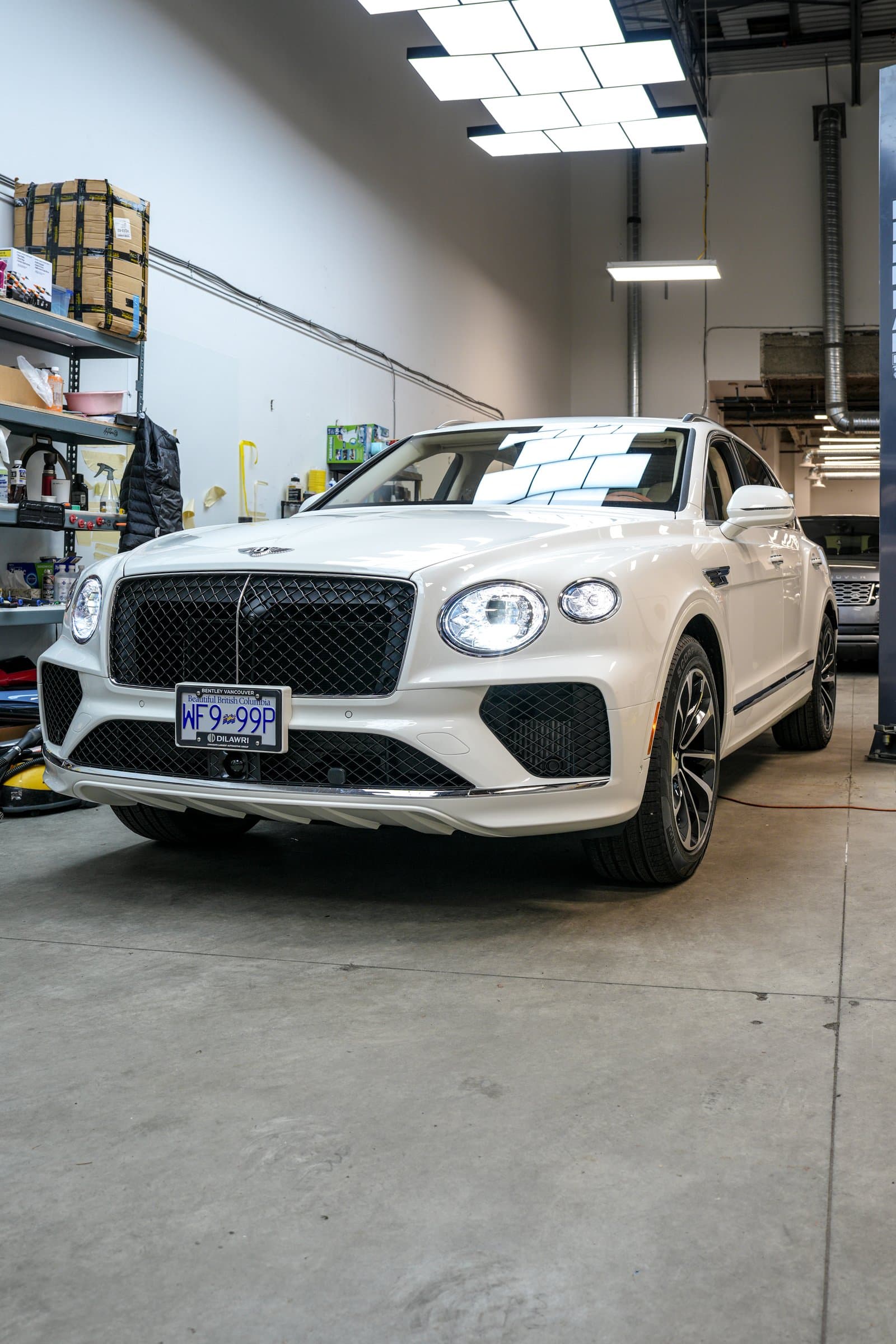
Related project: Bentley Bentayga — Full Clear PPF