
What an ECU Tune Actually Changes in Daily Driving
Published
Most people who research an ECU tune are looking at peak horsepower numbers. That is understandable, but peak horsepower is the least interesting thing a tune changes. The numbers on a dyno sheet tell you very little about how the car feels on Marine Drive at 7am or on the highway merge onto the Trans-Canada. What actually changes in everyday driving is subtler - and more meaningful.
Throttle Response: The Change You Notice First
Before the tune, your accelerator pedal maps a predetermined relationship to throttle plate opening and fuel delivery. The ECU tunes that relationship to be more direct - less pedal travel required to reach the same throttle opening, and a faster response from the moment you press the pedal to the moment the engine reacts.
On a naturally aspirated engine this means the engine responds more eagerly to small throttle inputs. On a turbocharged car it means the turbo spools earlier and holds its boost more consistently through the rev range. Neither of these changes requires you to drive harder - they mean the car does what you expect it to do with less delay.
Where the Power Actually Comes From
Factory tunes are calibrated for several things that conflict with maximum power: fuel economy targets, emissions compliance, and worst-case fuel quality across global markets. A performance tune recalibrates for the fuel available in your region and removes the power-limiting constraints that were designed for those variables.
In British Columbia, the fuel blend meets specific standards that allow a competent tuner to safely extract more from the factory hardware than the original calibration was willing to give. The engine internals - pistons, rods, bearings - are built to handle more than the stock tune allows. That is why a quality tune on a stock-engine vehicle does not require internal modifications.
Gear Shifting and Transmission Response
On vehicles with automatic transmissions, a performance tune often remaps shift pressure and shift points. The transmission holds gears longer before upshifting, shifts more firmly, and may respond faster to manual override inputs. On dual-clutch transmissions, this change can be significant - a tuned DCT feels noticeably more immediate than the stock calibration.
On manual vehicles, the throttle response improvement alone changes how you drive. Rev-matching on downshifts becomes more intuitive because the engine responds more predictably to the throttle input during the shift.
What Does Not Change
It is worth being clear about what a tune does not do. A performance tune on a stock vehicle will not make a naturally aspirated four-cylinder feel like a V8. The fundamental displacement and airflow characteristics of the engine do not change. The improvement is percentage-based - a tuned four-cylinder feels more responsive and pulls harder, but it does not rewrite the character of the engine.
On turbocharged vehicles the improvement is more pronounced because there is more headroom in the factory turbo calibration - but even then, a tune on a stock turbo does not produce turbo-spool behaviour that mimics a larger or different turbo. The improvement is real but bounded by the hardware.
BC Inspection and the Check Engine Light
A properly calibrated performance tune that retains the factory exhaust gas recirculation, catalytic converters, and emissions hardware will not trigger a check engine light on most modern vehicles. ICBC inspections pass on vehicles with a quality tune that does not remove emissions components.
If the tune was flashed without a quality tuner calibrating it for the specific vehicle, or if it raised exhaust gas temperatures beyond what the cooling system can manage, problems can develop. These are tuners to avoid - not reasons to avoid tuning.
Maintenance After a Tune
A performance tune increases the thermal and mechanical load on several components. Spark plugs wear faster and should be replaced more frequently - typically every 40,000 to 60,000 km on a tuned engine versus the standard 80,000 to 100,000 km interval. Fuel filters and air filters should be checked more regularly. Oil change intervals may be shortened on high-output tunes.
The engine itself tolerates the increased load well on most modern engines, which are over-engineered relative to their stock tunes. The components to watch are the ones that the factory tune was already working - turbos on boosted cars, for example, benefit from occasional harder drives that clean out oil coking.
Is a Tune the Right Move for You
A tune is most worth it on vehicles you drive regularly and enjoy driving. The daily improvement in throttle response is something you notice every time you drive. On a car that sits most of the time, the benefit is less immediate.
JRS Auto Customs works with performance tuning specialists who calibrate tunes for the specific vehicle and the fuel available in BC. Book a consultation to discuss whether a tune is appropriate for your car and what to expect from the calibration. You can also explore our performance services for more on what we offer.
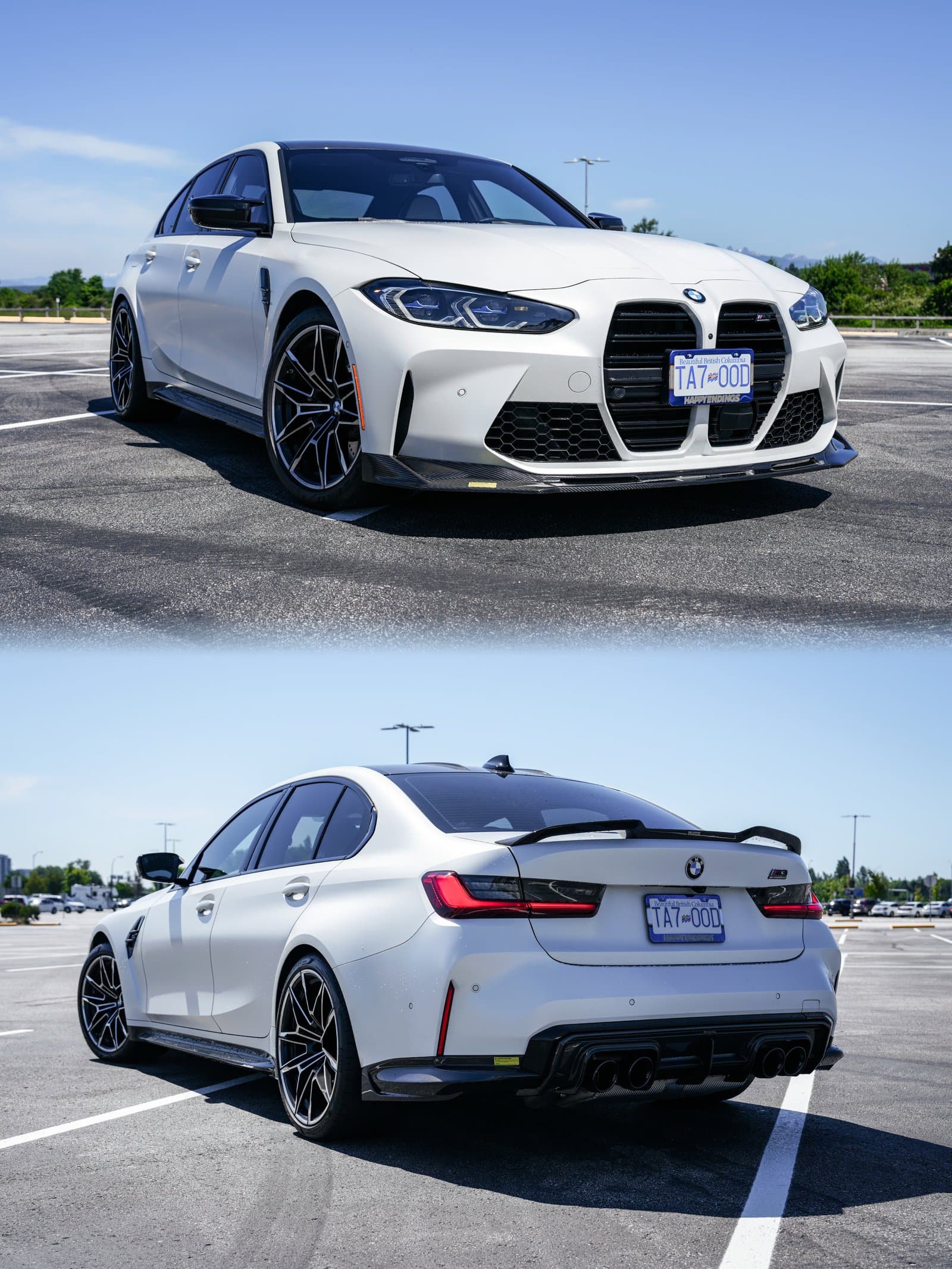
Related project: BMW M3 — Vorsteiner Aero Kit