Exhaust Mods and BC Inspection — What You Can and Cannot Do
Published
BC's annual vehicle inspection is a reality for most vehicle owners in the province. For drivers who have modified their exhaust — or who are considering it — the inspection raises specific questions about legality, sound levels, and emissions. Here is what the inspection actually covers and what it means for your car.
What BC Inspection Looks For in an Exhaust System
BC's periodic vehicle inspection program covers safety items, not general emissions testing in the same way as some other provinces. The inspection checks that the exhaust system is intact, properly mounted, and does not leak into the passenger compartment. It also checks that the catalytic converter and emissions equipment is present and unmodified — removing or replacing these components with non-OEM parts can cause a failure.
Sound levels are a separate concern. While BC's periodic inspection does not generally include decibel testing, excessive exhaust noise can result in a violation under the Motor Vehicle Act, which is enforced separately by police. If your exhaust is noticeably louder than stock and you are pulled over, that is a separate fine from any inspection issue.
Axle-Back, Cat-Back, and What Touches the Inspection
Understanding the parts of the exhaust system matters for knowing what you can change without touching the inspection. An axle-back system replaces everything from the rear axle backward — the muffler and tail pipes. It does not touch the catalytic converters or any emissions equipment, which means it has minimal interaction with the inspection checklist. Most quality axle-back systems do not trigger an inspection failure as long as the mounting points are secure and there are no leaks.
A cat-back system replaces the components from the catalytic converters backward, including the mid-pipe, muffler, and tail pipes. The key question is whether the system retains functional catalytic converters in the correct locations. If the cat-back you install still flows through the OEM cats — even if the rest of the system is aftermarket — it will generally pass inspection. Replacing the cats themselves, or removing them entirely, will cause a failure and may also trigger an out-of-province parts issue if the vehicle is registered in BC.
What About ECU Tunes and Downpipe Changes
ECU tunes and downpipe changes — replacing the exhaust components before the catalytic converters — are the modifications most likely to cause inspection problems. A downpipe that removes or replaces the catalytic converter with a high-flow unit will generally cause an inspection failure in BC because the original emissions equipment has been modified or removed. An ECU tune that disables or bypasses emissions monitoring systems can similarly cause a failure and may also trigger a check engine light that cannot be cleared without reverting the tune.
BC's annual vehicle inspection applies to most passenger vehicles registered in the province, typically from the vehicle's fourth year onward. The inspection frequency and specific requirements depend on the vehicle age and registration history, but the core checks relevant to exhaust modifications remain consistent across vehicle types. If you are buying a used car that has been modified, it is worth checking whether the previous owner obtained any inspection sign-offs for the exhaust work, or whether the modification was done without reference to inspection requirements. An undocumented exhaust modification can result in a failed inspection on your watch, regardless of when the work was originally done.
If you are planning an exhaust modification on your car and want to understand how it affects inspection, bring the car in and we can walk through what the inspection covers and what your specific setup will look like. We can also advise on axle-back vs. cat-back options that preserve inspection compliance. See our exhaust modification work in the portfolio.
The goal is not to discourage modifications — a well-chosen exhaust change can improve sound, reduce weight, and make a car more enjoyable to drive. The goal is to make sure that when inspection time comes, you are not caught out by something you did not know was a problem.
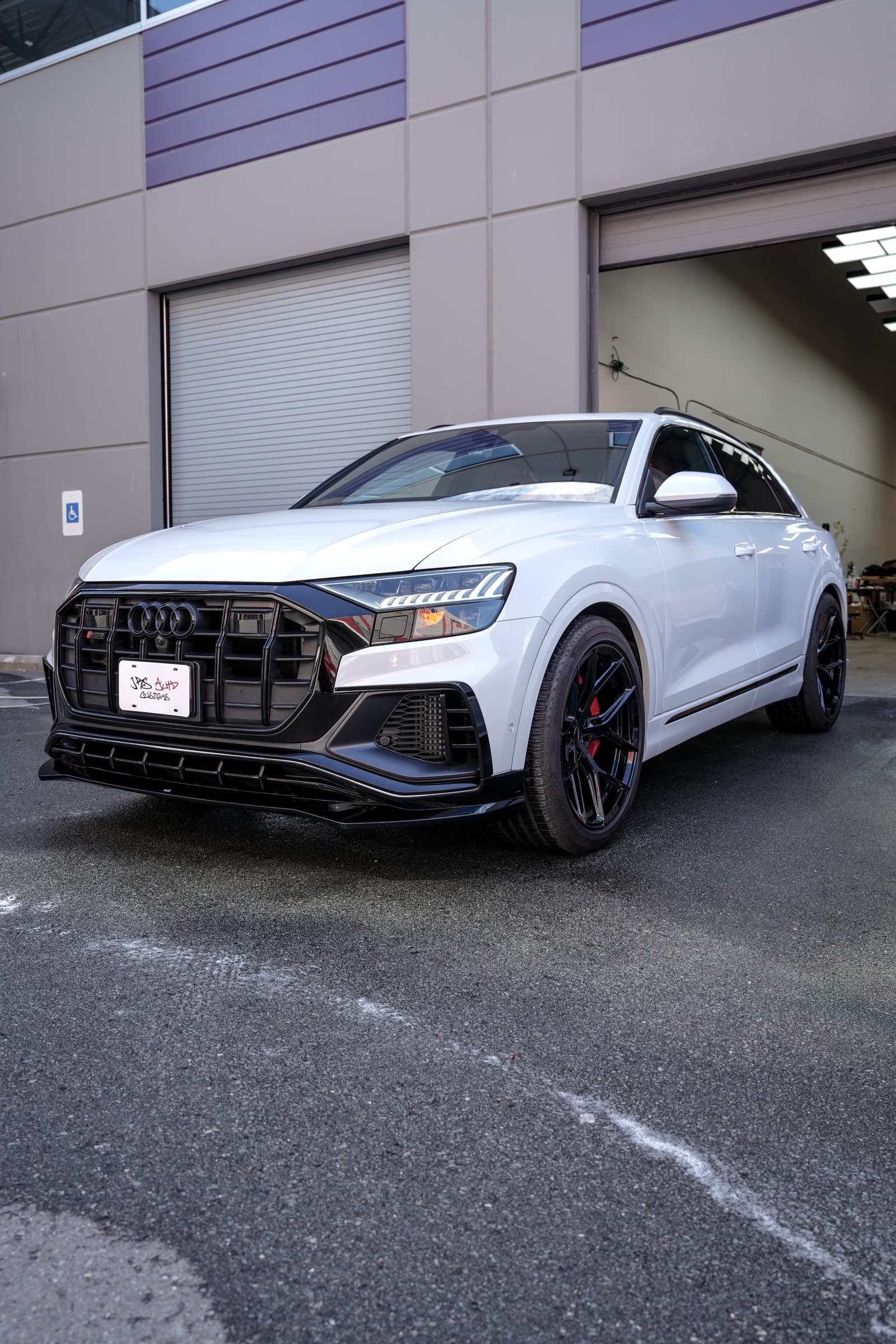
Related project: Audi SQ8 ABT Body Kit & Vossen HF5 Wheels