
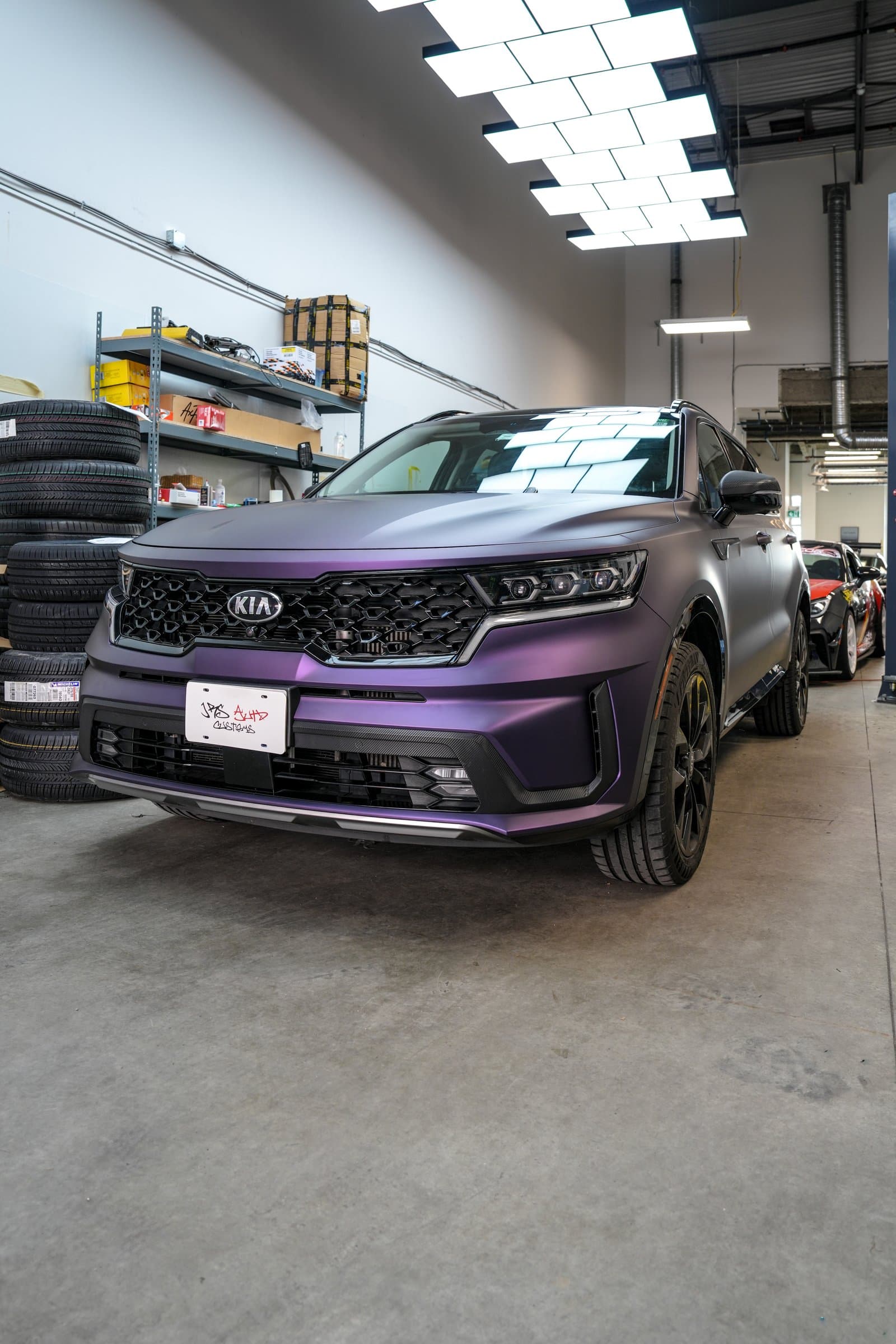
Fuel Flap Wrapping: Does Your Filler Door Get Film?
Published
The fuel flap is the one panel on a wrapped car that most owners forget to ask about. It is small, it sits on the rear quarter panel behind the rear door, and on a colour change job it has to be decided before any film goes down: does it get wrapped like everything else, does it get painted to match, or does it stay in factory paint?
Get that decision wrong and the car looks like a mistake from across a parking lot. A factory-painted flap on a satin purple wrap does not read as a deliberate accent. It reads as a patch nobody finished.
What the Flap Actually Is
The fuel flap is not a cosmetic cover. It is a hinged, latched panel with a rubber seal around the filler neck behind it, and on most cars a lock cylinder in the latch. It has to open, close, latch and keep road spray out of the fuel filler pocket. That is why it comes off the car during the job instead of getting filmed in place, and why the decision about what happens to it is made at the bench rather than at the front desk.
The pocket behind it is where salt and grit collect through a Vancouver winter, and on many cars the tyre pressure placard lives inside the flap. Both of those get handled at the same time the panel comes off. We have written separately about which badges that come off first, and the flap is the same kind of decision.
The Three Options
There are three realistic answers, and only one of them is right for a given car.
- Paint it to match the wrap colour. The panel is sprayed in the new colour so it reads as part of the design. This is the usual choice on gloss and metallic finishes, and it is where the paint shop does the work. Gloss Black, a colour the factory never built your car in, is the easy version of that problem.
- Wrap the flap as well. The same film goes over the panel, so the colour and the finish match by definition. The trade-off is that the film edge sits exactly where the panel opens and closes, and a hinge that flexes every time you open the flap is where film lifts.
- Leave it in factory paint. This is the option that adds the least to the job, and it suits a car where the flap is meant to stand out, such as a body-coloured flap on a contrasting wrap. It only works when the factory colour is a deliberate contrast rather than an accident.
Satin and Matte Are the Hard Case
A satin or matte finish changes the arithmetic. Colour is only half of what you see on a car; the sheen is the other half, and the film controls it. A sprayed panel carries clear coat gloss no matter how well the pigment was mixed, so a painted flap on a satin wrap is wrong even when the colour is right. The closer the film sits to a true matte, the less a paint match can hold up.
That is the argument for wrapping the flap too on a satin or matte car, or for choosing a finish that hides the difference. It is also why we offer colour change film built on a TPU paint-protection base: on the right car it does the colour change and takes the same rock-chip defence as clear PPF, and the rear quarter panel behind the rear wheel is precisely where road spray comes from.
What to Ask Before the Job Starts
Four questions, asked at the booking, save an expensive afternoon. The colour match itself is a craft with its own rules, and we have explained how it works for wraps and paint repairs elsewhere on this blog.
- Is the fuel flap being wrapped, painted to match, or left in factory paint - and which of those is it specifically on a satin or matte finish?
- If it is being painted, who does the colour match, and is the match sprayed on the actual panel rather than on a test card?
- If it is being wrapped, how is the film edge around the hinge treated?
- What happens to the tyre pressure placard inside the flap?
After the Wrap, the Flap Is a Maintenance Item
The flap is a high-stress area on a wrapped or filmed car. It sits in the road spray zone behind the rear wheel, its edge is where the film bends every time the panel opens, and the paint around the fuel filler neck is a chipping area on any car that lives on the highway. Check the edge for lifting during the first weeks, and keep the filler pocket behind it clean of salt.
If your car wears paint protection film rather than a colour change, the same pocket and the same hinge still matter. The film edge around the fuel flap is one of the most common places we see a lift, and it is worth checking at the same time as the rest of the car.
Related project: Kia — Satin Dark Night Purple Color Change