
Hail Damage on Your Car: What Happens to Paint and Glass
Published
What Hail Does to a Car Is Not One Kind of Damage
When hail comes through, the first instinct is to walk the car and look for damage. The problem is that hail leaves more than one kind of mark, and the two kinds need completely different answers. One is paint damage you can see and photograph. The other is metal damage you cannot see at all until much later. Treating them as the same problem is how owners end up spending money on the wrong thing.
A hailstone does two things at once when it hits a panel. It dents the metal underneath, and it delivers an impact that can chip or crack the clear coat above it. A small stone at speed might do only the first. A large one on a steep panel can do both at once. That is why the outcome varies so much from car to car even in the same storm, and why the sensible response depends on which of the two you are actually looking at.
The paint side of the equation is the part most people think about. Our guide to the first stone chip on your car walks through the clear coat layer by layer, and the same basic structure applies to hail. A shallow impact may leave a mark in the clear coat that looks like a chip. A harder hit can fracture the coating all the way through, and once that happens the panel is no longer a sealed surface.
The metal side is the one that catches people out. Paint can look almost untouched after a hailstorm and still be hiding a dented roof or hood. The difference between a panel that is merely pushed in and one that is creased is the difference between a repair you can largely polish out and a repair that means panel replacement. And a dent under intact paint still matters, because a stretched or creased panel will not return to shape on its own, and it will keep cracking the clear coat from underneath as the metal moves.
Why Hail Is Different From Every Other Kind of Stone Impact
Road debris and hail are not the same problem, and this is worth being clear about because the protection that works for one does not automatically work for the other.
A stone chip comes from a single, specific, directional impact. The gravel is thrown up by one particular wheel behind you, it has a size and a speed, and it strikes one point on one panel. Paint protection film is designed for exactly this. JRS describes PPF as a physical barrier that absorbs impact, and the PPF service page is specific about what that means: the film absorbs gravel, road debris and stone impacts before they reach the factory paint. A full PPF installation on a Bentley Bentayga in our portfolio is described the same way, wrapped panel by panel to guard against rock chips and road debris.
Hail differs from road debris in two ways that matter.
The first is area and direction. A stone chip is a point event: the gravel is thrown up by one wheel behind you and strikes one spot. Hail is a distributed event that lands from directly above, which is precisely where the broad horizontal panels sit. The affected area can be the whole roof, both hoods, or every flat panel on the car at once, and because the stones are not all the same size and do not all land at the same angle, several hits can land on the same panel in a few minutes. A panel can end up visibly deformed across its whole surface in a way no single stone chip could ever produce.
What Paint Protection Film Can and Cannot Do
This is the question that decides whether a PPF installation was worth it for your car, and it deserves a straight answer rather than a reassuring one.
Film does not stop a large hailstone from denting metal. Nothing applied to the surface of a panel prevents the panel itself from moving. You can reduce the likelihood of paint damage and you can reduce the severity of what gets through, but if the hailstone is big enough and the sheet metal is thin enough, the dent happens anyway.
This is not a criticism of the product, it is a property of the physics. Our guide to what paint protection film actually protects against draws the same line: it is excellent at absorbing the energy of impacts, and it is not a force field. The honest version of the claim is that film gives you a better outcome in a storm, not that it produces an undamaged car.
What To Do After a Hailstorm
The useful first step is to separate the assessment from the repair. Before deciding anything, you want to know whether what you are looking at is a clear coat issue, a dent, or a crease, because each one leads somewhere different.
For paint and clear coat, look at the panel in daylight and at an angle rather than head on. A chip or a crack in the coating catches the light differently from the surrounding surface, and it is much easier to find in raking light than when you are standing directly in front of the car. Any panel that shows a sharp-edged mark, or a mark with a dull or whitish centre, is a coating failure and it will spread if it is left.
Our guide to assessing paint and protection film on a used car before you buy covers the same inspection discipline, and it is worth borrowing if you are buying a car that has been through a hail region. The things to look at are the roof and hood for dents, the leading edges of panels for chips, and the paint for evidence of a repaint on a panel that would normally be factory-finished.
If the panel has been dented and you are going to have the paint corrected, the order matters. Correcting the paint before the dents are addressed means working a polisher over a panel that is still deformed, and the reflection will never come out right. The dent has to be addressed first, then the surface, then the finish.
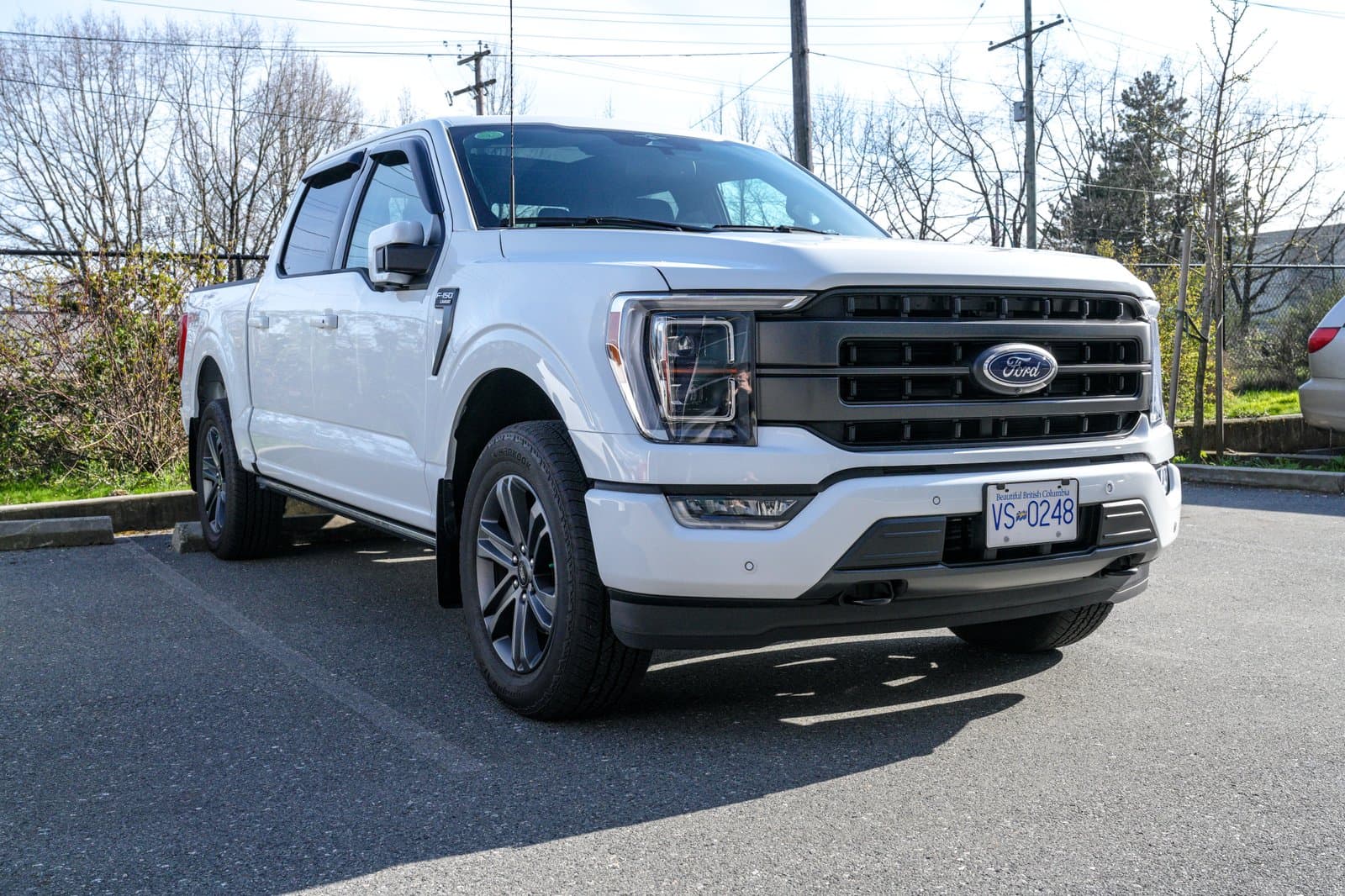
And if you are considering protection for the next storm, the realistic conversation is about what protection does for the panel it covers rather than whether it prevents damage. If you want to see what film looks like properly fitted on a wide horizontal panel, the Ford F-150 Raptor in our portfolio is a good reference: the hood and the flared fenders are armoured in clear PPF, with the description on the project noting it is ready for logging roads and mall parking lots with equal indifference. A broad hood like that is exactly the surface hail targets.
The Long-Term Question: Protection Before the Next Storm
Once a car has been through hail, the case for paint protection film usually makes itself. Not because the film would have prevented the dents, but because a car that has been through one storm in Vancouver is likely to see another.
That changes how you think about coverage. A full wrap protects everything, which is the straightforward answer and the one most owners want. But hail lands on horizontal panels, and the panels that get hit hardest are the roof, the hood, the boot lid and the rear deck. If the car is going to be parked outside, or if the parking situation puts it in the open, the panel coverage that matters is the coverage over those horizontal surfaces.
There is one more thing a hail event makes relevant, and it is not about the damage itself. A car that has taken hail sat through a storm in whatever condition it was parked in, and the salt, the grit and the water exposure that came with it are still on the car. That detailing work is the same discipline you would apply after any severe weather exposure, covered in our guide to what a door ding or parking scratch actually requires.
The bottom line is straightforward. Hail is a real event, and PPF is genuinely useful against it. But film mitigates hail damage on a panel, it does not prevent it, and the difference between those two claims is the difference between a realistic decision and a disappointing one. Assess the metal first, repair in the right order, and protect the surface last.
Related project: Ford F-150 Raptor Workhorse PPF