
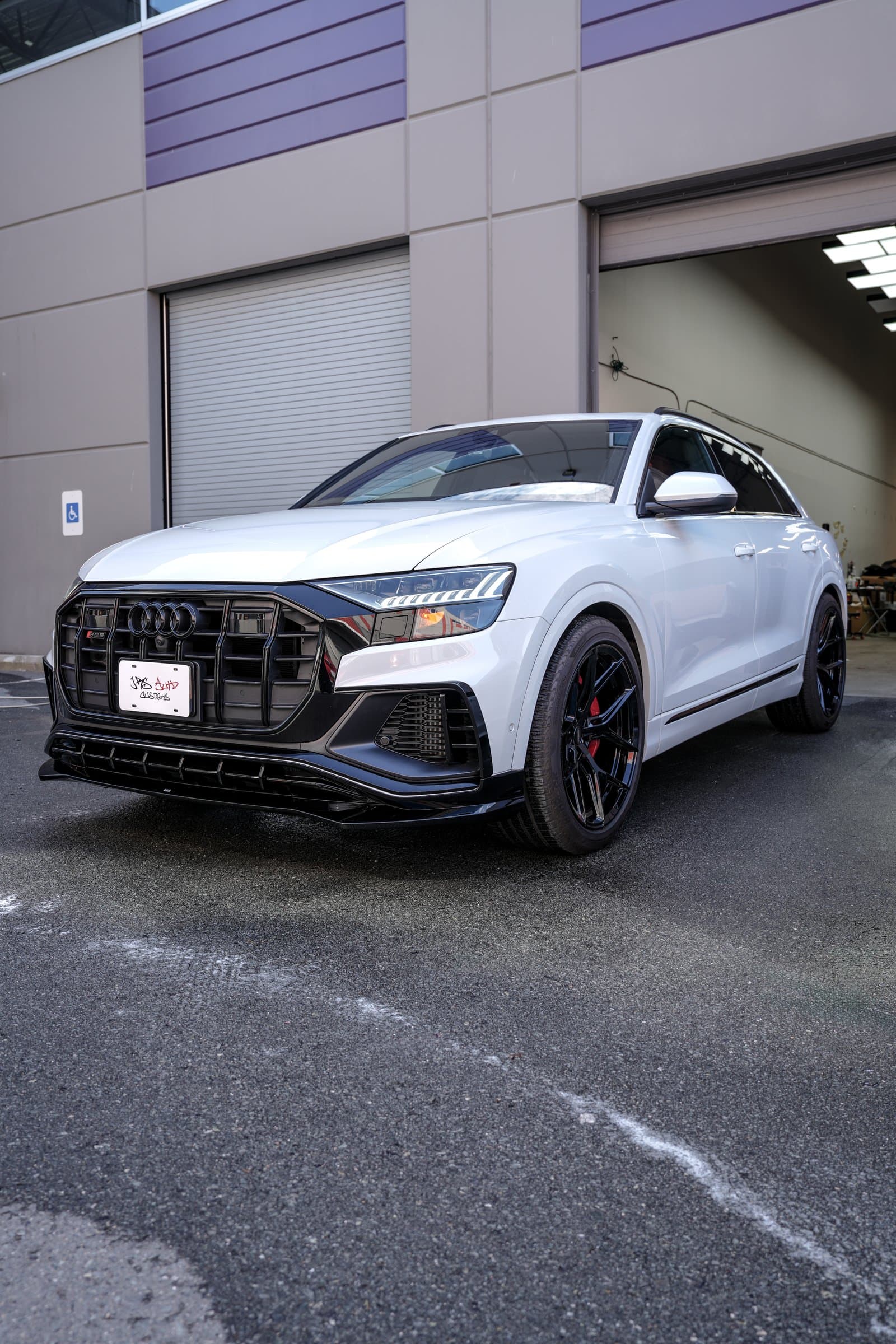
Headlight Restoration and Oxidation Care in Vancouver
Published
Oxidised headlights are a problem you do not notice at first, accumulating gradually it until one day you look at your car and realise the headlights look yellowed, foggy, and dim. By that point the issue has been building for years. In Vancouver it builds faster than in many Canadian cities, and it is worth understanding why before it affects your night driving visibility.
What Causes Headlight Oxidation
Modern headlights use polycarbonate lenses rather than glass. Polycarbonate is lighter and more impact-resistant than glass, but it is susceptible to UV degradation. The outer layer of the lens oxidises when UV radiation from sunlight breaks down the polymer surface, creating a chalky, discoloured layer that scatters light rather than transmitting it cleanly.
Vancouver amplifies this process. The city gets meaningful sun year-round — the UV index in summer can be significant even through cloud cover. The mild winters prevent the thermal cycling that helps dry out surface moisture in other climates. The result is that oxidation progresses steadily through spring, summer, and autumn without interruption, and the mild winter does not reset the clock the way a hard freeze does elsewhere.
Road salt and sand accelerate the surface degradation too. Salt residue sitting on the lens surface adds to the chemical breakdown of the polycarbonate. In a city that salts its roads aggressively from October through March, every salted drive adds to the surface damage accumulating on the headlights.
The practical consequence is measurable: an oxidised lens can transmit as little as 30 percent of the original light output. The rest is scattered and absorbed by the damaged surface. This is not just an appearance issue — it is a safety issue at night and in rain.
Restoration Versus Replacement
Restoration and replacement are different solutions to different problems. Restoration is appropriate when the lens housing and reflector are still functional and the only issue is surface oxidation on the outer lens. Replacement is appropriate when the housing has failed, the reflector is degraded, the seal has let moisture into the assembly, or the lens has physical damage like cracks or chips.
Restoration involves abrading the oxidised outer layer of the polycarbonate with progressively finer compounds, then applying a UV-resistant sealant or coating to replace the protective layer that has worn away. The process takes a few hours per headlight and produces a result that is close to the original clarity. The durability of the result depends on the quality of the final sealant and the conditions the car is parked in.
Replacement involves removing the old headlight assembly and installing a new OEM or aftermarket unit. The advantage is a like-new result with a new seal, a new lens, and a new housing. The disadvantage is cost — replacement is significantly more expensive than restoration, and the quality of aftermarket assemblies varies considerably.
The decision usually comes down to the condition of the housing and reflector. A detailer or body shop can assess whether the reflector inside the housing has degraded — if the mirror finish behind the lens has corroded or fogged, restoration of the outer lens alone will not restore full light output.
Protecting Headlights After Restoration
Restored headlights benefit from the same protection as the rest of the paint and glass on the car. A layer of ceramic coating on the headlight lens creates a UV-resistant barrier that slows the return of oxidation. This is a straightforward add-on at the time of restoration.
PPF on headlights is an option for owners who want the maximum level of protection. Clear film applied to the headlight lens creates a physical barrier against both UV and road debris. It is common on newer vehicles where the headlights are still clear and the owner wants to keep them that way.
For vehicles that already have significant oxidation, restoration followed by a protective coating is a cost-effective approach that buys several years before the oxidation returns to the same level.
For headlight restoration, assessment, or protective coating, visit theJRS Auto Customs maintenance service page or thedaily-essential page to discuss what approach makes sense for your vehicle.