
Headlight Restoration vs Replacement in Vancouver's Climate
Published
If you have owned a car for more than five years in Vancouver, you have probably noticed the headlights looking hazier than they used to. That cloudiness is not just a cosmetic issue — a degraded headlight lens reduces the amount of light that actually reaches the road, which affects night driving visibility and how early other drivers can see you. The question is whether to restore the existing lens or replace the whole assembly. The answer depends on a few specific factors.
Why Vancouver Accelerates Headlight Lens Degradation
Modern headlight lenses are made from polycarbonate plastic, which is much more resistant to stone chips than glass but is susceptible to UV degradation. The outer surface oxidises when exposed to ultraviolet light, creating a hazy layer that scatters light rather than transmitting it cleanly. Vancouver's climate accelerates this process in two ways that are specific to the region.
First, BC has a high UV index relative to other Canadian provinces. Even on overcast days, the UV intensity in the Lower Mainland is significant. Second, winter in Vancouver can be surprisingly sunny, and snow and water reflections amplify the UV exposure — the same effect that makes the mountains feel brighter than the city on a clear January day. Combined with road salt spray from winter driving, the lenses are dealing with both photochemical oxidation and salt-induced surface degradation at the same time.
The result is that a six-year-old car in Vancouver often has headlights that look worse than the same car in a dry, low-UV climate. The lens surface goes from clear and smooth to yellowed, chalky, and rough. On some lenses, the inner surface also shows condensation or moisture accumulation, which indicates the seal between the lens and the housing has failed — a different problem that affects whether restoration is viable.
When Restoration Is the Right Choice
Headlight restoration involves sanding the outer surface of the lens to remove the degraded layer, then polishing it back to clarity and applying a UV-protective coating. When done properly, restoration can bring a headlight back to near-factory transparency.
Restoration works well when the degradation is on the outer surface only — the part you can touch — and the housing is sealed with no moisture inside the lens. If you open the back of the housing and find condensation or water marks on the inside of the lens, the seal has failed and moisture is getting in. Restoration will not fix that: the inside will keep fogging regardless of how clear the outside is.
The other consideration is whether the lens has been restored before. Each restoration removes a small amount of polycarbonate. If the lens has been sanded and polished multiple times, it becomes thinner and more prone to cracking or warping under the heat of the bulb. A technician can measure the lens thickness to determine whether another restoration is safe.
After restoration, applying a UV-blocking clear coat is essential — without it, the freshly exposed polycarbonate will oxidise again within a season or two in Vancouver's climate. A proper restoration job should include this step.
When Replacement Makes More Sense
Replacement is the better choice when the housing seal has failed, when the lens has been previously restored multiple times and is too thin, or when the plastic is cracked or physically damaged. On some vehicles — particularly higher-end European models — replacement assemblies also include upgraded bulbs or LED configurations that are not available when restoring the original lens.
The cost difference between restoration and replacement varies significantly by vehicle. On a common model, a quality restoration might cost a fraction of a full replacement. On a vehicle with expensive OEM assemblies, replacement can be the more cost-effective long-term decision if restoration would need repeating every two years.
A practical tip: before committing to either option, measure how much light your headlights are actually putting on the road at night. A light meter or a simple comparison with a known-good vehicle at the same distance will tell you whether the reduction is significant enough to justify the work now, or whether it can wait until spring.
Getting an Assessment Before You Decide
JRS Auto Customs can assess your headlights and advise whether restoration or replacement is the appropriate option for your specific vehicle and usage. The assessment includes checking the housing seal, measuring lens thickness, and evaluating the pattern and output of the headlights themselves. If the car also has paint protection or PPF, the team can factor that into the recommendation.
You can also protect the headlights proactively with a clear protective film — the same material used in PPF — which shields the lens from UV, stone chips, and salt spray from the first day of installation. If your vehicle does not already have headlight protection, ask the JRS team whether it is worth adding as part of a wider protection package. Learn more about the PPF options available at JRS Auto Customs.
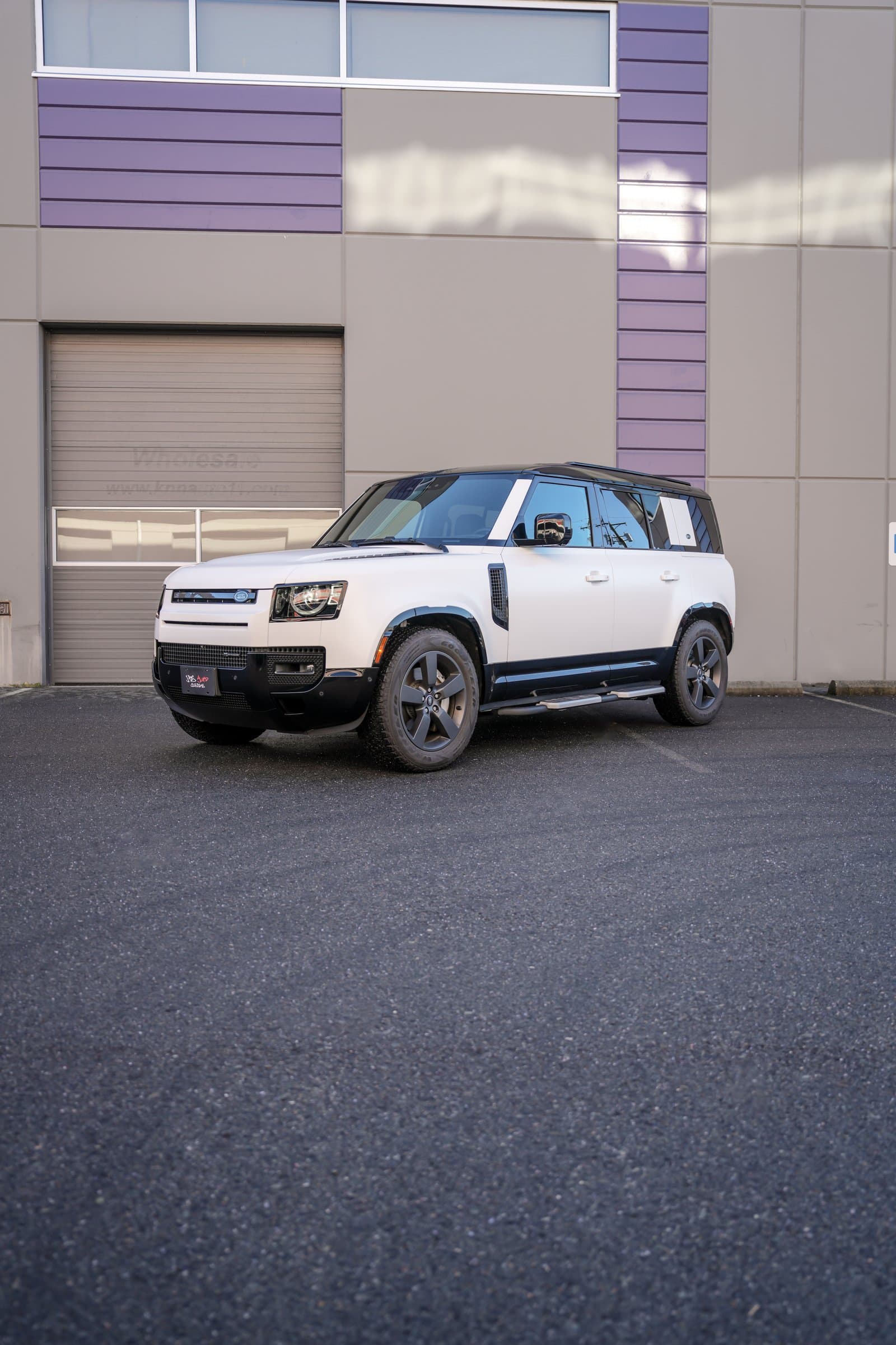
Related project: Land Rover Defender Matte White PPF