How Colour Matching Works for Wraps and Paint Repairs
Published
If you have ever asked a shop to match a colour, you probably know the gap. You have a shade in mind, the film catalogue is close but not right, or a panel needs repainting and no longer lines up with the rest of the car. Colour matching means reproducing a specific colour rather than settling for the closest one available. Since 2010 we have been doing custom work in Vancouver, and colour matching comes up far more often than most owners expect, usually at the point where a decision about a colour change or a paint repair has to be made properly rather than approximately.
What Colour Matching Actually Is
Most colour changes begin in a catalogue. Wrap manufacturers produce hundreds of stock colours, from solid blacks and particular whites through to deep metallics, and for most projects that is exactly the right starting point. Colour matching is a different job. For a wrap, it means a film produced for a specific colour reference rather than a roll pulled off the shelf. For paint, it means a formula mixed to reproduce what is already on the rest of the car.
The distinction matters because the goal is not a similar colour, it is the colour you were looking at. When paint has been matched properly, there is no panel that reads differently from its neighbours. When it has not, the repaired area can look slightly lighter or sit slightly off in hue once it is out in daylight, and once you have noticed it you cannot stop noticing it.
When Owners Actually Need It
A handful of situations bring colour matching onto the table.
First, when you want a colour the film library does not carry. Some factory colours were never produced in film at all, or were not produced in the exact version your car wears. If a car has an unusual paint finish and you would like to keep that look, that is a matching job.
Second, when the point of the colour change is a specific factory colour, including a colour a manufacturer has since discontinued.
Third, when a damaged panel needs to be repainted and no longer matches. A car painted a decade ago may have faded or oxidised differently from a newer panel, which means a standard formula that was correct for the car when it was new can now be off.
And fourth, on multi-tone and custom work, where the colour came from a reference, a supplier, or an earlier stage of the car's own history.
Why Matching Is Harder Than It Looks
Two things make this more demanding than ordering from a swatch book.
The first is metamerism. Two samples can look identical under one light and separate under another. A colour matched to a sample indoors can read differently in open daylight, under the orange cast of a street lamp, or on a wet road at night. A sound match gets checked in more than one lighting condition, and on a wrap it gets checked across the whole car rather than on a single flat panel.
The second is that the reference itself may not be uniform. A car's paint can vary from panel to panel, and sometimes more between a door and a roof than you would expect, based on how it was sprayed years ago and what it has been exposed to since. Matching against a single door can produce a repaired panel that does not agree with the roof right next to it. A careful shop takes readings from several areas and works from the panel that is closest to original.
Then there is finish. Film has a texture and a depth that paint does not, so carrying a colour across two different materials is a different problem from carrying it across two panels of the same material.
How to Ask About a Match
When you talk to a shop about a colour change or a paint repair, the questions that help are specific ones.
Ask how the colour will be established: from a paint code, from a physical sample, from a scan of your car, or from a photograph. A photograph is the weakest starting point, because a screen shows a colour under one light and one set of settings, and it shows you what the camera saw rather than the paint itself. A physical sample or a code taken off the car is a much stronger place to begin.
Ask where the reference colour is being taken from, and if it is a single panel, ask whether more than one area is being checked.
Ask what happens if the match lands close but not exact. Any shop should be able to say plainly how much difference is acceptable and what it would take to narrow it further.
Ask what the finished result will be judged against, and when it will be judged. A colour that reads correctly under the shop's lights may not read correctly in daylight tomorrow.
Where It Sits Alongside the Rest of the Work
Colour matching is one decision inside a larger one. A colour change is usually paired with protection on the new finish, and a matched paint repair is usually paired with the correction needed to make the surrounding panels agree with it. If you are wrapping a car in a matched colour, sealing the film afterwards matters as much as the colour itself, because the seal is what keeps the finish behaving as intended through Vancouver's wet season and road salt.
Our colour change service page covers the finishes and coverage options available, our ceramic coating page explains how the protection layer works on top of a new finish, and our maintenance detailing page covers what a general refresh includes. If you are weighing up protection before deciding on colour, the PPF page is worth reading first.
We have been working on custom cars in Vancouver since 2010, and colour matching is one of the pieces that turns a good job into a discreet one.
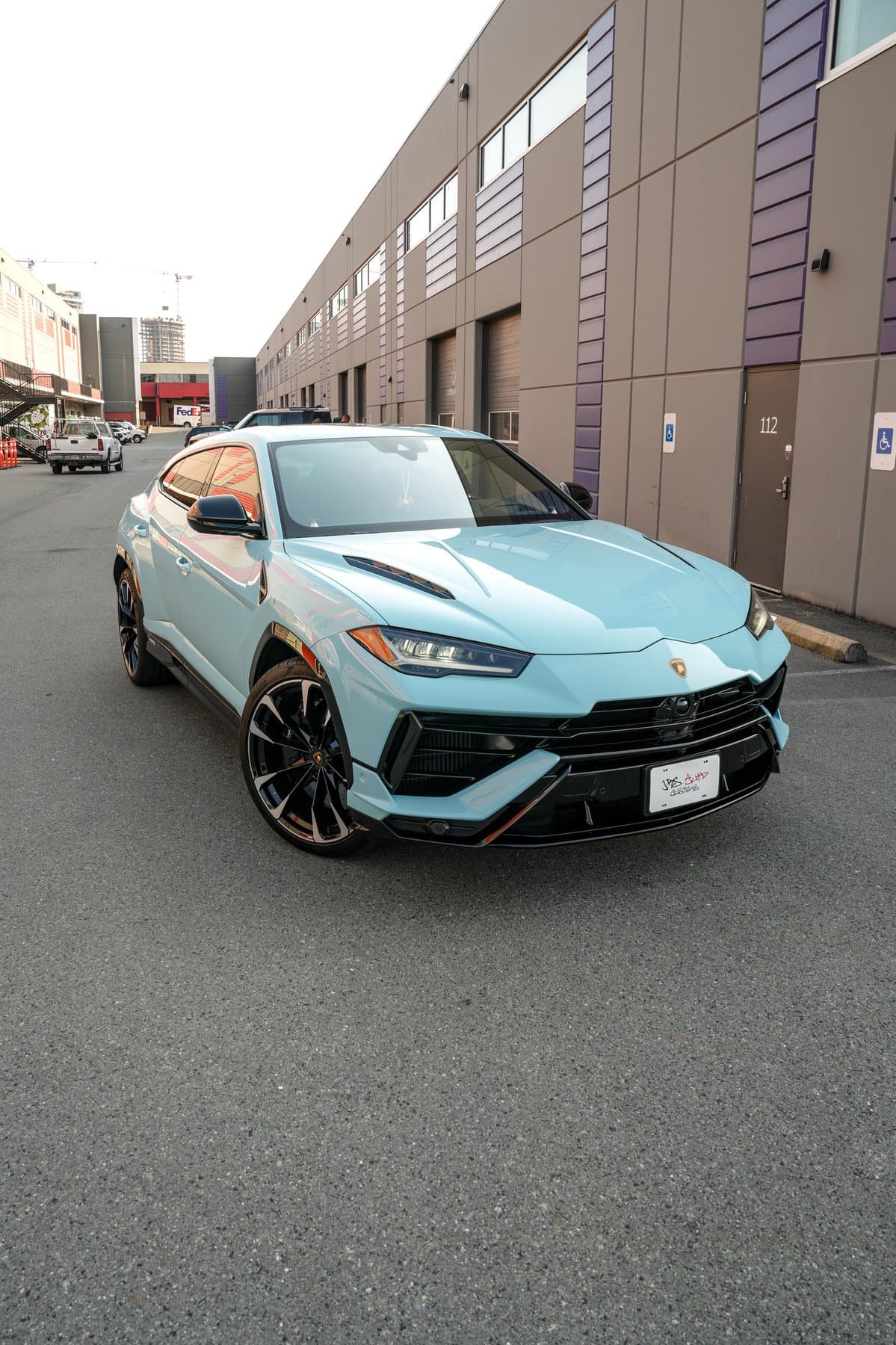
Related project: Lamborghini Urus — Maison Blue