
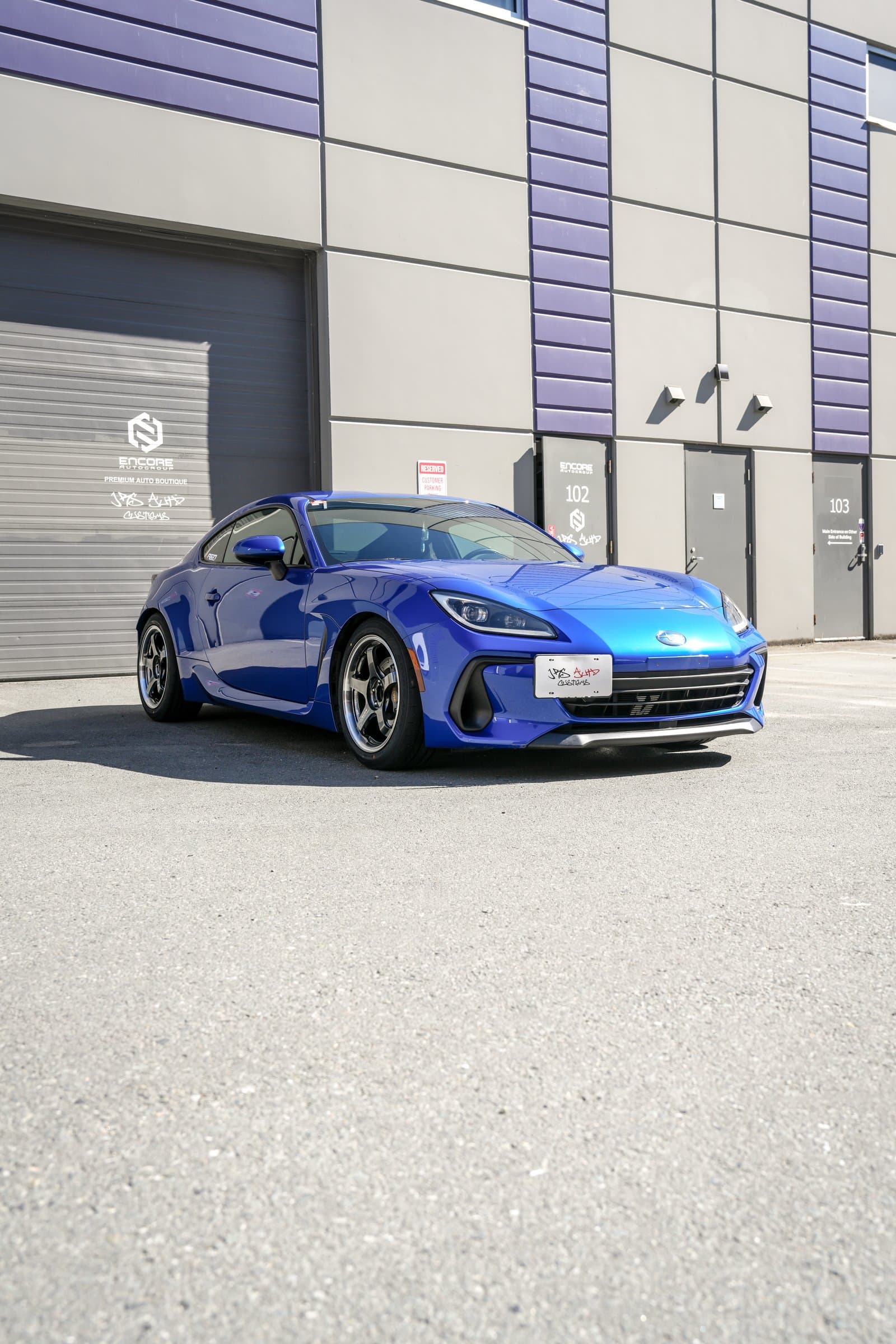
How to Wash and Protect Your PPF in Vancouver
Published
Paint protection film is one of the best investments you can make for your car in Vancouver. It guards against rock chips, scratches, and the daily wear that comes from city driving. But PPF is not a set-it-and-forget-it product — it needs regular care to do its job properly, and Vancouver's climate creates some specific challenges that most car owners do not think about until the film starts looking dull.
Why Vancouver Is Tough on PPF
Vancouver is one of the wettest cities in Canada. From October through spring, your car sits in near-constant moisture. Combine that with road salt, urban pollution, and the marine fog that rolls in from the harbour, and you have an environment that works against any surface coating — including PPF. Moisture trapped under the film edges, acidic pollutants from ferry routes and industrial areas, winter road salt, summer industrial fallout, and spring tree sap — each of these can degrade a PPF installation if it is not washed off regularly.
What to Avoid When Washing PPF
The most common mistake is treating PPF like ordinary paint. A few things that will cause problems:
Pressure washers aimed at an angle can force water and contaminants under the film edges. Over time this weakens the adhesive.
Automated car washes, especially brush-style tunnels, can cause micro-abrasions on the film's surface.
Harsh chemicals — solvents, petroleum-based degreasers, or acidic cleaners — will stain or cloud the film.
Abrasive brushes, stiff brushes, or paper towels will scratch the surface.
The Right Way to Wash PPF
Use a pH-neutral car shampoo specifically formulated for film-safe cleaning. Avoid anything with wax or gloss enhancers that can leave a residue on matte or satin finishes. Soft microfibre wash mitts or lambswool mitts are the safest tools.
Follow the two-bucket method — one bucket with shampoo, one with clean rinse water. Wash from the top of the car down, rinsing the mitt in the rinse bucket before reloading with shampoo. This prevents dragging grit across the surface.
After washing, rinse thoroughly with deionised or filtered water to remove any mineral residue, then dry with a clean microfibre drying towel. A light layer of a dedicated PPF sealant applied every few months helps maintain the film's hydrophobic surface.
Can You Use an Automated Car Wash?
Soft-touch automated car washes are generally acceptable for PPF, but repeated use can cause surface marring over time. Touchless car washes are the safest option, though they do not clean as effectively. Avoid brush-style tunnels entirely — they can scratch and lift PPF film. Watch out for friction flaps at the exit of most tunnel washes, as they can catch on film edges.
How Often Should You Wash in Vancouver's Rainy Season?
Vancouver's wet season runs from October through spring. During this period, PPF-covered vehicles should be washed at least every one to two weeks — more frequently if possible. After heavy rain or marine fog events, a quick rinse with deionised water helps remove acidic pollutants before they bond to the film surface.
Maintenance Is About More Than Appearance
Keeping your PPF clean is not just about how the car looks. Contaminants sitting on the film surface can gradually degrade its hydrophobic properties and, over time, affect the adhesive underneath. Regular washing preserves the film, extends its service life, and keeps the vehicle protected.
For professional PPF maintenance and deeper cleaning, book an appointment at JRS Auto Customs. Our team can also advise on adding a ceramic coating over your PPF for additional chemical resistance and easier maintenance.
Seasonal Summary
Autumn and winter: wash most frequently. Salt, moisture, and marine fog are at their peak. Spring: full inspection and decontamination after winter. Summer: less rain, but UV and industrial fallout still accumulate. A consistent wash routine through all four seasons is the simplest way to get the most out of your PPF.
Related project: Subaru BRZ — Full Gloss Clear PPF