Hub-Centric Rings: Why Aftermarket Wheels Vibrate
Published
Every November in Vancouver, drivers swap onto winter wheels or aftermarket alloys and notice a steering tremor around 90 to 110 km/h on Highway 1. A second trip to the balancer often shows zero error, because the culprit is a missing or worn hub-centric ring.
At JRS Auto Customs on Laurel Street, our wheels and custom fitment service checks centre bore sizing alongside offset and brake clearance before a wheel ever touches a vehicle. Understanding how the hub carries the wheel explains why a gap smaller than a millimetre can feel like a bent rim at highway speed.
Hub-Centric vs Lug-Centric Fitment Explained
Factory wheels on almost every modern passenger car, SUV, and EV are hub-centric. That means the centre bore machined into the back of the wheel matches the diameter of the raised cylindrical lip on your vehicle's hub. When you slide an OEM wheel onto the studs, that hub lip supports the weight of the vehicle and locks the wheel dead centre before you tighten a single lug nut.
Most aftermarket cast and flow-formed wheels are built with a larger universal centre bore, such as 73.1 mm or 66.6 mm, so one wheel casting can fit dozens of different car models. If you bolt that wheel onto a hub with a smaller diameter—say 57.1 mm, 64.1 mm, or 66.5 mm—without a hub-centric ring, the wheel is held in position only by the taper of the lug nuts or lug bolts. Even when tightened in a star pattern, lug hardware alone can leave the wheel off-centre by a fraction of a millimetre, which turns into rhythmic vertical shake as rotational speed climbs.
Why Balanced Tires Still Shake at Highway Speed
A wheel balancer spins the tire and rim assembly on its own precision cone, which centres the wheel through the centre bore. On the machine, the assembly spins true and reads zero-zero. Bolted onto the car without the proper ring, the wheel rests on the lug studs instead of the hub lip and sits slightly eccentric.
Drivers usually feel that eccentricity most clearly between 85 and 115 km/h on smooth stretches like the Port Mann approach or the Sea-to-Sky Highway, while city speeds below 60 km/h feel completely normal. Over months of wet Vancouver commuting, uneven clamping load can also fret the mating face or elongate lug seats, turning a simple fitment oversight into a recurring vibration.
Plastic vs Aluminum Hub-Centric Rings in Vancouver Rain
Hub-centric rings are made in two common materials: polycarbonate plastic and billet aluminum. Both materials do the exact same job of filling the radial gap between the car's hub lip and the wheel's centre bore, because the ring is only an alignment spacer and does not carry shear load once the lugs are torqued properly. Still, Metro Vancouver's wet winters and salted bridge decks expose clear practical differences between the two:
- Polycarbonate plastic rings resist galvanic corrosion and will not seize onto a steel or aluminum hub after months of winter rain and road brine.
- Cheap brittle plastic rings can crack or deform if a tire shop forces a wheel on crooked or uses an impact gun before seating the wheel flush.
- CNC-machined aluminum rings hold tighter tolerances and handle track-day brake heat without softening, which suits high-performance builds.
- Aluminum rings require a thin coat of anti-seize on the hub lip during fall and spring swaps so moisture does not bond the ring to the hub.
When we put together winter and seasonal tire packages, we inspect existing rings at every changeover and replace any cracked or heat-warped plastic rings before torquing the lugs to spec.
What to Check Before Your Next Wheel Swap
If you bought used aftermarket wheels, switched between summer forged rims and winter alloys, or noticed a faint steering shimmy right after a seasonal swap, a quick hub-bore check usually saves an unnecessary alignment or balance bill. Measure both the vehicle hub and wheel bore rather than guessing by brand, since hub sizes can change between generations.
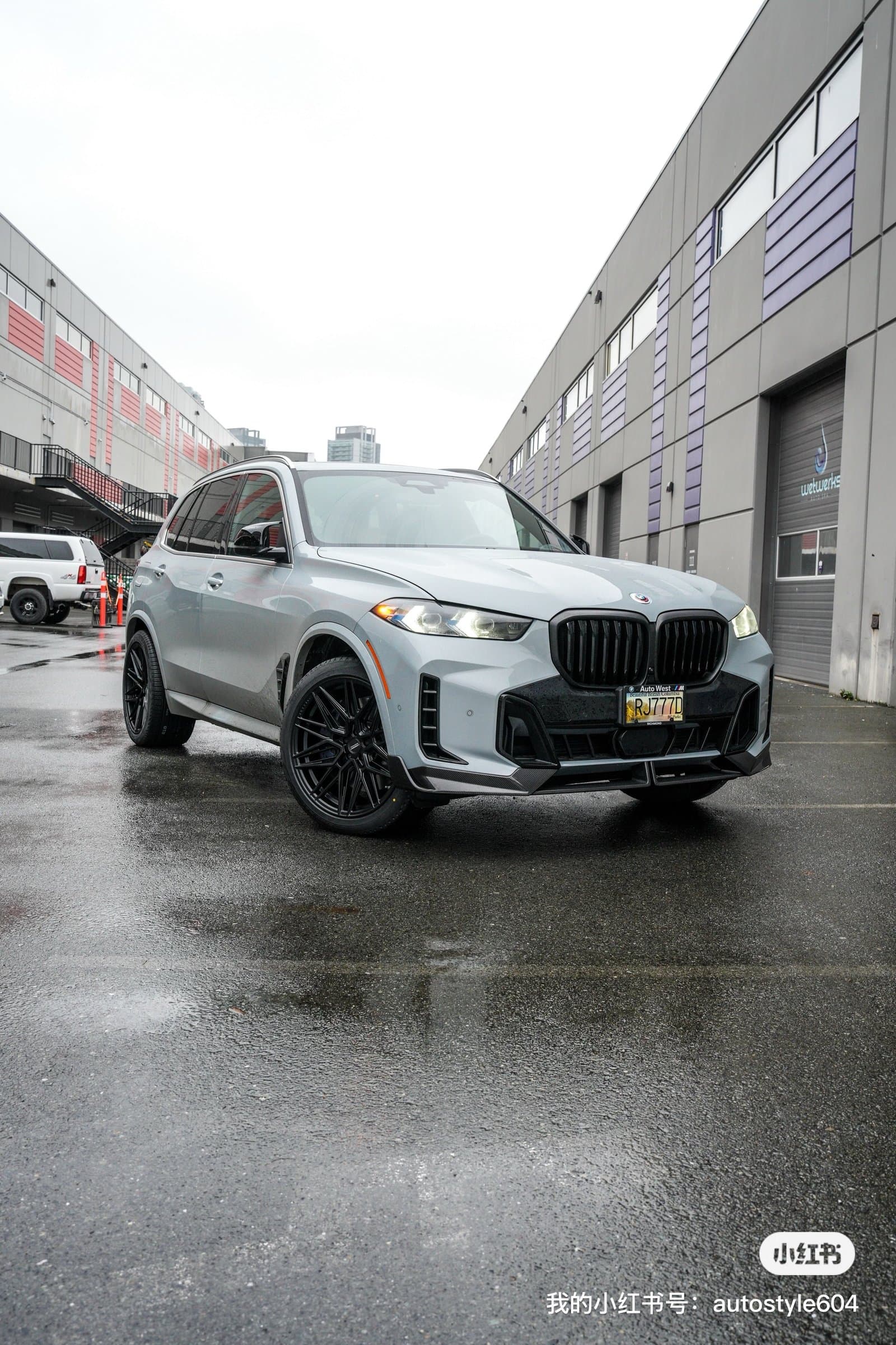
If you want a vibration-free setup without guesswork, look at how we spec custom-bored fitments like this BMW X5 Vossen HF7 wheel upgrade or bring your wheel set to JRS Auto Customs at 8889 Laurel St #102 in Vancouver. We verify hub-bore tolerances, seat the right rings cleanly, and torque every lug by hand so your wheels run smooth from city streets to highway speeds.
Related project: BMW X5 Vossen HF7 Wheel Upgrade