
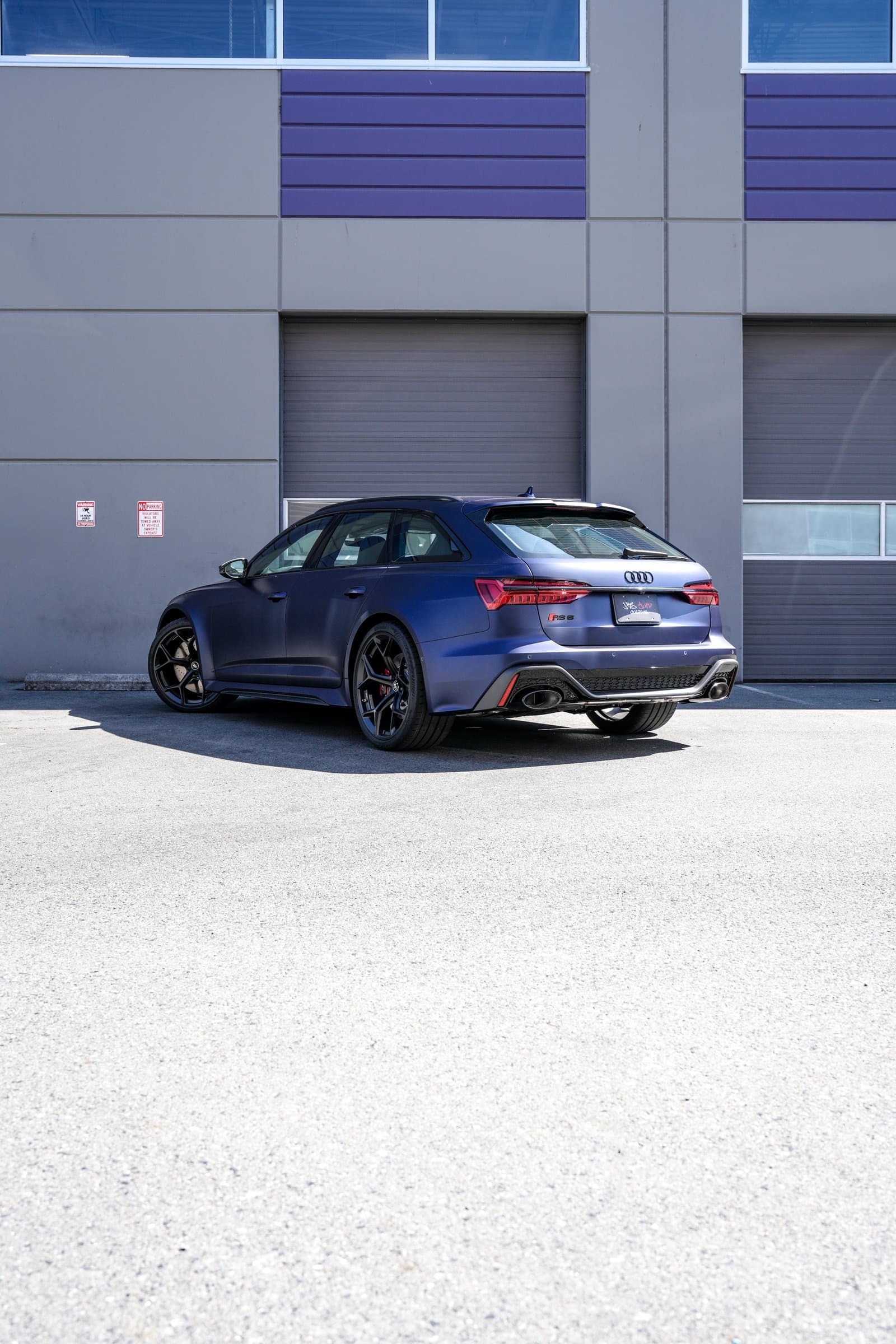
Matte Paint and PPF Care in Vancouver's Climate
Published
Matte finishes — whether from the factory paint, a vinyl wrap, or paint protection film — require a different maintenance approach than gloss surfaces. The same cleaning products and techniques that keep a gloss finish looking sharp will damage a matte one. Vancouver's wet climate adds another layer of consideration: matte surfaces show road film, water spots, and contamination more visibly than gloss, so regular maintenance matters more.
Why Matte Finishes Cannot Be Corrected Like Gloss
A gloss paint surface can be polished — compounds and polishes cut into the clear coat to remove defects, and the surface is then refinished to a high shine. This works because gloss paint has a flat, even surface that can be cut and refined. A matte finish is deliberately non-reflective — it has a texture at a microscopic level that diffuses light and creates the flat appearance. Any attempt to compound or polish a matte surface removes that texture and creates shiny spots — a patch of gloss on a matte finish that cannot be undone without re-spraying or re-wrapping the affected panel.
The implication is that matte finishes need to be protected before damage occurs, rather than corrected after it happens. Prevention is the only practical strategy. This makes PPF on matte-finish paint a particularly strong choice — the film absorbs impacts and prevents damage from ever reaching the paint, while the matte texture is maintained through the film's own surface finish.
Washing Matte Finishes: What to Use and What to Avoid
Standard car wash soaps are generally safe for matte finishes if they do not contain wax, gloss enhancers, or polymer sealants. These additives are designed to fill in and enhance gloss surfaces, which on a matte finish will create uneven shine and patches where the product has accumulated. Look for a wash product explicitly formulated for matte or satin finishes, or a pure shampoo with no additives.
The two-bucket wash method — one bucket with wash solution, one with clean water for rinsing the mitt — is as relevant for matte finishes as it is for any paint, and more important given the risk of dragging contaminants across the surface. Any grit or particle caught in the wash mitt will create scratches on a matte surface just as it would on a gloss one, but on a matte finish those scratches appear as bright marks against the flat surface and are more visible.
Automatic car washes — especially touchless ones using harsh detergents — can damage matte finishes over time. Touch-type car washes are worse: the brushes drag grit across the surface and can permanently alter the matte surface finish. Hand washing or touchless-only car washes are the appropriate approach for a matte-finish vehicle.
Water Spots and Contamination on Matte Surfaces
Water spots form when mineral deposits in water are left behind as water evaporates. On a matte surface, the same deposits appear as irregular patches that are immediately noticeable. The practical response is to dry the vehicle after washing or after rain, rather than allowing it to air-dry. A clean microfibre drying towel removes water before it can leave deposits.
Road film — the oily grey layer from traffic exhaust and road grime — adheres to matte surfaces more readily than gloss ones, and is harder to remove with normal washing alone. A dedicated matte-surface decontamination product, applied periodically, breaks down road film without damaging the finish. Avoid abrasive clay bars.
PPF on Matte Paint: What Changes When the Surface Is Already Flat
Standard clear PPF has a gloss top surface that adds a layer of shine to the paint beneath it, which changes the appearance of a matte-finish vehicle — it will look slightly glossier than before.
Matte-finish PPF — also called satin or stealth PPF — is formulated to maintain the flat, non-reflective surface appearance. A vehicle with matte PPF applied should look the same from ten metres as it did before the film was installed.
The maintenance of matte PPF follows the same rules as matte paint: no wax-based products, no compounds, gentle washing with matte-formulated products. PPF services at JRS Auto Customs covers matte-finish installations, and the team can advise on the right film product for your vehicle.
When Your Matte Finish Needs Professional Attention
If a matte surface has been damaged by the wrong cleaning product — an additive soap, wax, or compound — the appearance will be uneven and cannot be corrected by polishing. A professional detailer who specialises in matte finishes can sometimes reduce the appearance of surface damage using specific matte-surface cleaners and decontamination products, but the results depend on how deeply the surface has been altered.
If the surface is significantly compromised — permanently shiny patches, deep scratches from an automatic wash, etching from a harsh chemical — re-protection of the affected panels with matte PPF is often the most practical solution. It covers the damage entirely and restores the consistent matte appearance. If you have questions about caring for a matte-finish vehicle, maintenance and inspection is where JRS handles matte-surface assessment and care advice.
Related project: Audi RS6 Avant Matte Blue PPF