How to Inspect a Modified Car Before You Buy It
Published
Modified cars attract buyers who want something different, but they also require more scrutiny than a stock vehicle. The previous owner's modifications may have been done well, poorly, or not at all — and you will not know until you look. Here is what to check before you commit to a modified car.
Start With the Basics: Suspension and Alignment
Any suspension modification — new springs, coilovers, lowering links, adjustable control arms — affects the geometry of the car. Look for uneven tyre wear across the tread face, which is a reliable sign of an alignment that was done once after the modification and never touched again. Uneven wear on the front or rear only tells you the alignment was done without proper compensation for the modification.
Check the coilovers or struts for oil weeping around the seal — fresh oil means a recently leaking damper. Bounce the car at each corner: a properly valved damper will control the oscillation in two to three cycles. A damping adjustment knob on the shock body should move freely without grinding.
Look underneath for signs of the car being jacked repeatedly on the pinch welds rather than a proper jack point — a common shortcut that cracks or deforms the pinch weld over time.
Wheels and Tyres as a Condition Indicator
Wheels tell you a lot. Scratches on the barrel face that look like they came from kerb contact suggest the car has been driven aggressively or parked carelessly. Curbing on the lip is common on lowered cars — minor cosmetic damage, but a signal of how the car has been treated.
Check that the tyres are the same size and model on all four corners. Mismatched rear and front tyre sizes on an all-wheel-drive car is a serious problem that can damage the centre differential. Tyres that are the wrong size for the car — stretched to fit or aggressively stretched and pumped — indicate an owner who prioritised appearance over mechanical integrity.
Tyre age matters as well. Check the four-digit DOT code on the tyre sidewall — the last four digits indicate the week and year of manufacture. A set of four-year-old tyres, even with tread remaining, may have degraded compound that compromises grip in wet conditions.
Electrical and Electronics
Modern modified cars accumulate electrical additions. Check every light, the horn, the stereo, any gauges or extra displays, and the window switches. Any accessory that was added without a proper fused relay circuit is a latent fault waiting to manifest — and on modern vehicles with sensitive CAN bus systems, an electrical fault can cause module communication failures that are expensive to diagnose.
Check the battery terminal connections and the earth straps for corrosion or loose fittings. Any wiring that looks like it was installed without planning — loosely tied back, routed near heat sources, or using butt connectors instead of sealed connectors — is a red flag for the overall quality of the electrical work.
Exhaust and Engine Bay
Listen to the exhaust from inside the cabin with the windows down and up. Excessive drone at idle or under acceleration is a sign of a poorly matched system that was installed without understanding the resonance characteristics. On a turbocharged car, check for oil vapour from the turbo inlet — white or grey smoke on startup that clears quickly can indicate a failing turbo seal.
Look for signs of tuning — a flashed ECU, piggyback tuners, or any additional engine management hardware. If the car has been chipped or reflashed, the vehicle history should show regular service intervals that account for increased power and torque. A high-power tune without corresponding service records means the engine has been driven hard without the maintenance that higher output demands.
What to Walk Away From
A car with electrical work that looks improvised is a walk-away. Wiring faults are the hardest to diagnose and the most likely to leave you stranded. Similarly, a car with a piggyback tune but no upgraded fuel system — fuel pump, injectors, and fuel pressure regulator — is being asked to produce more power without the fuel system to support it, which means the engine management is running an engine beyond its safe operating parameters.
JRS Auto Customs in Vancouver offers pre-purchase vehicle inspections including mechanical and modification assessment. Book a pre-purchase inspection before committing to a modified vehicle.
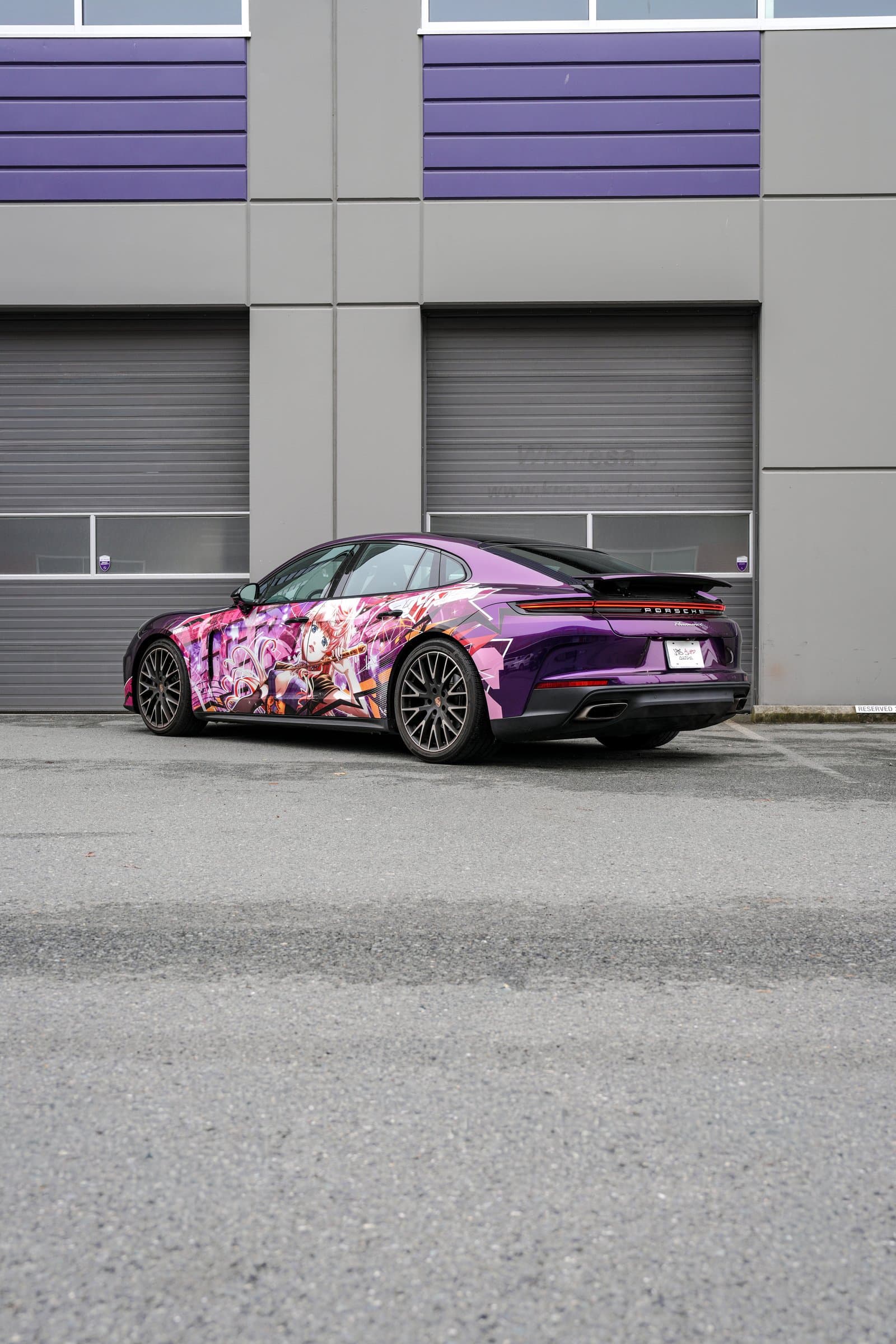
Related project: Porsche Panamera Purple Itasha Anime Wrap