
Should You Let the Shop Store Your Off-Season Tires?
Published
Every autumn, a Vancouver driver with two sets of wheels faces the same small logistics problem. The winter set goes on. The summer set comes off, and now there are four wheels and four tires leaning against a wall in a garage or a unit somewhere, waiting six months. Most people handle it the obvious way: put them in the corner of the garage and forget about them until spring. Sometimes that is fine. Often it is not, and the reason is that storage is where a wheel set quietly goes wrong.
What actually happens to a set that sits in a garage
Rubber keeps working while it sits. A tire compound does not stop ageing just because the car is parked; it continues to oxidise and harden slowly, and heat and UV exposure speed that up. Sitting on concrete is the part that causes the most common visible problem. Concrete wicks moisture, condensation forms underneath, and a wheel lying flat develops a flat spot in its contact patch that you can feel on the first drive of spring.
There is a second, less obvious cost. If the wheels come off the car covered in brake dust and road film, that contamination does not sit still for six months. Brake dust carries iron particles and is slightly acidic, and it keeps working against the finish underneath the whole time. The result is dull micro-corrosion that appears as patches under the coating once the wheels are back on and the sun hits them. This is why a set that was cleaned before it was put away comes back looking noticeably better than the set that was not.
What a shop can do that a garage cannot
This is where the difference between storing a set yourself and leaving it with a shop actually matters. A climate-controlled storage environment holds a steady temperature and humidity, which is precisely the condition that a tire compound and a wheel finish both want. A garage in the Lower Mainland sees condensation and freezing. An unheated storage unit gets damp. Neither is stable, and stability is the whole point.
The other difference is that the set gets worked on while it is off the car. Brakes are serviced, the wheels are cleaned properly before they go into storage rather than after they come out, and the car is inspected while it is apart. The seasonal swap becomes a scheduled visit rather than a weekend project, and the winter set is fitted in a single appointment. JRS runs dedicated winter wheel and tire packages so the swap takes one visit each season, with climate-controlled storage for the off-season set in between.
The practical benefit is the one owners notice most: the car is not unavailable on a Saturday. It goes on, it comes off, and the only thing you had to do was book it.
When it is worth paying for, and when it is not
If you have one set of wheels and one set of tires, there is nothing to store, so the question does not apply. If your off-season set is a cheap set of steel wheels with basic all-season tires on them, the cost of storing them is usually not worth a fee, and a dry corner of the garage with the wheels off the floor will do. The case gets stronger as the value of the set rises. Forged or flow-formed aftermarket wheels carry a finish that is more sensitive to what sits underneath them, and a high-quality summer performance tire is not a thing you want standing on concrete for half a year.
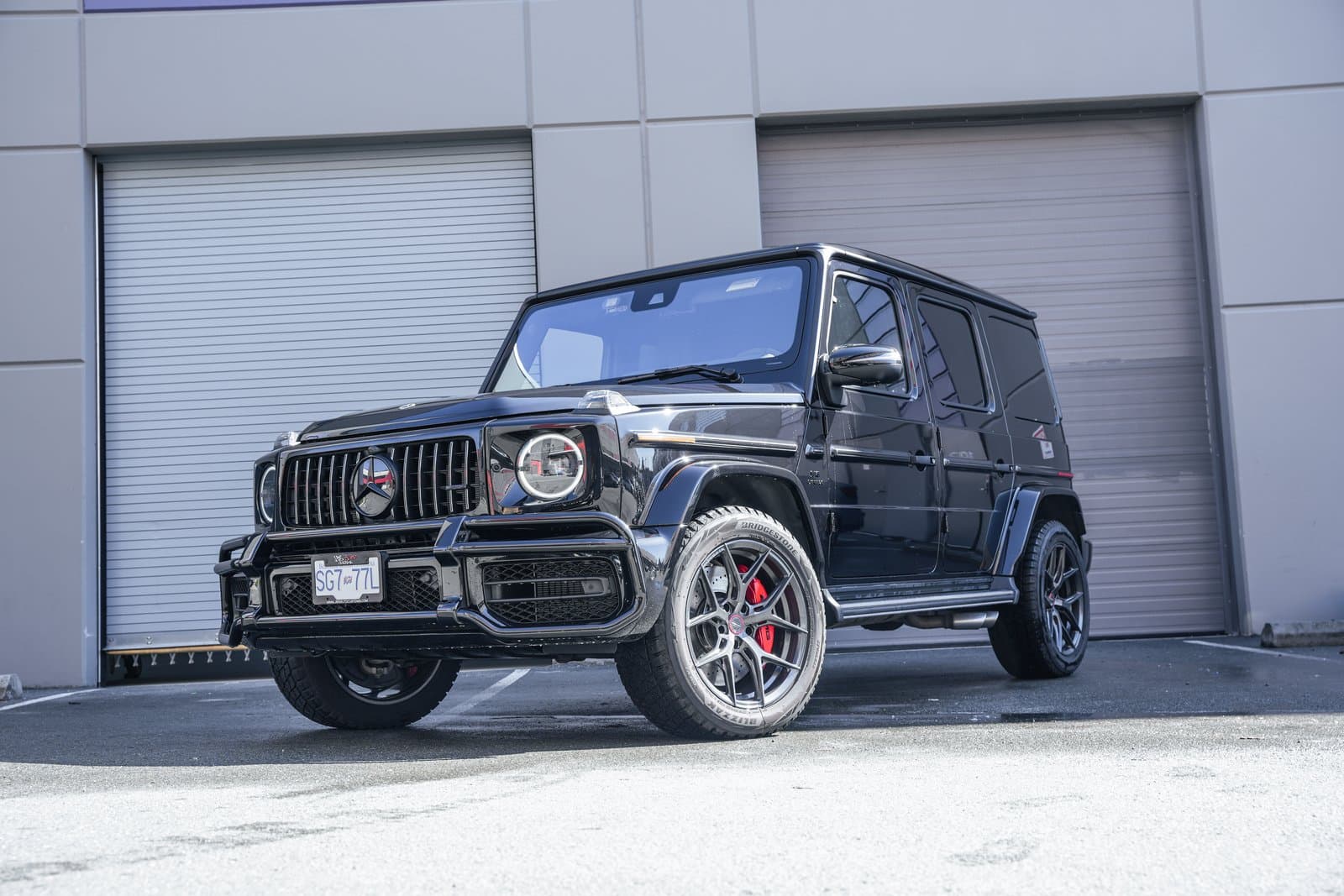
Size matters too, and not only in the obvious sense. A wheel that suits a range of tire types is a better candidate for storage because you will actually rotate it. The G63 AMG in our portfolio is a good example: it carries 20-inch Vossen HF5 wheels in gunmetal, and the fitment was chosen specifically because 20 inches works equally well with winter tires, all-season tires, or all-terrain tires. A set that suits more than one season is a set you will keep in rotation, and a set you keep in rotation is a set worth storing properly.
What to ask before you commit a set to storage
Ask what the environment actually is, rather than accepting the word climate-controlled. You want to know whether temperature and humidity are held steady and whether the space is dry. Ask whether the wheels are cleaned before they are stored, and whether that cleaning is part of the service or something you need to arrange yourself. Ask whether the tires are stored mounted or loose, and how the contact patch is protected from taking a set.
Also ask what happens to the car while it is apart, because a seasonal swap is a small window in which a good shop will look at things that are normally hidden: the brake condition behind the wheel, the condition of the tire valve stems, and the general state of the car. If the wheels are going to be off anyway, that inspection is close to free, and it is the point where a problem gets caught before it becomes a failure on the highway in February. If the car is due for other work at the same time, our maintenance service can cover it in the same visit rather than booking a separate appointment.
If you are in the position where a second set is already in your garage, the decision is not really about money. It is about whether the set is in a condition you want to put back on the road in March. Most of the difference comes from what happened during the months it was sitting there, and most of that difference is made before it goes in.
Related project: 2022 G63 AMG — 20" Vossen HF5 Gunmetal Wheels with Bridgestone Winter Tires