What Paint Correction Actually Does for Your Car
Published
Most car owners have heard of paint correction. Fewer understand what it actually involves, how it differs from a standard detail, and what results are realistic for their vehicle. Understanding the process matters because it is a commitment -- in time, in cost, and in the fact that it removes a measurable layer of your clear coat each time it is done.
What Paint Correction Actually Removes
Paint correction is the process of removing a controlled, measurable layer of the clear coat from a vehicle's paint surface using machine polishing. The removed layer is typically between a few microns and twenty microns thick, depending on the severity of the defects being addressed. The goal is to reach a flat, defect-free surface that reflects light uniformly.
The defects that paint correction removes are: swirl marks caused by incorrect washing technique, fine scratches from automatic car washes, bird droppings and tree sap that have etched the surface, water spot etching from mineral deposits, and oxidation that has roughened the clear coat texture. These defects are all in the clear coat -- the thin layer of lacquer over the coloured base coat -- which is why correction restores the appearance without changing the colour of the vehicle.
Single-Stage vs. Two-Stage Correction
Single-stage correction uses one pass of a machine polisher with a compound or one-step polish to address lighter defects. Swirl marks, washing scratches, and light oxidation respond well to a single-stage correction. Results are typically a reduction of visible defects by the majority, which is sufficient to restore a deep gloss to most vehicles.
Two-stage correction adds a second polishing pass after the compound stage -- a finishing polish with a softer pad to refine the surface to a near-mirror finish. The second pass removes the fine marks left by the compound pass and is what separates a good correction from an excellent one. It also removes additional clear coat, which is why two-stage correction is typically reserved for vehicles where the highest possible finish quality is the goal.
Paint Correction vs. a Standard Detail
A standard detail cleans, conditions, and protects the existing surface without removing any clear coat. It uses clays, polishes, and waxes or sealants that sit on top of defects rather than removing them. For a vehicle with light swirl marks and minor contamination, a detail can improve the appearance noticeably. For a vehicle with moderate to severe swirl marks, etching from contamination, or oxidation, a detail will mask the defects temporarily -- but they will be visible again within weeks as the surface wears.
Paint correction addresses the defect permanently. The surface is physically changed -- the defect is removed. The result lasts as long as the clear coat holds, which depends on how the vehicle is subsequently washed and maintained. A vehicle that is corrected and then washed incorrectly will develop new swirl marks. The correction does not prevent future damage -- it removes past damage and resets the clock.
Vancouver Climate and Paint Correction Timing
Vancouver's climate creates specific conditions that affect when correction is most effective. Autumn through to early winter is one of the best windows for correction: the road salt season has not yet begun in earnest, which means a freshly corrected vehicle can be protected and coated before the worst of the road grime arrives. A correction done in October or November and immediately followed by ceramic coating or a high-quality sealant gives the vehicle its best protection through the winter months.
Correction done in early spring, before the summer sun intensifies, is also effective -- but a corrected surface that is not protected with coating or sealant heading into summer will accumulate UV oxidation and contamination faster than a protected one. Correction without protection is a wasted investment in Vancouver's climate.
Who Paint Correction Is Worth It For
Paint correction is worth considering for vehicles with moderate to severe swirl marks or surface contamination that no amount of washing or claying will remove. It is worth doing before applying ceramic coating or PPF, because coating over a scratched or etched surface seals the defects in permanently. For vehicles that will be kept for more than two years, the investment in correction before protection pays off over the ownership period.
It is less worth doing for vehicles that are traded within a year, for vehicles with severe clear coat failure or oversanding from prior poor repair work, or for vehicles where the underlying paint has been so heavily cut back that there is insufficient clear coat remaining to correct safely.
If you are wondering whether paint correction is the right step for your vehicle, JRS Auto Customs can assess the condition of your paint and advise on the appropriate approach. Learn about paint correction and ceramic coating options at JRS Auto Customs.
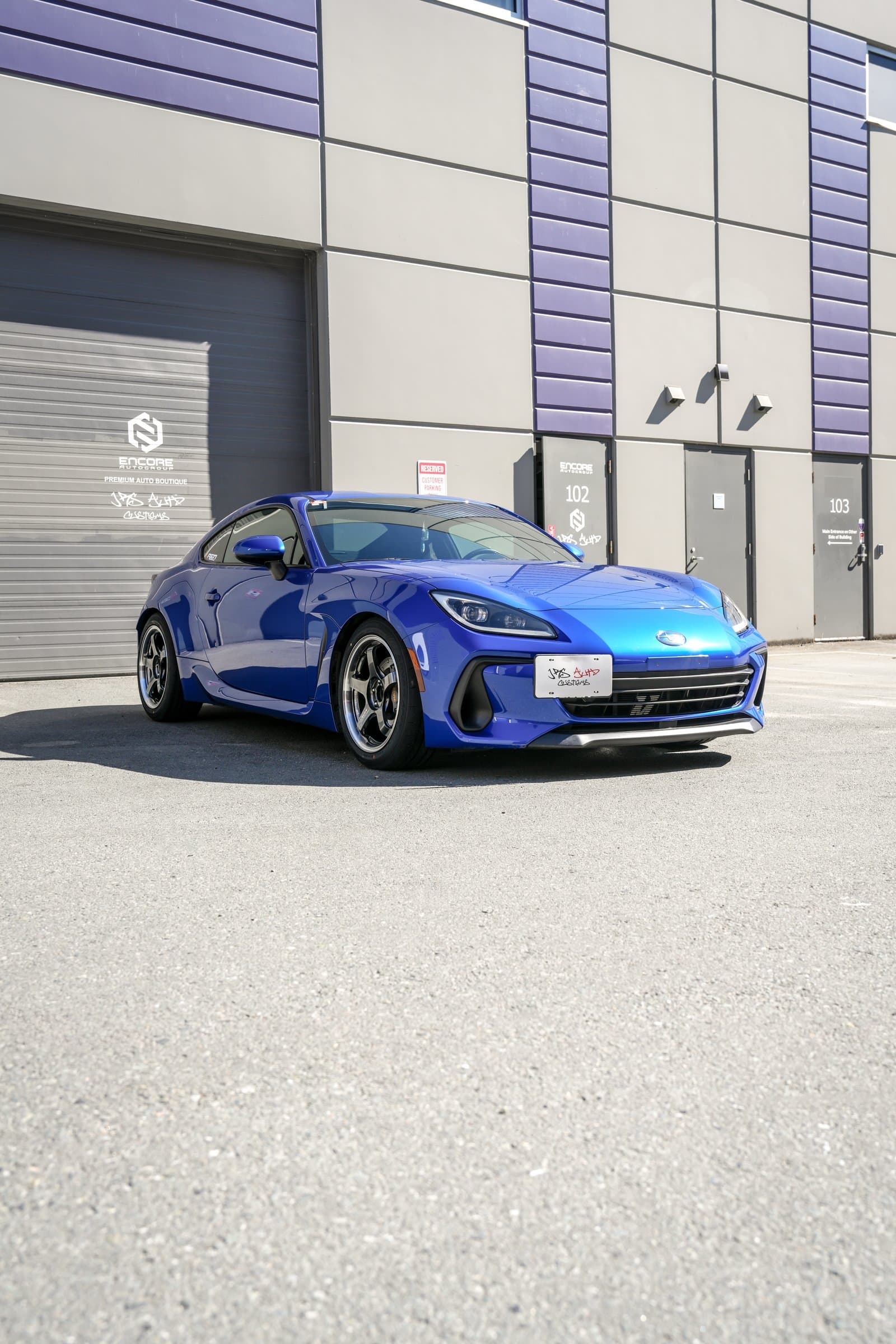
Related project: Subaru BRZ — Blue Paint Protection Film