
Paint Decontamination in Vancouver: Why It Matters with PPF
Published
Paint decontamination is one of those automotive care terms that gets mentioned in passing a lot and understood clearly very little. It usually shows up as part of a longer process -- a step before paint correction, or a prep stage before PPF. But decontamination is also a standalone service with real value for any vehicle owner who wants to keep their paint in better condition than the baseline. Here is what it actually does and why Vancouver drivers in particular should pay attention.
What Paint Decontamination Actually Removes
The things that stick to your car paint are more varied and more persistent than the things that wash off with soap and water. There are three categories worth knowing.
Iron fallout: the most common and the most damaging. Industrial sources, railway brakes, and brake dust from other vehicles all contain iron particles that embed in the paint surface. On light-coloured cars these show up as tiny orange-brown dots. On dark cars they are less visible but equally present. Standard washing does not remove iron fallout -- it requires a chemical agent that dissolves the iron particles.
Rail dust: a specific subset of iron fallout from train brakes, particularly relevant in the Lower Mainland where rail corridors run close to major commuter routes. Rail dust particles are particularly hard and can embed deeply into softer clear coat finishes.
Organic contaminants: tree sap, bug residue, bird droppings, and pollen all fall into this category. These are acidic and begin etching the paint surface within hours of landing. They wash off more easily when fresh, but once hardened they require a dedicated decontamination step to remove fully.
Why Vancouver is particularly hard on car paint
The Lower Mainland has a concentration of industrial activity, ferry terminal rail operations, and a coastal climate that combines moisture with airborne particulates. Add to that the calcium chloride used on North Shore roads in winter and you have a contaminant profile that is genuinely harsher than most Canadian cities. A car parked in Richmond for a winter season accumulates a different type and concentration of surface contamination than the same car would in Calgary or Toronto.
Why Decontamination Matters Even Without PPF
The clearest reason decontamination matters on its own is what happens when contaminants bond to the clear coat and are left there. Iron particles that are not dissolved and removed will oxidise in place, creating tiny rust spots that etch into the clear coat permanently. The longer they sit, the deeper the etching. Once etching has progressed past a certain depth, the only way to restore the surface is through paint correction -- which is more involved and more expensive than decontamination.
Decontamination also matters for any wax or paint sealant application. If you are applying a wax or sealant to a contaminated surface, the product bonds to the contamination rather than to the paint. This means it does not last as long and does not protect as effectively. A decontaminated surface gives wax or sealant a clean substrate to bond to, which extends the lifespan and effectiveness of whatever protection you apply.
The connection to paint correction
Paint correction removes surface defects by abrading the clear coat. If you correct a contaminated surface, you are compounding the contamination into the paint rather than removing it. Decontamination before correction ensures you are working on a clean surface and not embedding contaminants deeper into the finish. This is why professional detailers always decontaminate before correcting.
When to Get Decontamination Done
There is no fixed rule, but a practical schedule for a daily-driven vehicle in Vancouver is twice a year: in early autumn before the worst of the rain season, and in early spring once the vehicle has dried out from winter. These are the transition periods when the contaminant load is highest and when the surface is in the most vulnerable condition.
It is also worth decontaminating before applying any new protection -- whether that is wax, sealant, ceramic coating, or PPF. The prep stage ensures the protection has a clean surface to bond to and will perform as intended.
Signs your car needs decontamination now
If your car has a rough or gritty texture to the touch even after washing, that is contamination sitting on the surface. If you run your fingernail across the paint and hear a scratching sound, the surface has bonded contaminants that washing alone will not remove. These are the practical indicators that decontamination is overdue.
What the Decontamination Process Involves
A professional decontamination service typically runs in two stages. The first is an iron-removing chemical bath: an iron fallout remover is applied to the paint surface and allowed to react, dissolving embedded iron particles. The surface turns a purplish colour as the chemical reacts -- this is normal and expected. The second stage is a clay bar pass or equivalent decontamination lubricant process, which physically removes the remaining bonded surface contamination that the chemical stage did not dissolve.
The whole process on a full-size vehicle typically takes two to three hours. It is done by hand and requires the vehicle to be clean and dry before starting. The result is a completely smooth, contamination-free paint surface that is ready for any protection or correction step.
Is Decontamination Included in a Detail?
Not always -- and this is worth asking about explicitly. A standard exterior detail typically includes washing, drying, and a surface preparation step, but full decontamination with iron remover and clay is often an add-on service. When you are booking, ask whether decontamination is included and what is involved in the surface prep. If you have been noticing the rough texture after washing, it is worth specifying decontamination as the service you want.
Speak to JRS Auto Customs about decontamination and surface prep
A decontaminated paint surface is the starting point for every other paint care decision you make -- correction, protection, or maintenance. Getting it done at the right time, rather than waiting for visible deterioration, is the approach that saves the most effort over the long run.
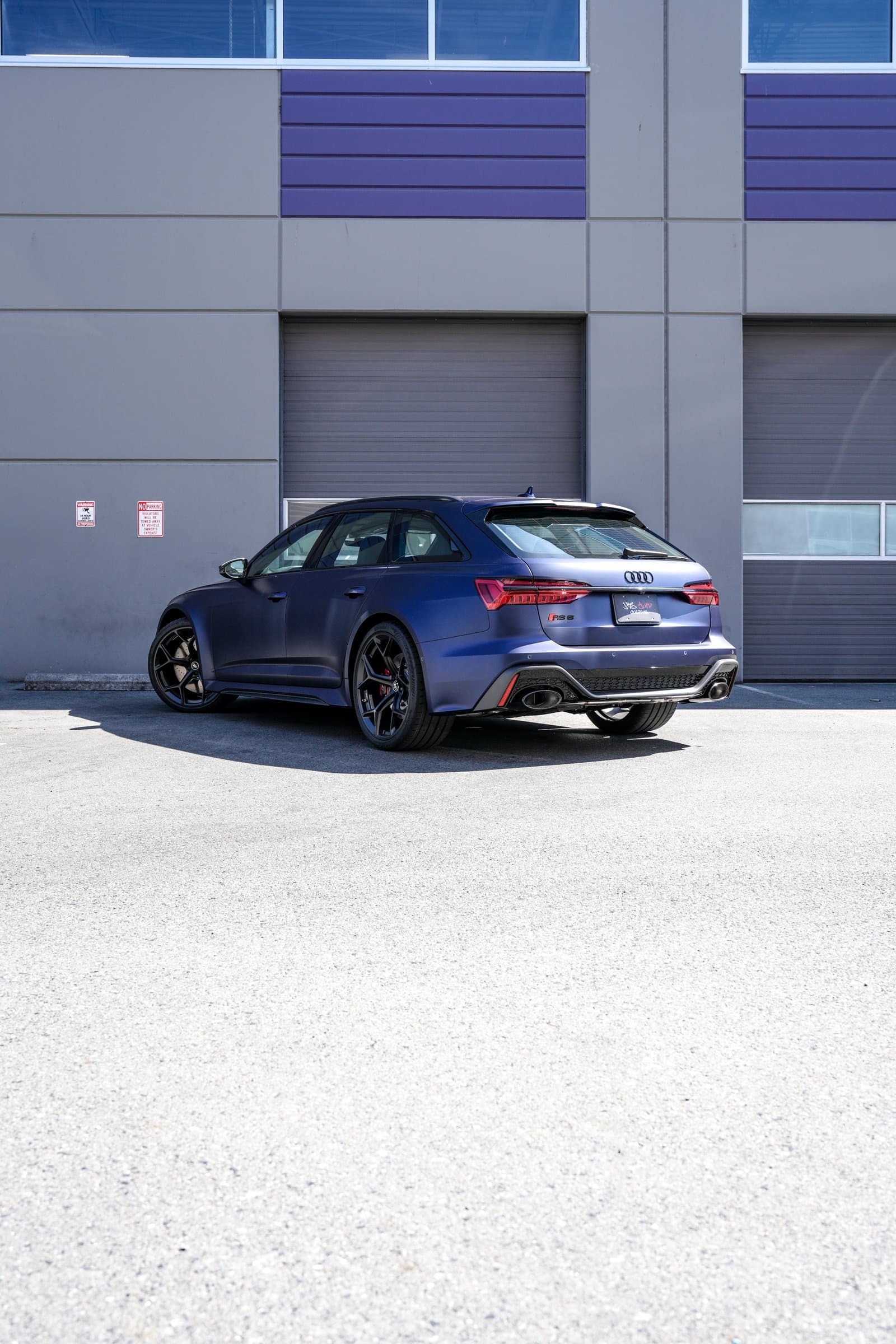
Related project: Audi RS6 Avant Matte Blue PPF