Paint Overspray on Your Car: What It Does to Your Wrap
Published
A fine mist of paint settles on a car and most owners assume it is road grime. It is not. Overspray is airborne paint — from a neighbour’s renovation, a construction site nearby, or a graffiti tag — and it lands on the hood, roof and boot as a film of paint polymer rather than as dirt. A car wash will not move it, because washing dissolves grime and overspray is not grime. It is a chemical bond to the clear coat.
Vancouver has more of this than most cities. Renovations run all year, construction is permanent, and the Lower Mainland’s industrial corridors put both right next to parked cars. The question is not whether your car will get hit — it is what the hit does to the protection underneath.
How to Tell Overspray Apart from Grime
Overspray has a signature that regular grime does not. It sits on horizontal surfaces only: hood, roof, boot lid, the top of the wing mirror. Road film settles in the same places, so that alone proves nothing. The difference is texture and behaviour. Grime feels gritty and washes away. Overspray feels smooth, and it stays. Run a finger over it: if the mark has a slight texture and a tinted cast — orange primer, black paint, silver — you are looking at paint, not dirt.
If you are still not sure, look at the panel edge closest to the source. Overspray usually fades toward the far end of the car. Washing will not shift it, and a pressure washer only spreads the film thinner while driving it further into the clear coat.
Why It Behaves Differently on Each Protection Type
The same mist means three different things depending on what is under it, and this is where the expensive mistakes happen.
- On a painted panel, overspray sits on the clear coat. It is chemically bonded, so it has to be dissolved with a solvent or lifted mechanically with a clay bar. Left long enough it takes on a texture that looks like orange peel and needs real correction work.
- On a ceramic coating, the risk is the solvent rather than the paint. Whatever softens the overspray has to be strong enough to move paint, and the same chemical can strip or haze the coating while it works.
- On wrap film, the film itself is the target. Solvents that are safe for clear coat can haze, dull or soften the vinyl and lift a raised edge, so overspray on a wrapped car is a specialist problem rather than a weekend one.
That is why our ceramic coating service starts with a coating-safe check rather than a generic paint thinner, and why the preparation step is not a detail worth skipping when you book.
Our colour change film work handles the surface differently for the same reason: the same overspray that lifts off paint in one pass can haze a film that took a full day to install.
Paint protection film behaves differently again, and this is the one most owners get backwards. PPF is the only layer that actually resists overspray, because it is a physical barrier that takes the impact instead of the clear coat. A film that gets misted is a film that did its job. What matters is the edge, because that is where the film lifts and where contamination gets underneath, which is why our paint protection film service inspects edges at every maintenance visit.
What to Do in the First 24 Hours
Time is the variable that decides how bad this gets. Fresh overspray is still a film sitting on top of the surface, and it lifts much more easily than cured overspray that has bitten into the clear coat. If you find it early, wash the car with a plain pH-neutral shampoo, dry it properly, and then deal with the film on its own. Waiting three weeks in a parking spot is what turns a twenty-minute job into a paint correction.
What not to do matters just as much. Do not put a harsh solvent on a coated or wrapped car to be aggressive with it, because you are trading a paint problem for a coating problem. Do not use a clay bar on a matte or satin finish without understanding what that finish is, because it will mark. And do not assume a quick wash has fixed it, because a car that looks clean in daylight can still be carrying a bonded film that shows up under a spot-free inspection light.
If the car is wrapped or coated, bring it in and have the surface identified before anything touches it. Our maintenance and detailing packages include the decontamination step that removes bonded contamination before it turns into a correction job. Come in within a few days of finding the mark and it is usually a straightforward removal rather than a repair.
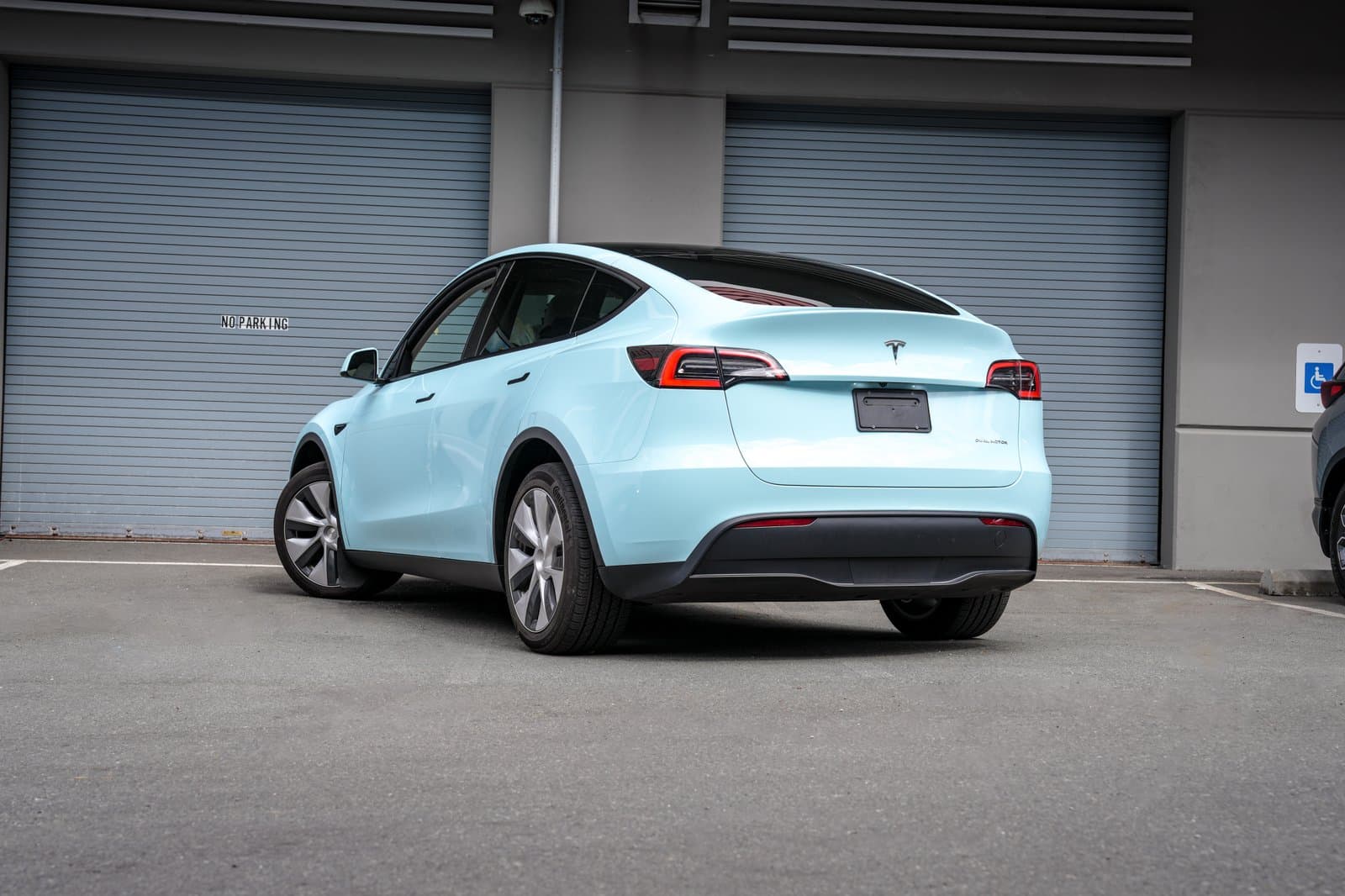
Related project: MY Blue Color Change