Why a Better Exhaust Makes Sense for Vancouver Drivers
Published
Most Vancouver drivers never think about their exhaust until it starts rusting through or making a noise that turns heads for the wrong reasons. But for anyone who drives regularly on mountain passes, pulls loaded trailers to the ferry terminal, or just wants their daily commute to feel more responsive, a quality exhaust upgrade is worth understanding — not just for the sound, but for what changes under the hood.
Why Your Stock Exhaust Works Against You in Vancouver Traffic
A restrictive factory exhaust creates backpressure that forces the engine to work harder to push spent gases out. In city and highway driving this means slightly sluggish throttle response, particularly when you need a quick merge onto the Ironworkers Memorial Bridge or accelerate up the hill from Horseshoe Bay ferry terminal loaded with vehicles queued for the next sailing.
A less-restrictive exhaust reduces that pumping loss. The engine breathes more freely, which means it responds to the accelerator pedal with less hesitation. This is a real-world improvement for daily driving — not a track-day fantasy. The change is most noticeable in vehicles with larger displacement engines or turbocharged setups, where exhaust gas energy drives the turbo wheel more efficiently with a freer-flowing system. A vehicle that feels sluggish at partial throttle under normal commuting becomes noticeably more cooperative when the system is less constrained.
BC Exhaust Laws: What Is Actually Street Legal
The BC Motor Vehicle Act prohibits any modification that increases noise beyond the original equipment level, or that removes a catalytic converter. In practice, ICBC inspections flag vehicles with straight-pipe systems, missing cats, or unmuffled exhausts. A properly installed cat-back or axle-back system from a reputable brand — one that retains the factory catalytic converters and uses a resonating or muffled tip — stays well within legal limits.
The threshold that matters is a measured decibel level at a given speed, not the presence of an aftermarket exhaust in itself. Most quality cat-back systems produce a modest tone increase over stock — noticeable to the driver, not irritating to passing pedestrians at a crosswalk. Keeping the cats in place and using a quality muffler is the practical boundary for a compliant daily driver build.
Before installing any exhaust system, it is worth checking the ICBC vehicle modification guidelines for your specific model year. Some vehicles are more closely scrutinised than others, and the inspection outcome depends on the specific components installed, not just the category of modification.
Cat-Back vs Axle-Back: What Changes and What It Costs
An axle-back system replaces only the muffler and tail pipes. Installation is straightforward on most vehicles, and the sound change is incremental — a bit deeper, a touch more character without being dramatic. This is often the right starting point for a daily driver who wants a meaningful upgrade without affecting emissions equipment or requiring extensive labour.
A cat-back system replaces everything from the catalytic converters rearward: downpipe, mid-pipe, resonator and muffler. Flow improvements are more significant, and the tone change is noticeably more pronounced. The trade-off is cost and complexity — cat-back systems require more labour to install, and the results depend heavily on the quality of the components. A poorly made system can introduce drone at highway speeds, which is worse than the original exhaust.
For Vancouver's damp climate, material choice matters. Stainless steel resists the road salt and moisture that accumulates on the underside of a vehicle through BC winters. Budget aluminized steel systems will corrode faster in these conditions, making the upfront savings false economy — a system that lasts eight years in Arizona might be done in three on a Lower Mainland vehicle driven through salted roads every winter.
JRS Auto Customs installs and advises on exhaust upgrades for vehicles across the Lower Mainland, from simple axle-back swaps to full cat-back systems with performance headers. The team can walk through what fits your vehicle, your driving patterns and your budget. Whether you drive a naturally aspirated V6 or a twin-scroll turbo four-cylinder, there is a sensible upgrade path that does not compromise compliance or daily drivability.
Visit the exhaust services page at JRS Auto Customs to see what is available for your vehicle and book a consultation.
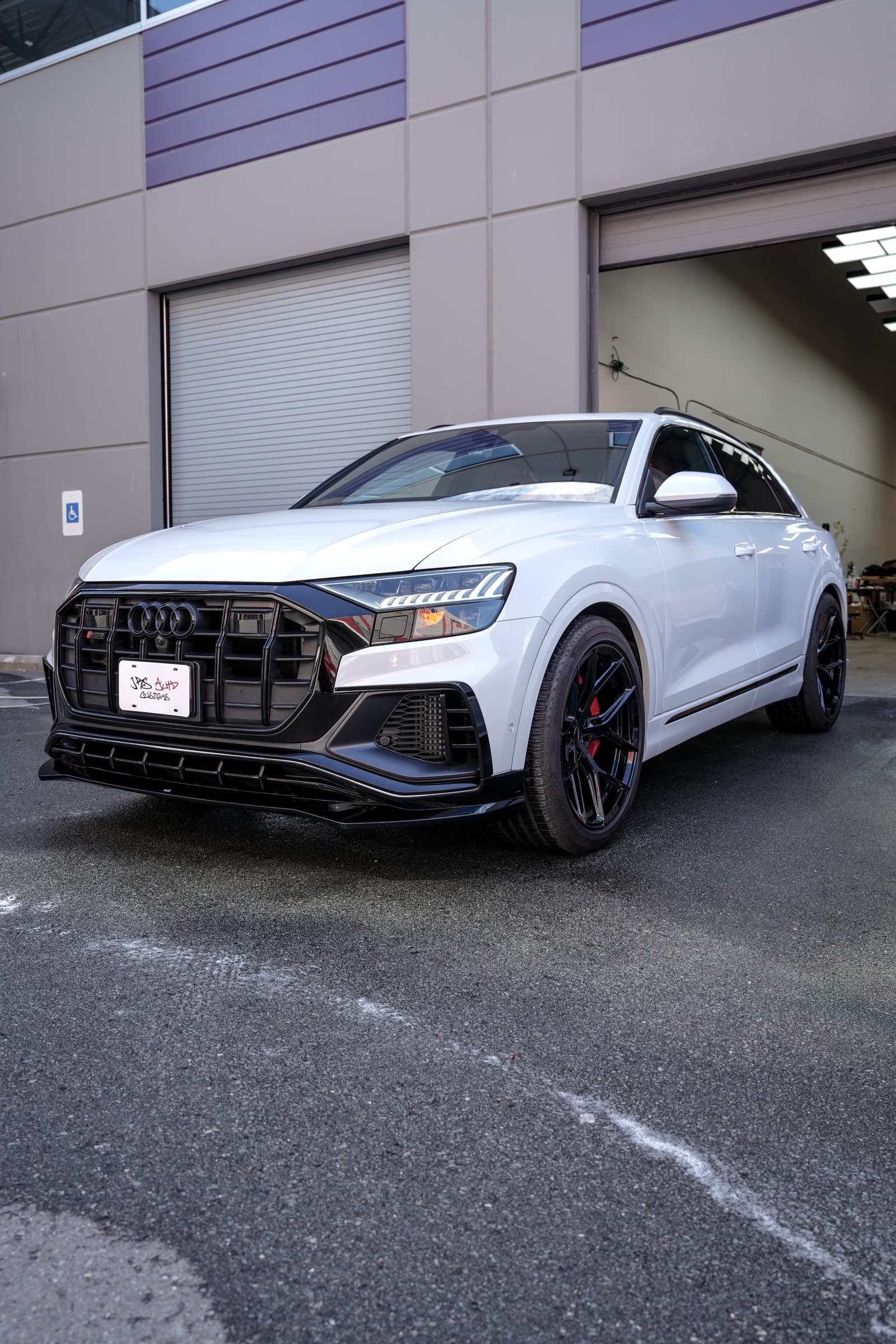
Related project: Audi SQ8 ABT Body Kit & Vossen HF5 Wheels