
What a Performance Exhaust Feels Like in Vancouver
Published
There is a version of the performance exhaust conversation that focuses on decibels, decibel readings, and whether a particular setup will pass a drive-by noise test. That is a real concern, but it is not the conversation most people are actually trying to have. The question underneath is simpler: will it make the car more enjoyable to drive? And if so, in what way, and at what cost to your neighbours and your daily commute? This guide is about the second conversation.
What a Better Exhaust Actually Changes
A performance exhaust changes the car in three distinct ways, and it is worth separating them because they appeal to different drivers.
Sound is the most obvious. A well-designed performance exhaust opens up the note — letting the engine breathe more freely produces a richer, more textured sound across the rev range. This is not just volume. A good system sounds better at 2,000 rpm in city traffic than a restrictive stock system does at full throttle. The character of the sound also varies between configurations: a cat-back system keeps the stock headers and catalytic converters and only modifies the rear section, producing a deeper, more refined note without the raspiness that comes with removing primary converters. An axle-back modifies only the rear muffler section, giving a subtler change.
Throttle response is the second change. A less restrictive exhaust allows the engine to purge spent gases more efficiently, which reduces back-pressure. The result is a snappier feel on tip-in — the car responds more immediately to the accelerator. On a turbocharged car this is more pronounced at mid-range revs than at the very top end. For daily driving in Vancouver's stop-and-go traffic, this is a quality-of-life improvement most owners notice within the first week.
Weight reduction is the third. Removing a heavy stock muffler and exhaust piping in favour of stainless or titanium components can reduce the vehicle's total weight by a noticeable margin. Less weight on the rear axle also shifts the balance slightly, which can sharpen the car's handling feel.
Sound Level: What Vancouver Drivers Actually Need to Know
British Columbia's Noise Act sets thresholds for vehicle noise, and enforcement varies across municipalities in the Lower Mainland. The practical reality for Vancouver drivers is that most quality cat-back systems are designed to sit within those limits at idle and under moderate acceleration. The setups that create problems are typically those with straight-through race mufflers or removed secondary mufflers, where the decibel output exceeds what a street system is designed to keep within bounds.
If you are driving an older naturally aspirated engine with a performance intake and no catalytic converter replacement, the noise level will be higher and the risk of a complaint or a fine more real. Modern turbocharged engines tend to benefit from the free-flowing exhaust without needing to go to extremes.
Is a Performance Exhaust Worth It for Daily Driving in Vancouver
The honest answer depends on how you drive and what you want from the car.
For someone who commutes across the Lower Mainland, spends time in stop-and-go traffic on Highway 1, and parks in residential areas at night, the primary benefit is throttle response. A snappier car in traffic is genuinely more pleasant — you merge faster, you respond faster to gaps, and you spend less time revving in the low-to-mid range. The sound is a bonus that you hear more than anyone else.
For someone who drives on mountain roads — the Sea-to-Sky Highway, the North Shore, Harrison — the sound and the power delivery combine into a different experience. The car feels more willing on a back road, the note opens up on a mountain climb, and the weight reduction makes a noticeable difference on a tight switchback.
For someone who drives the same route every day with no interest in engagement, a performance exhaust is harder to justify. The benefit is not in efficiency or comfort — it is in how much you enjoy being behind the wheel.
What to Watch Out For Before You Buy
Fitment is the most common issue. Not every exhaust is designed for every model, and the same part number can fit differently depending on the year, engine variant, and whether the car has other modifications. Before buying, confirm that the system is designed for your specific vehicle — not just the same model, but the same engine and model year range.
Warranty is a consideration for newer vehicles. Some manufacturers void powertrain warranty coverage if a non-OEM exhaust is installed, though this is rare and typically only for modifications that can be directly linked to a failure. Check your warranty terms or talk to your dealer before committing.
Vancouver's coastal climate also accelerates corrosion on lower-quality stainless systems. When selecting an exhaust, check the grade of stainless steel — 304-grade is the standard for coastal environments, while 201-grade is more prone to surface rust over time.
Getting Started
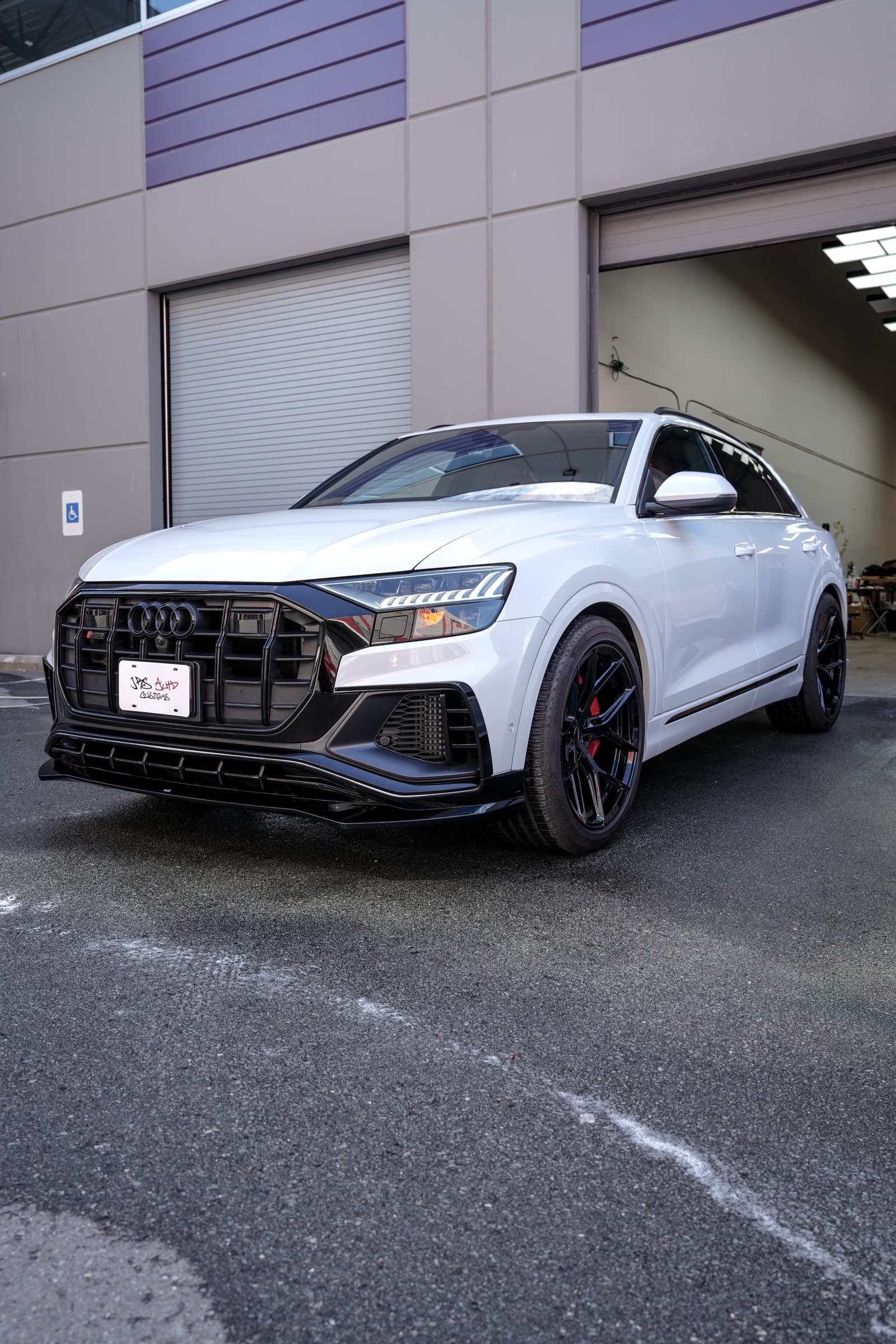
If you are wondering whether a performance exhaust is worth it for your car, the most useful next step is to listen to the specific system on your vehicle before committing. At JRS Auto Customs we have completed a range of exhaust upgrades and can walk you through the options that fit your vehicle, your driving style, and your noise-level preferences. See our exhaust service page to learn more, or browse our completed Audi SQ8 project to see a recent installation.
Related project: Audi SQ8 ABT Body Kit & Vossen HF5 Wheels