
What PPF Changes About Your Car Care Routine in Vancouver
Published
Paint protection film does exactly what the name suggests — it protects your paint. But one thing many car owners do not expect is how much it changes the day-to-day care of the car. After installation, washing, maintenance and inspection routines all shift. Here is what to expect and how to manage it in Vancouver conditions.
The First Two Weeks After Installation
The film needs time to fully bond to your paint. Most installers recommend leaving the car dry for 48 to 72 hours in ideal conditions, and avoiding automated car washes for at least the first two weeks. Vancouver is not ideal conditions for this — if it rains heavily in the first few days after install, the water does not damage the film, but the adhesion process goes more smoothly when the car is kept dry and indoors where possible. After the initial settling period, you will notice the film has slightly changed the surface feel of the car — a well-installed PPF should feel smooth and look seamless.
Avoid pressure washers pointed directly at the edges of the film during this period. Once the film has fully cured — typically after two to four weeks depending on conditions — standard washing can resume. JRS Auto Customs will give you specific guidance for your vehicle based on the film installed and the time of year.
Washing a PPF-Wrapped Car: What Changes
The good news: most PPF films are hydrophobic, which means water beads off and dirt does not stick as easily as it does on raw clear coat. In practical terms, your car stays cleaner for longer between washes, and washes more easily when you do clean it. In Vancouver rain — which is often mildly acidic and carries road film — that hydrophobic quality is genuinely useful.
What you should avoid: abrasive brushes in automated washes, harsh chemical degreasers, and any compound designed for cutting into paint. The film is designed to absorb minor abrasions and self-heal, but aggressive chemicals can degrade the top coat over time. pH-neutral car wash soap and a soft microfibre wash mitt are all most PPF-wrapped cars need for regular cleaning. If you are dealing with road tar or stubborn grime, a dedicated PPF-safe decontamination product is the right choice.
JRS Auto Customs offers a range of PPF installation options for Vancouver drivers. Whether you are wrapping the full car or protecting high-impact areas only, see our PPF service options and find out what makes sense for your vehicle and your driving conditions.
Self-Healing: How It Works and Its Limits
Most quality PPF films have a top coat that can self-heal minor scratches — the kind caused by washing with a slightly dirty mitt, light branch contact, or minor scuffs. The mechanism is heat activation: running hot water over the affected area, parking in sunlight, or applying a heat gun or hairdryer at a safe distance will allow the film surface to flow back together and erase the mark. This works well for surface-level damage and is one of the strongest arguments for choosing PPF over cheaper alternatives.
The limit is deliberate: deep scratches that have penetrated the top coat, rock chips that have fully punctured the film, and edge lifting caused by improper installation or neglect are not self-healing. These require film replacement in the affected area. Vancouver drivers should be aware that road salt accelerates edge degradation — keeping the edges of the film clean and dry in winter is one of the most important maintenance steps you can take.
How Often to Inspect and What to Look For
Plan to inspect your PPF every three months, or more frequently if you do a lot of highway driving. Look for edge lifting — particularly along the front bumper, bonnet edges and around the wheel arches, which take the most stone impact and aerodynamic pressure. Edge lift can start small and trap moisture underneath, which can affect the bond over time. If you catch it early, a professional can re-apply the edge without replacing the whole panel.
Beyond edges, look for any discolouration — some lower-quality films can oxidise or discolour over time, particularly in direct sunlight. Quality automotive-grade PPF resists this, but it is worth checking every season. If you notice any bubbling that is not related to an edge, bring it to a professional; bubbling can indicate contamination under the film during installation that was not properly addressed.
When to Book a PPF Maintenance Visit
At JRS Auto Customs, PPF maintenance is part of what we do. Whether you need an edge repair, a full panel replacement, or a professional decontamination to restore the hydrophobic surface after a harsh winter, we handle it. The best time to have the film inspected is before winter sets in and after the worst of the salt season — late October and early March are the two most useful checkpoints for Vancouver drivers. See our maintenance and detailing services or get in touch to book an inspection with our Vancouver team.
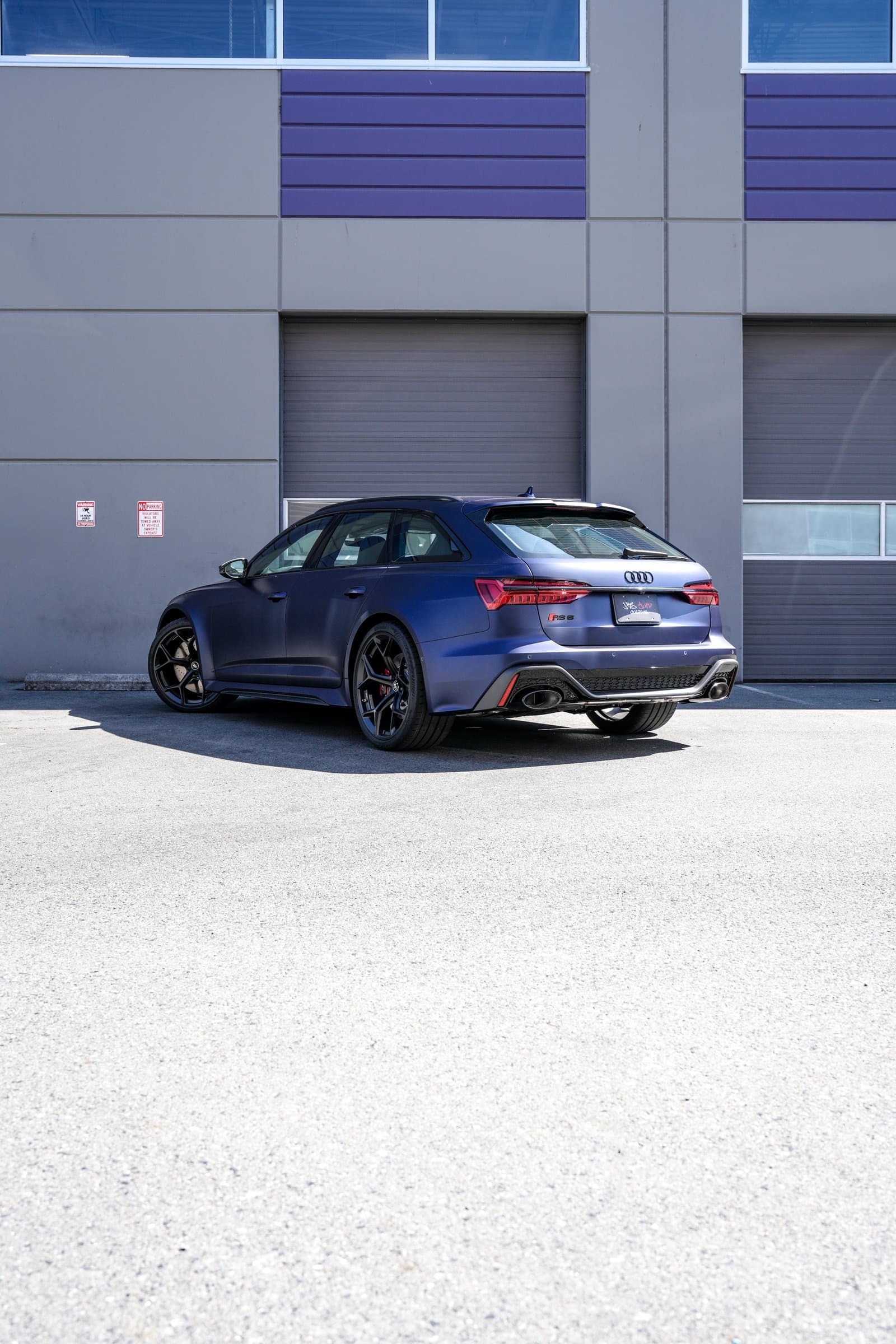
Related project: Audi RS6 Avant Matte Blue PPF