
Why Clear PPF Turns Yellow and What to Do About It
Published
Paint protection film is one of the most effective ways to shield your car from Vancouver's road conditions, but no film lasts forever without some change in appearance over time. One of the most common concerns owners bring to our shop is discolouration — a yellowing or hazing of the film that can make a car look older than it is. Here is what causes it, what you can do about it, and how to manage it going forward.
Why clear PPF discolours over time
Most clear PPF uses a polyurethane top coat as its outer layer. That top coat is what self-heals from minor scratches and what protects against stone chips. Over time, exposure to UV radiation, heat, and certain road chemicals causes the top coat to oxidise. Oxidation changes the optical properties of the film — it no longer transmits light as cleanly, which is what creates the yellowing, hazing, or clouding that owners notice.
The rate at which this happens depends on film quality, installation quality, environmental exposure, and maintenance. Higher-quality films use better UV inhibitors and more stable top coat chemistry, which slows the oxidation process significantly. Lower-quality films may show noticeable discolouration within two to three years, while a well-maintained premium film can maintain its clarity for five to seven years or more.
What accelerates discolouration in Vancouver conditions
Vancouver's conditions are not kind to any surface over time, and PPF is no exception. Direct sun exposure — particularly parking outside during summer — dramatically accelerates UV oxidation. Road salt and calcium chloride, which the city uses in winter, can sit on the film surface and create a chemical environment that accelerates degradation. Bird droppings and tree sap are also particularly damaging to PPF top coats and should be removed promptly.
Poor maintenance habits make a significant difference. Infrequent washing allows contaminants to sit on the film surface, and certain types of road film contain compounds that are abrasive and acidic. Vehicles that are not washed regularly through the winter months tend to show discolouration faster than vehicles that are maintained consistently.
The difference between yellowing and surface staining
It is worth distinguishing between two types of appearance change. Yellowing is a chemical change in the film itself — the top coat is oxidising and this cannot be reversed by cleaning. Surface staining, by contrast, is contamination sitting on top of the film: mineral deposits from water, road grime, or the residue from incorrect cleaning products. Surface staining can often be improved with a dedicated PPF cleaner or a mild decontamination wash.
The quick test: if the discolouration improves after cleaning, it is probably staining. If it does not change, you are likely seeing genuine film oxidation. Staining is manageable; oxidation is progressive and is eventually addressed by replacing the affected panel.
What to do about discoloured PPF
If you have discoloured PPF, the options depend on the severity. Localised staining on a few panels can sometimes be improved with a professional PPF-safe decontamination treatment. Widespread yellowing or hazing across the film usually means the top coat has reached the end of its useful life and replacement is the only solution that restores the original appearance.
Partial replacement is possible — you do not need to rewrap the whole car if only the most-exposed panels are affected. Front-end panels — the hood, front bumper, and front fenders — are the most exposed to UV and road conditions and typically show discolouration first. Colour PPF and textured-finish PPF, including matte and satin films, are much less prone to visible yellowing because their top coat appearance is not optically clear.
How to slow discolouration from the start
The most effective steps you can take are simple but consistent. Park in shade or underground whenever possible — this alone dramatically reduces UV exposure. Wash the car regularly, particularly through the winter months when road salt is present. Remove bird droppings and sap as soon as you notice them. Use only cleaning products labelled as safe for PPF, and avoid any abrasive materials on the film surface.
Applying a PPF-safe ceramic topper every six to twelve months can also slow discolouration by adding an extra UV-resistant barrier over the film's top coat.
JRS Auto Customs in Vancouver installs and maintains PPF across all finish types. Our team can assess whether your film needs decontamination or replacement and advise on maintenance products that slow discolouration. Start with a consultation if you have questions about the condition of your current film or want to plan for long-term PPF care.
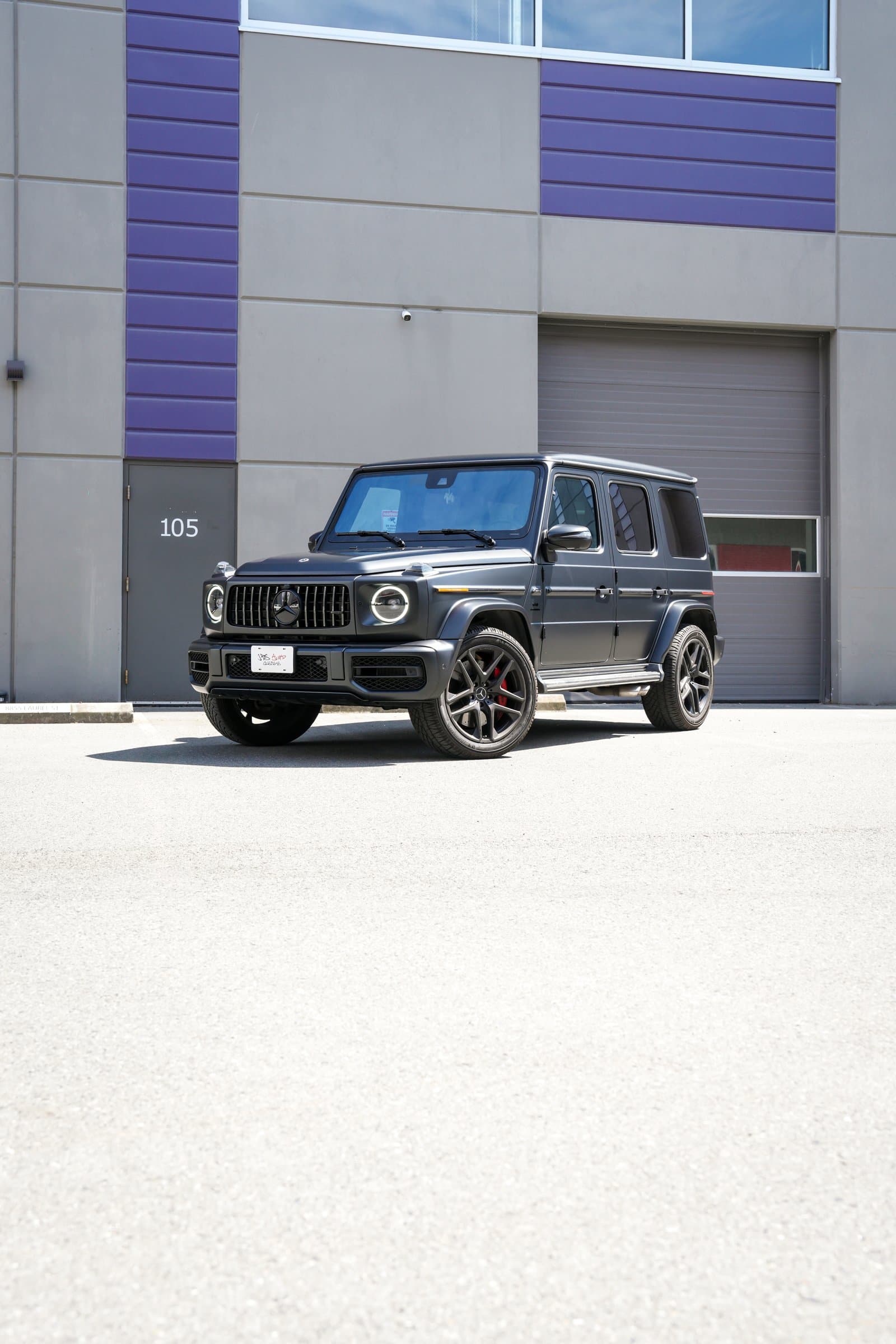
Related project: Mercedes-AMG G63 Frozen Black Matte PPF