
Why PPF Edges Lift and How to Prevent It
Published
Edge lifting — sometimes called peeling — is one of the most common issues that brings PPF owners into our shop. It is also one of the most preventable. Once you understand why it happens, the steps to avoid it become straightforward. Here is what Vancouver drivers need to know about PPF edge lifting and what to do when it occurs.
Why PPF edges lift in the first place
PPF edge lifting happens when the film separates from the paint surface at the perimeter. The most common cause is improper surface preparation before installation. If the paint surface was not properly decontaminated — if there was wax, sealant, silicone, or road film present when the film was applied — the adhesive does not bond fully to the surface and the edges are the first place it releases under the force of wind, pressure washing, or normal thermal expansion and contraction.
The second most common cause is installation in conditions that are not ideal. Film applied in direct sunlight, on a surface that is too hot or too cold, or in high humidity does not allow the adhesive to cure properly. When the adhesive is stressed by normal driving conditions — temperature changes, pressure from washing — the edge releases first.
Vancouver-specific factors that accelerate edge lifting
Vancouver's climate creates specific conditions that accelerate edge lifting if the install is not done properly. High humidity in spring and fall, combined with temperature fluctuations, stresses film edges that were installed in marginal conditions. Winter road salt and calcium chloride sitting on film edges can also degrade the adhesive bond over time, particularly if the edges were not sealed properly during installation.
Pressure washing is a significant contributor. High-pressure water directed at close range can get under film edges and lift them — particularly along the hood edges, front bumper edges, and door handles, which are the most exposed perimeters. Once water has worked under the edge, it continues to lift the film as it freezes and thaws through winter.
What to do when edge lifting starts
Small areas of lifting — particularly along panel edges where the film has lifted a few millimetres — can sometimes be re-bonded by a professional installer using a soft heat gun and a firm squeegee. The installer heats the film to make it pliable, presses it back against the paint surface, and squeegees out any water or air that has accumulated underneath. This is not always successful, particularly if contamination has accumulated under the film.
If the lifting has progressed significantly, or if the edge has been contaminated by road grime, re-bonding is unlikely to hold. In those cases, the affected section of film is removed and replaced. This is one of the advantages of PPF: replacement is done panel by panel, not the whole car.
How to prevent edge lifting from the start
Prevention starts with choosing a shop that does proper surface preparation. The vehicle should be decontaminated — including a clay bar or chemical decontamination treatment — before the film is applied. Installation should be done in controlled conditions: moderate temperature, shaded from direct sun, and with the vehicle given time to cool to ambient temperature before film is applied.
Edge sealing — where the installer applies a firm pressure along all film edges with a silicone-free sealer — is the most important step in preventing future lifting. Ask your installer specifically whether they edge-seal every panel. This step adds a few minutes per panel but is the single most effective measure against edge failure.
JRS Auto Customs in Vancouver installs and repairs PPF across all vehicle types. Our team can assess whether edge lifting can be re-bonded or requires replacement, and advise on the right approach for your vehicle. Start with a consultation to discuss your PPF condition and protection options.
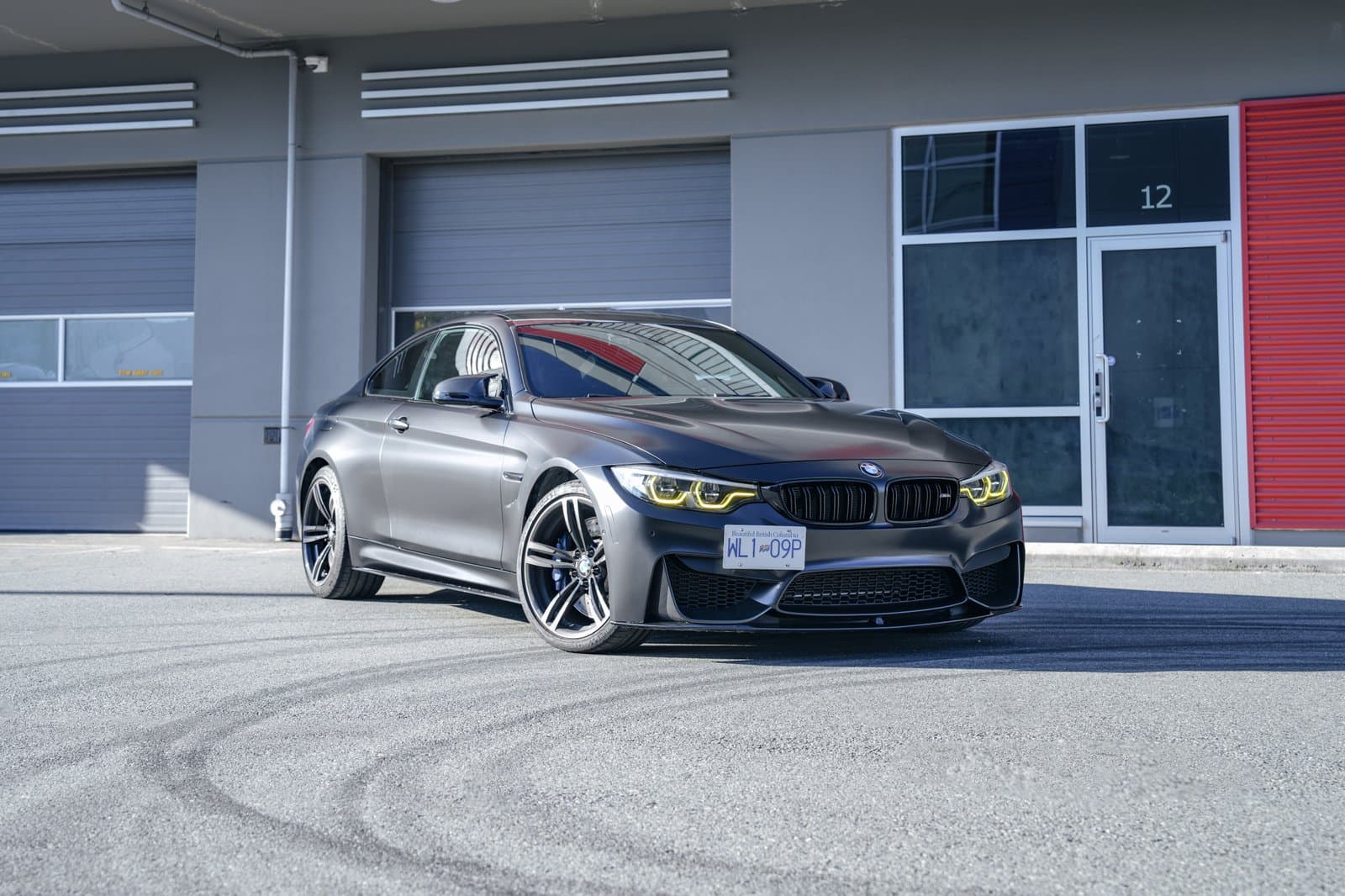
Related project: BMW F82 M4 Matte PPF