
Does Your Daily Driver Actually Need PPF?
Published
PPF has a reputation as something for high-end sports cars and track machines. That reputation is not wrong — those cars benefit from it — but it has obscured the fact that daily drivers and high-mileage commuters are often the vehicles that get the most value from paint protection film. A car that sits outside all day, drives through construction zones, parks on busy streets, and racks up highway kilometres is taking more rock hits than a weekend toy that lives in a garage. Here is the practical case for PPF on a daily driver.
The Daily Driver vs the Weekend Toy
A weekend car driven occasionally, stored in a garage, and maintained with care faces a fundamentally different risk profile from a car that is used hard as a daily vehicle. The daily driver accumulates exposure: highway kilometres that send a constant stream of debris at the front end, parking lot dings from shared spaces, the accumulated effect of seasons of road salt, and the regular wear of urban driving. That cumulative exposure is what PPF is designed to manage.
Highway Kilometres
If you commute on Highway 1 through Vancouver, or regularly drive the Sea-to-Sky corridor, you are doing 100 kilometres per hour with a constant stream of vehicles ahead of you kicking up gravel, sand, and debris. The front bumper, hood, and leading edge of the fenders take the bulk of this. On a daily commuter doing this five days a week, the stone chip accumulation over three years can be significant. PPF absorbs this and keeps the paint underneath intact.
Urban Parking
Parallel parking on Commercial Drive, or navigating a busy parkade, means your car sits inches from other vehicles at the edges of doors, boot lids, and bumpers. Door dings are one of the most common forms of cosmetic damage on daily drivers in urban environments, and they are almost entirely preventable with PPF applied to the door panels.
The Cost Equation for Daily Drivers
PPF on a daily driver makes economic sense when you compare the cost of the film against the cost of paint repairs over the ownership period. A stone chip that reaches bare metal will rust if it is not treated. Paint repairs on a daily driver — particularly on the front panels — are not cheap, and insurance claims for minor cosmetic damage can affect your premium. PPF shifts the cost from reactive repair to proactive protection.
The calculus is also different from a high-end car: on a daily driver, keeping the paint in good condition matters for resale even on an economy or mid-range vehicle. A car with a clean front end and no rust is worth more at trade-in than one with a history of stone chips and touch-up paint.
What Coverage Makes Sense for a Daily Driver
Front-End Package
For a pure commuter, the front-end package — front bumper, hood, fenders, mirrors — covers the areas that take 90 percent of the stone chip damage. This is the most cost-effective starting point and covers the most likely repair cost on a daily vehicle.
Full Front Plus Door Panels
If you regularly parallel park on busy streets, adding the door panels to the front-end package covers the door ding risk. This is a common combination for urban daily drivers and covers both the most dangerous driving zone and the most common parking hazard.
Full Body
On a daily driver with a long ownership horizon — five years or more — full-body PPF makes more sense than on a weekend car. The extended protection keeps the paint in show-room condition over a much longer period, which is more valuable on a vehicle you are driving every day and intend to keep.
JRS Auto Customs can quote a PPF package
specifically for daily drivers and high-mileage commuters, with options for front-end only, front-plus-doors, or full body coverage.
PPF and Vancouver's Specific Conditions
Vancouver adds a layer of complexity to the daily driver PPF case. The combination of winter road salt, coastal humidity, and the North Shore's gravel and debris means that a daily driver's front end is under assault from more angles than in a drier climate. The salt season is particularly hard on any exposed bare metal or touch-up repairs — which is another reason that a film protecting a clean paint surface through winter is more valuable here than in a city with a milder winter.
Making the Decision
The strongest case for PPF on a daily driver: you drive highway kilometres regularly, you park on busy streets, you keep the car for more than three years, and you want to protect its resale value. If most of those apply to you, PPF is not a luxury — it is a practical investment in protecting the asset you use every day. If your daily commute is short urban trips and you park in a garage, the case is weaker but front-end protection is still worth considering.
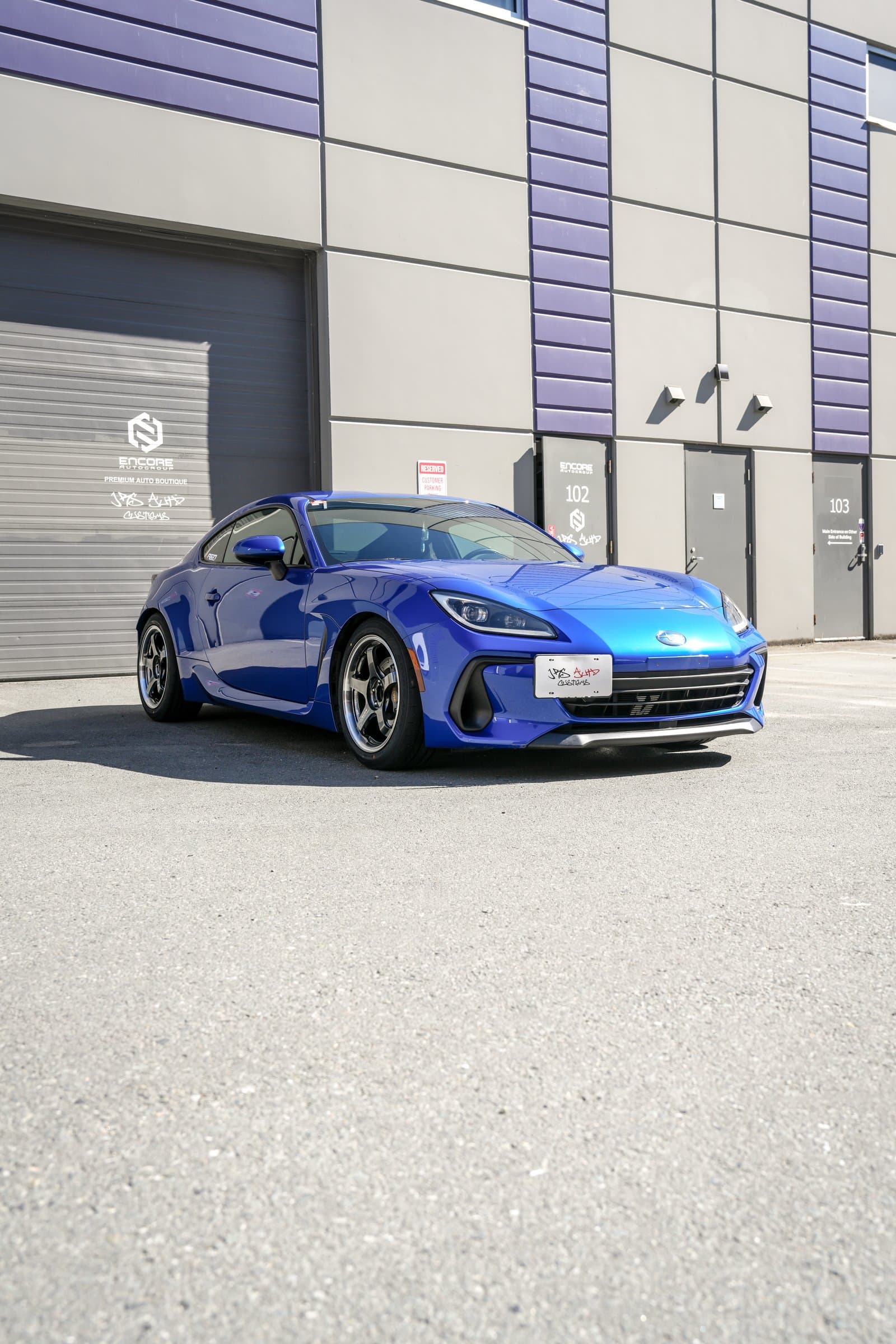
Related project: Subaru BRZ — Full Gloss Clear PPF