
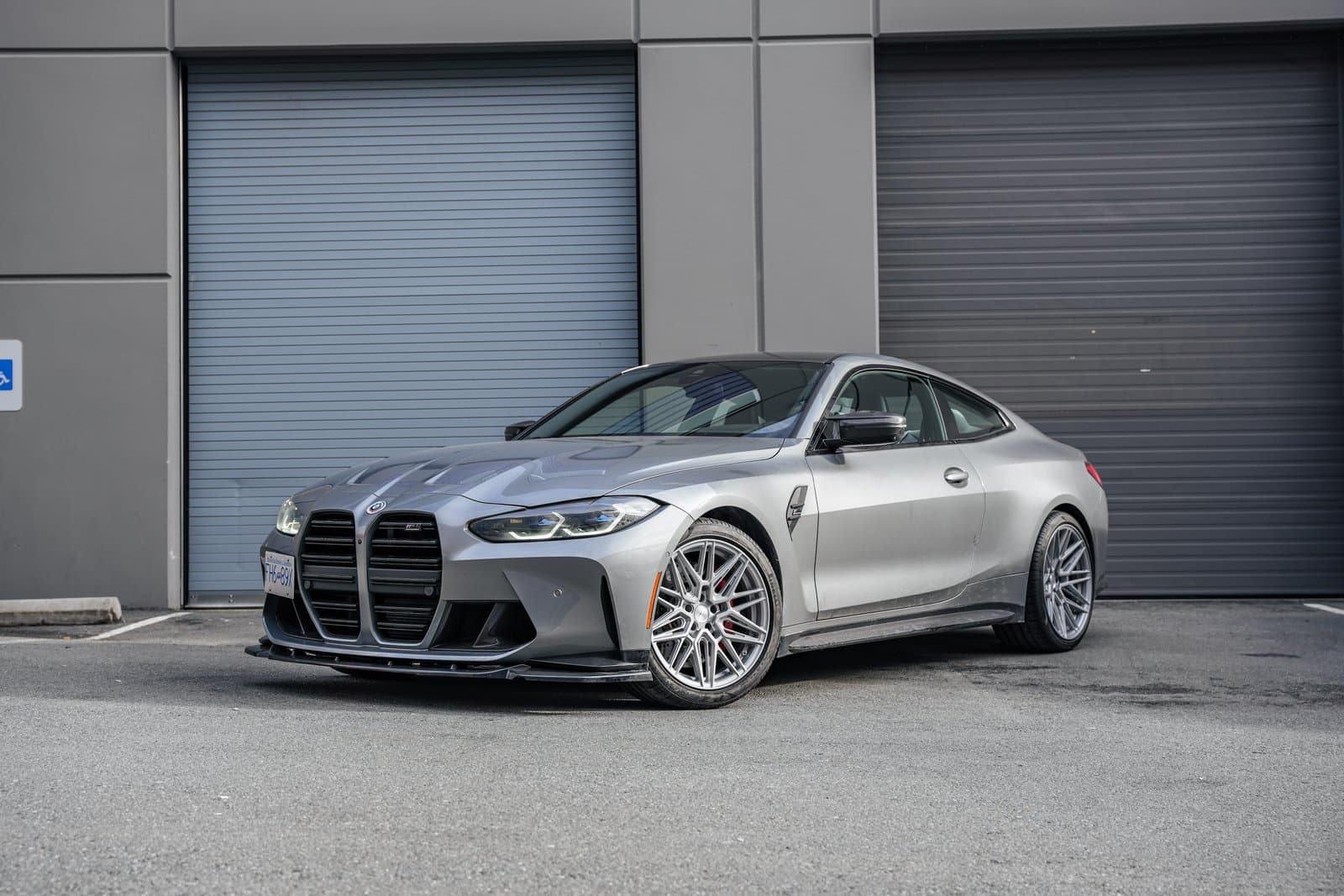
Why Paint Protection Makes Sense for Leased Vehicles
Published
If you are driving a leased car, you are in a specific situation that changes the economics of almost every modification decision. The car is not yours. You have to give it back. And the lease agreement almost certainly contains a clause about condition at return — condition that is defined, at least in part, by the appearance of the paint.
Most leased car owners in Vancouver make one of two mistakes: they do nothing and accept whatever wear the car accumulates over the lease term, or they avoid the car entirely to protect it, which defeats the purpose of having it. Neither is the right call. Here is the actual framework for thinking about paint protection on a leased vehicle.
What Your Lease Agreement Actually Says About Paint
Lease return standards vary by lender and manufacturer. At a minimum, most agreements define acceptable paint condition as free from damage beyond normal wear and tear. Normal wear is subjective, but in practice, lenders and lease-end inspection companies draw a clear line between weathering and damage: stone chips on the hood and front bumper are treated differently from scratches caused by contact or impact.
The most common chargeback at lease return is for paint damage — specifically stone chips, scratches, and dents. The cost of a paint repair bill at lease return can be significant, particularly on a European luxury vehicle where panel prep and refinishing costs are high. Multiple stone chips on a front hood can easily exceed the inspection threshold for a chargeback.
Excess wear and tear charges are not capped at the cost of the repair. Some lease agreements allow the lender to charge for diminished vehicle value — a car with evidence of paint damage can be valued lower at auction, and that difference can be charged back to you even if you have repaired the damage.
How PPF Changes the Lease-Return Equation
Paint protection film is removable. This is the key fact that changes the economics for leased vehicles. PPF applied to the front end of a leased car protects the highest-risk panels — hood, front bumper, front fenders, side mirrors — through the full lease term. When the lease ends, a trained technician removes the film. The paint underneath is in the same condition as the day the film was installed.
The removal cost is a fraction of what a chargeback for paint damage would be. A front-end PPF removal on a typical vehicle runs far less than a single panel respray. And because PPF is optically clear, there is no evidence of the film to a lease inspector — they see a car with intact factory paint.
PPF also preserves the car in a way that protects its trade-in or private-sale value if you decide to buy the leased vehicle at the end of the term. Many lessees do not decide whether to buy the car until the end of the lease. Maintaining the paint in the meantime keeps that option open without commitment.
What Full-Body PPF Does for a Lease
Front-end PPF is the most common application for leased vehicles because the front end bears the majority of stone chip risk. Full-body PPF is less common on a lease but makes sense in specific situations: if the car is a high-value European vehicle where paint damage at return is particularly costly, if the vehicle will be used in conditions where stone chip risk extends beyond the front panels, or if the lessee wants the most complete protection available.
Full-body PPF removal at lease return is more involved than front-end only, and the cost reflects that. The decision to go full-body on a lease should factor in the remaining lease term, the vehicle value, and whether the lessee is considering buying the car at the end.
What About Ceramic Coating on a Leased Car?
Ceramic coating and PPF serve different purposes and are not mutually exclusive. Ceramic coating does not protect against physical impact — it will not stop a stone chip. It does, however, make the car easier to wash, provides chemical resistance, and adds gloss. On a leased vehicle, ceramic coating is a legitimate maintenance choice rather than a protection choice: it keeps the car looking better through the lease term and makes the final wash and detail before return easier.
The combination we see most often on leased vehicles is ceramic coating over the full vehicle with front-end PPF: ceramic keeps the car looking good, PPF protects the front surfaces from stone chips. Both are removable or reversible at lease return without cost to the paint.
The Decision Framework
Ask yourself three questions: How much of the lease term remains? A two-year lease with eighteen months left has a very different risk exposure than a three-year lease with two months remaining. What does the front of your car look like right now? If there are already stone chips, PPF will protect the paint going forward but not repair what is already there. Is the vehicle a make where paint repair costs are high? European luxury vehicles in particular command high prices for paint repair, which makes the economics of PPF more favourable.
If you are in the first half of a lease on a vehicle where front-end paint damage is likely — any car driven regularly on BC highways, or parked in dense urban areas — the case for front-end PPF is straightforward. It costs less than a chargeback, preserves the option to buy the car at the end of the lease, and requires no behavioural change on your part.
JRS Auto Customs works with leased vehicles regularly and can assess your car's current paint condition and advise on the PPF approach that makes sense for your lease situation. Visit our PPF service page to see options, or call us to discuss your specific vehicle and lease timeline.
Related project: BMW M4 G82 on Vossen HF7 Hybrid Forged Wheels