
How Long Does PPF Last in Vancouver?
Published
Paint protection film is sold with a range of durability claims. What actually matters is not the marketing — it is the local climate, the quality of the installation, and how the car is maintained. Vancouver presents a specific combination of conditions that affects PPF lifespan in ways that do not apply in drier or warmer cities.
What Vancouver Does to PPF That Other Climates Do Not
The two main longevity factors in Vancouver are UV exposure and the wet-dry cycling. The summer UV index in the Lower Mainland reaches 7 to 9 from June through August — comparable to Denver. That UV index, combined with the long wet season, accelerates the breakdown of the top coat on a film, particularly on south-facing panels and the hood. A car parked outside all year in Vancouver will see more film degradation in four years than the same car in a garage in Calgary, where the winters are colder but the summers are drier.
The wet-dry cycle is the other factor. In a dry city, film stays stable between washes. In Vancouver, the combination of morning condensation, road salt in winter, and the alkaline residue left as water evaporates creates a mild but persistent chemical challenge at the film surface. This does not destroy the film — but it does wear the top coat faster than the film would age in Arizona.
Realistic Lifespan Expectations
A quality PPF — professionally installed, on a car that is maintained — will typically perform well for four to six years in a Vancouver outdoor exposure scenario. That is the film maintaining its clarity and protective function, not necessarily looking brand new. By year five or six, a professional inspection will typically reveal surface oxidation on the top coat, particularly on horizontal surfaces, and some loss of hydrophobic properties.
A car garaged during the workday and washed regularly will see the same film last notably longer — seven to ten years in some cases. Conversely, a car that sits under trees and gets sap and bird dropings allowed to sit for days will see accelerated top coat breakdown regardless of film quality.
What Extends PPF Life in Vancouver
Three practices make the most measurable difference in film longevity for Vancouver drivers. First, a regular wash — every one to two weeks in summer, every week during winter salt season. Road salt is the primary driver of surface degradation; keeping the film clean removes the salt brine before it can affect the top coat. Second, an annual professional inspection, ideally in early autumn before the salt season. Catching edge lifting or surface contamination early means a localised repair rather than a full re-wrap. Third, parking out of direct summer midday sun when possible. This is not always practical, but a car parked in shade through July and August ages notably slower than one that bakes on the south side of a parking structure.
If you are considering PPF and want to understand what is involved and what to expect from the process, see our PPF service page.
When to Replace Rather Than Repair
If the film is yellowing, bubbling across more than a panel, or has edges that have lifted and allowed water underneath, replacement is the better option than repair. The cost of a partial re-wrap is meaningful, but a film that has failed and is left on the car is doing the paint no favours — trapped moisture under a degraded film accelerates the exact corrosion it was meant to prevent. For cars approaching five years of outdoor Vancouver exposure, an inspection is worth budgeting for even if the car looks fine from a distance.
Questions about PPF condition or re-installation? Contact JRS Auto Customs for an assessment.
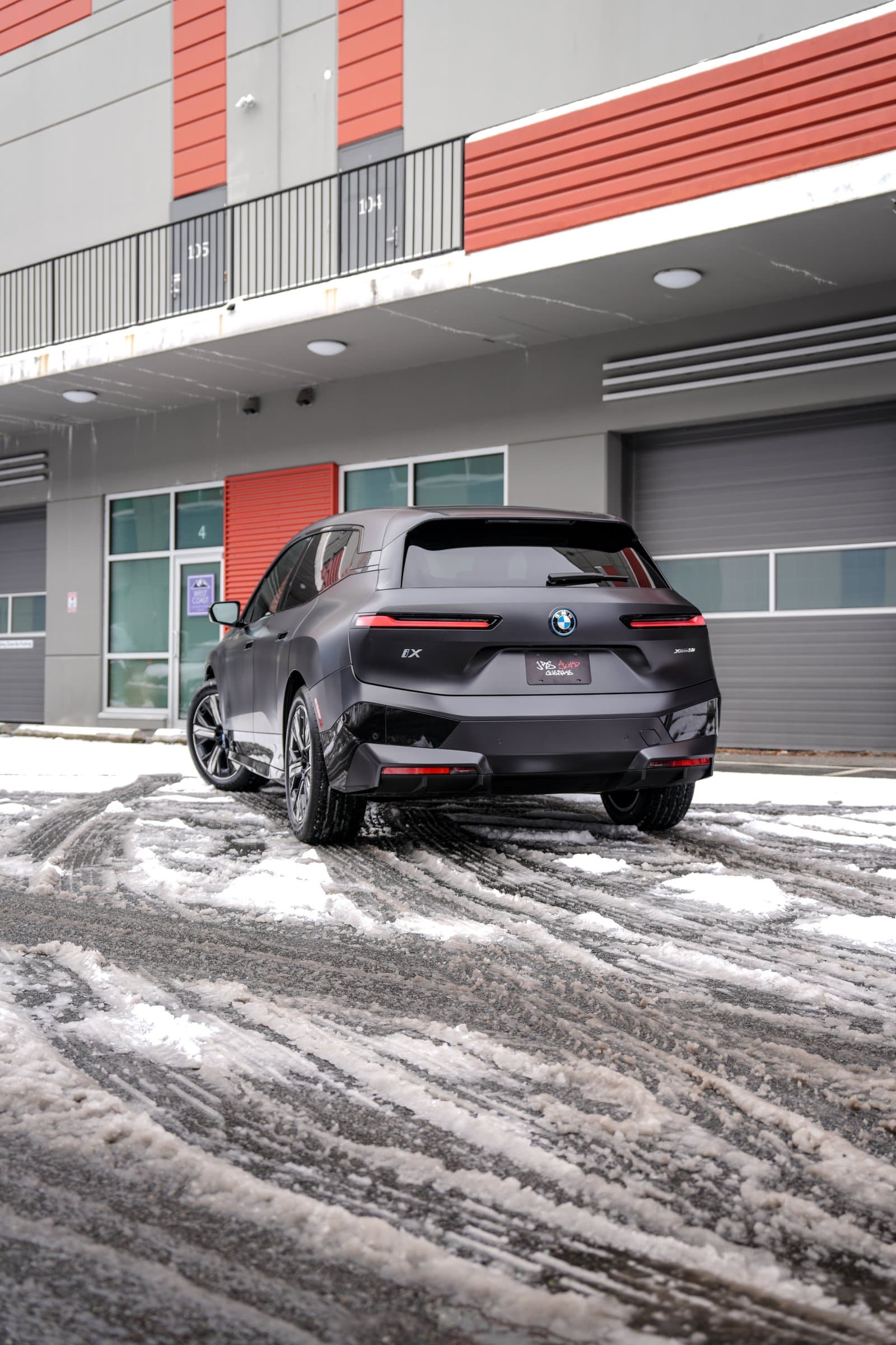
Related project: BMW iX Matte PPF