
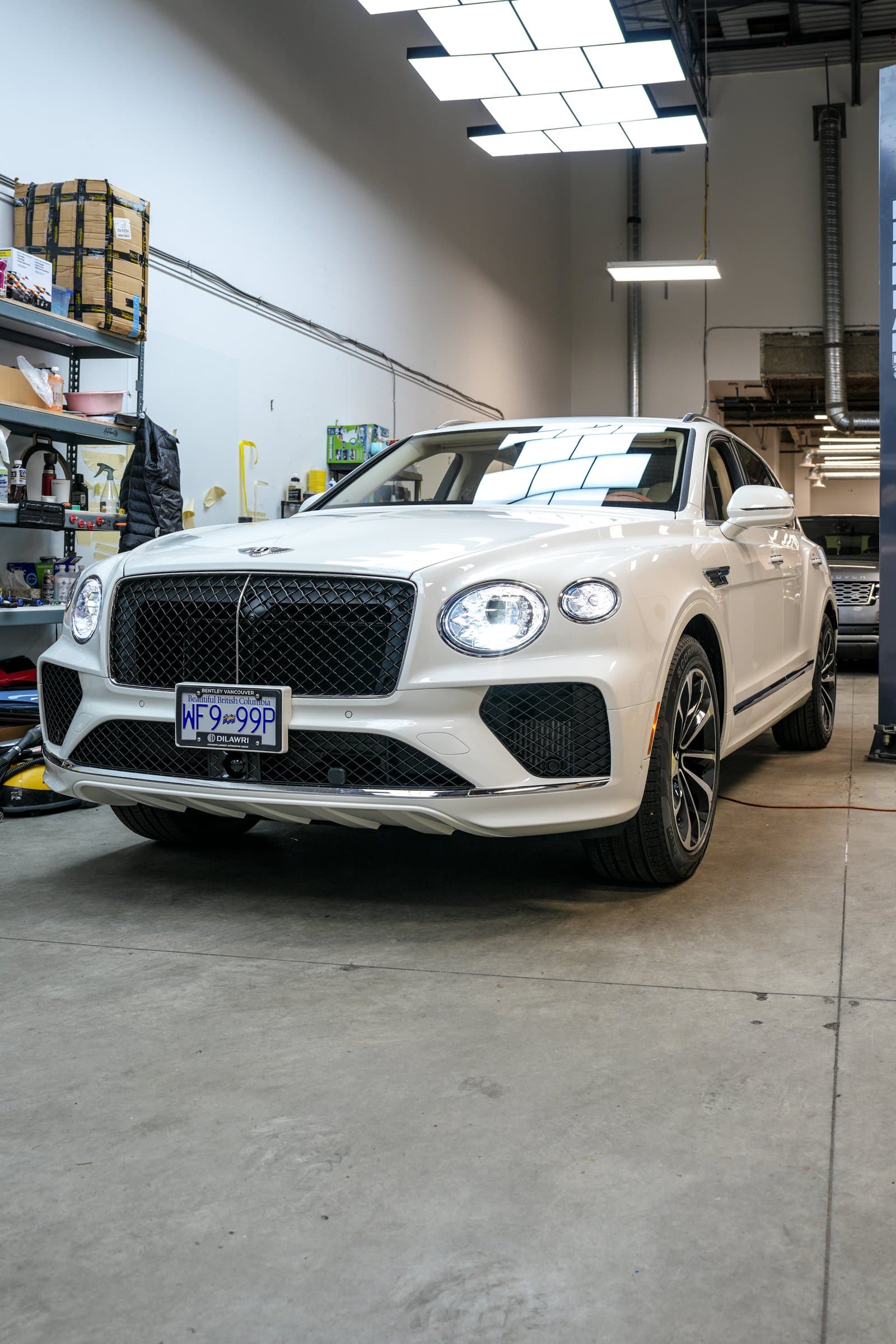
Caring for Your PPF-Wrapped Car in Vancouver
Published
Paint protection film does a significant amount of work for your cars paint. It absorbs rock chips, resists scratches from car washes, blocks UV, and keeps the factory finish pristine underneath. That is why it is a common protective investment for Vancouver vehicles. But PPF is not maintenance-free. How you care for it over the years determines how long it lasts and how well it keeps protecting the paint underneath.
Washing a PPF-Wrapped Car
The right washing technique matters more for PPF than it does for bare paint. The film itself is durable, but the edges and seams are vulnerable to being lifted by pressure washers, harsh chemicals, or incorrect washing technique.
The safest washing approach is the two-bucket method with a pH-neutral car wash soap. One bucket for the rinse water, one for the soap. Use a microfiber wash mitt rather than a sponge — a mitt holds less grit and is less likely to drag contaminants across the film surface. Rinse the mitt thoroughly between passes.
Pressure washers are useful for rinsing but should be kept at a safe distance from edges and seams. The high-pressure stream can lift the film at the perimeter if aimed directly at an edge. A 45-degree angle and a distance of at least a metre from the film edge is a practical guideline.
Touchless car washes are generally acceptable for PPF if they use neutral pH soap and no harsh chemicals. Brush-type automatic washes are not recommended — the brushes can catch on edges and lift the film, particularly on older installations where the edges have begun to settle.
Dealing with Road Salt and Contaminants
Road salt is a significant ongoing challenge for PPF in Vancouver. Salt sits on the film surface and, if left, can work its way to the edges where it is particularly vulnerable. Removing salt promptly after a drive on treated roads makes a material difference to edge longevity.
A thorough rinse with clean water after any significant salt exposure is an effective step you can take yourself. If the car has been sitting for a few days with salt still on it, a gentle wash with pH-neutral soap will remove it without risk to the film.
Avoid acidic or solvent-based cleaners on PPF. These can degrade the film surface over time and compromise the clarity. Bird droppings, tree sap, and bugs should be addressed promptly with a dedicated bug and tar remover rather than aggressive chemicals.
In areas where salt and sand accumulate — wheel arches, lower door panels, and rocker areas — inspect the film edges periodically. These areas take heavy contamination and are where edge lift is most likely to develop.
Winter Considerations for PPF
Vancouver winters are not as cold as the rest of Canada, but the combination of persistent rain and road salt makes them hard on PPF nonetheless. The film itself is rated for cold temperatures, but the adhesive bond at the edges can be affected by prolonged moisture exposure.
One practical step for winter: if the car is parked outside for extended periods, a garage is better than covered parking when the roads have recently been salted. The temperature cycling between a cold garage and a cold car can create condensation at the edges, which weakens adhesion over time.
Snow brushes with hard bristles can scratch PPF. Use a soft-bristle brush or a dedicated car snow brush rather than a general-purpose snow shovel or a brush designed for ice removal.
Ice melting products applied to the car directly should be avoided. If ice has formed on the film, warm water — not hot — will melt it safely. Scrapers with hard plastic edges can catch on film edges and are not recommended.
When to Bring the Car In for Inspection
PPF should be inspected by a professional at least once a year, and after any significant impact or winter season. A shop inspection checks edge adhesion, surface condition, and whether any impacts have compromised the film in ways that are not visible from a casual inspection.
Lifted edges are repairable without replacing the entire panel in most cases. A professional can re-seal the edge with a proper adhesion promoter and clean the seam. Ignoring a lifted edge allows moisture and contamination to get underneath the film, which accelerates failure and can compromise the paint underneath.
Beyond the film itself, the paint underneath PPF stays in the same condition it was when the film was applied. This means that removing the film years later reveals pristine paint underneath — which is the whole point. Keeping the edges sealed and the film surface clean is what makes that outcome possible.
For PPF service, maintenance, and inspection, visit theJRS Auto Customs PPF page or themaintenance service page.